
I start with my serving style. Wedding slices (1 x 2 inches) allow a 10″ round cake to serve approximately 40 portions, while party cuts (1½ x 2 inches) require that same size or lead me toward a 6″ + 8″ two-tier for 35–40 servings.
If I’m serving only cake, I size up; if other desserts are included, I choose a smaller size. I also determine whether I want clean plates or packed slices to take home, as leftovers influence my decision.
Layer height, pan shapes, and specific baker questions will help refine your final choice.
Start With 40 Guests: What’s Your Real Serving Goal?
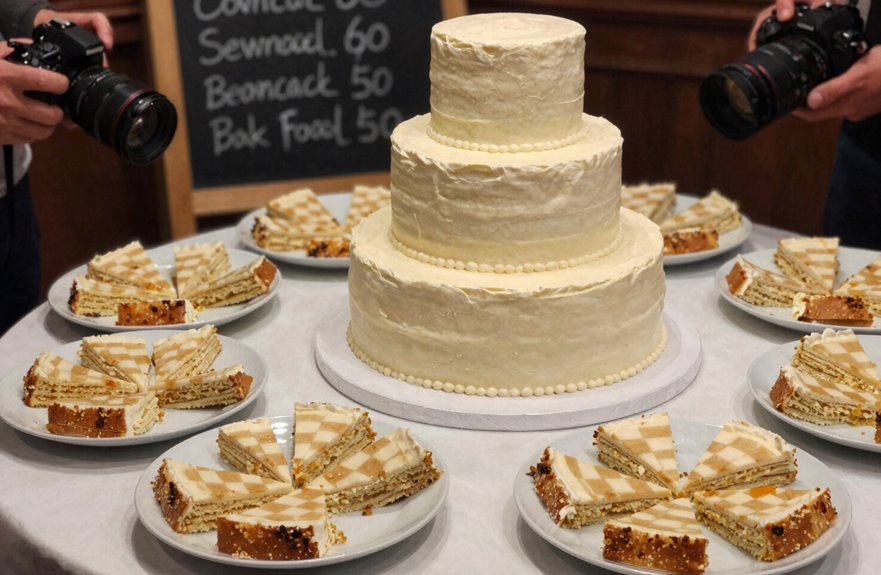
Why guess when you can plan? I always start with the guest count locked firmly in mind; forty people means everything else falls into place.
Your serving sizes determine where we go from here. I’m talking about real slices people actually enjoy, not paper-thin afterthoughts.
Cake sizes aren’t one-size-fits-all, and I’ve found options that truly serve our group. A 10″ round provides generous portions everyone remembers.
I also consider a two-tier setup with 6″ and 8″ layers stacked, creating that centerpiece moment we all want. Or perhaps a 12″ single layer fits our style better.
There’s even a 4-layer 10″ approach when we want height without width.
Matching cake sizes to our exact guest count ensures nobody leaves hungry and nothing goes wasted. We’re creating something that fits perfectly.
Will Cake Be the Only Dessert for Your 40 Guests?
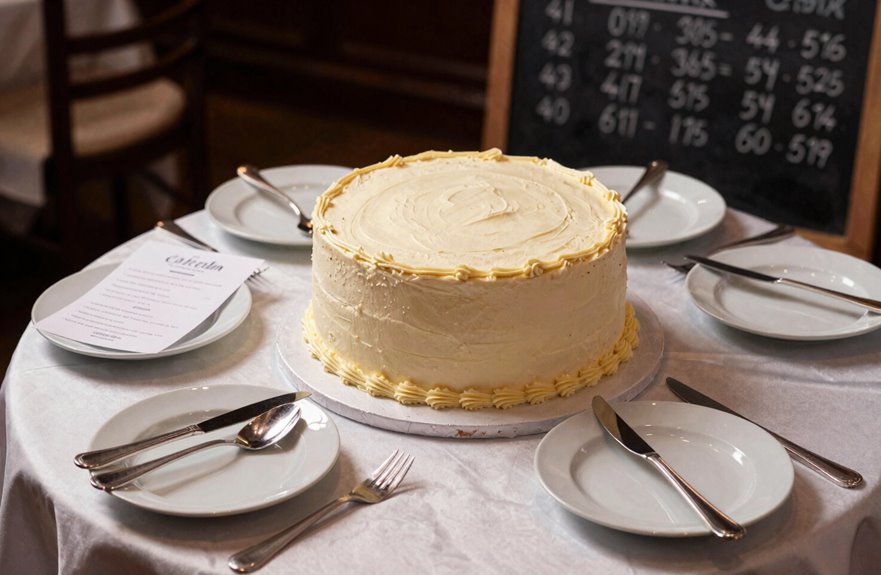
When planning a dessert table, I consider whether I will only serve cake. If cake is the sole option, I will need larger portions per person.
However, if I include other sweets, I can reduce the slice sizes while still satisfying everyone. The impact of portion size is significant; wedding-style thin cuts allow a single cake to serve many more guests than larger party wedges.
I also think about my preferences for leftovers. I would prefer a slightly smaller cake that gets finished rather than having half a sheet cake sitting in my fridge for a week.
Dessert Table Planning
How much dessert your guests actually need depends entirely on what else you’re serving them. When planning for 40 guests, checking the cake serving chart is essential to maintain a clear perspective.
If the cake stands alone, tiered cake sizes become valuable. A 9″–10″ single tier typically provides about 40 servings, or you can opt for a stacked 6″ and 8″ two-tier cake that also accommodates 35–40 servings.
Serving guidance here allows for thoughtful planning. For a more dramatic presentation and portion count, consider a 4-layer 10″ cake.
Whether you choose a 10″ round (2 or 3 layers) or a 12″ two-layer option, there are choices available to satisfy everyone’s preferences.
Portion Size Impact
When cake stands alone as your sole dessert, portion planning shifts significantly. Consider what your guests truly need from this moment together.
I recommend planning for 1 to 1.25 portions per guest for your 40 people, which translates to roughly 40–50 servings total. Your serving size directly influences your cake pan size choices.
Smaller wedding-style cuts (1 by 2 inches) allow a 10-inch round to yield 40 servings, while a taller 4-layer 10-inch can stretch portions without increasing the base size.
Tier configurations work well too. A simple 10-inch single tier or a paired 6 and 8-inch two-tier can achieve that 35–40 serving range.
If your gathering tends to be hungry or if you want to ensure everyone is satisfied, consider rounding up your portions. Providing ample servings fosters connection, and guests appreciate a generous host.
Leftover Preferences
Your decision about leftovers influences how I size your cake from the start. If cake is your only dessert, I recommend a 10-inch round yielding 40 servings, or perhaps a 12-inch double-layer for taller slices that maintain that serving count.
A two-tier 6-inch and 8-inch combination works well too, providing roughly 35–40 portions depending on how you slice.
If you want leftover cake for tomorrow’s coffee or a midnight treat, I will suggest increasing the cake size. This could mean adding a tier or opting for a 4-layer 10-inch cake.
You’re not just feeding guests; you’re creating shared memories that last. I always consider varying appetites and second helpings, because no one wants to feel like they are taking the last piece.
Decide If You Want Leftovers to Send Home
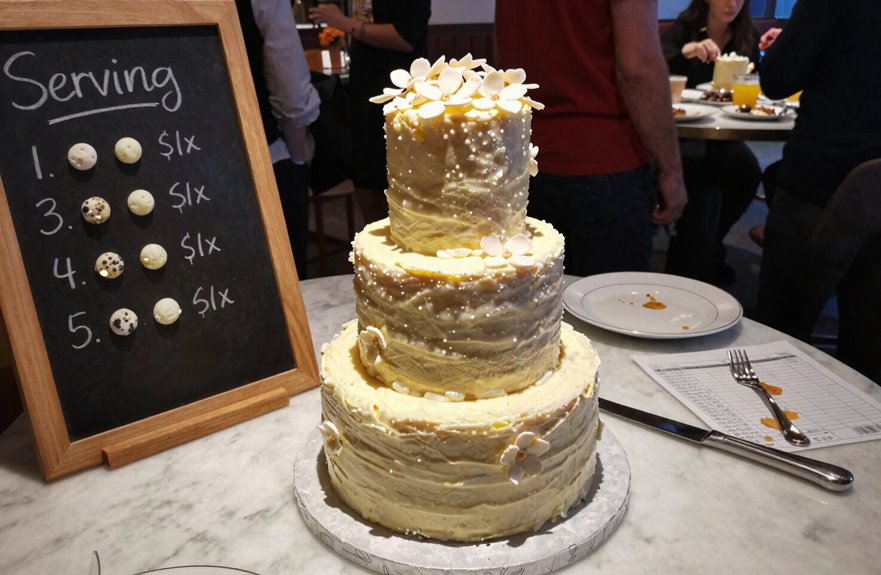
I will assist you in deciding whether you want leftovers for your guests to take home. We will explore how your preferences influence portion planning, cutting styles, and the overall cake size.
Additionally, I will discuss practical takeaway options that make sending extras home simple.
Leftover Preference Planning
Why leave the party empty-handed? I always plan for leftovers when I want my guests to feel part of the celebration.
Choosing the right cake size means considering those extra servings that allow everyone to take a slice of joy home with them.
- A 10-inch round provides a decent portion with roughly 40 servings.
- I opt for a 6″/8″ two-tier setup when I want volume plus visual appeal.
- A 4-layer 10-inch cake increases height and ensures I have enough.
- Stacking tiers (think 5″/7″/9″) can extend my servings into the 40-60 range.
- Taller or tiered designs allow me to slice thicker without reducing leftovers.
It’s important to ensure that no one leaves without something sweet in their hands.
Portion Size Impact
How much cake do I actually want people to eat versus take home? I ask myself this every time I’m planning for my group, and I bet you do too.
Your portion size choice directly shapes how much cake you’ll need and whether friends leave with extras.
When I want leftovers to send home, I plan for 1.25 large portions per guest or round up to the next whole cake size when using standard servings.
For a target of leftovers, I estimate servings with a larger portion size and select a cake size that yields 10–20% more servings than my guest count.
Choosing smaller portions (0.75–1.0 per guest) reduces total cake needed but decreases chances of guests taking home extras. Wedding-style smaller cuts, about 2×1 inches, can increase total servings from the same cake size, which helps with leftover planning.
The cake calculator translates my guest count and chosen portion size into the number of cakes needed to achieve desired leftovers.
Takeaway Container Options
Portion size decisions lead me to consider what happens after the party ends, specifically whether I’ll be handing out slices in takeaway containers on the way out.
If I want leftovers to send home, I plan for 10–20% extra cake servings beyond my guest count. A 6″ & 8″ two-tier or a 10″ round gives me approximately 40 servings with substantial portions to spare.
A 4-layer 10″ cake achieves similar numbers; extra height allows for better portion control for take-home slices. Wedding-style smaller cuts stretch my cake further, increasing the potential for leftovers.
Choosing a 10–12″ diameter or taller multi-tier design lets me keep portions generous while fitting more into takeaway containers.
- Stacking a two-tier cake that feeds 45 ensures everyone leaves satisfied.
- Slicing taller layers that fit neatly into compact takeaway containers.
- Cutting smaller wedding-style portions increases my leftover count.
- Selecting 10–12″ rounds balances abundance with ease of packing.
- Guests leave with their sweet souvenirs in hand.
Choose a Showstopper Cake or Simple Dessert
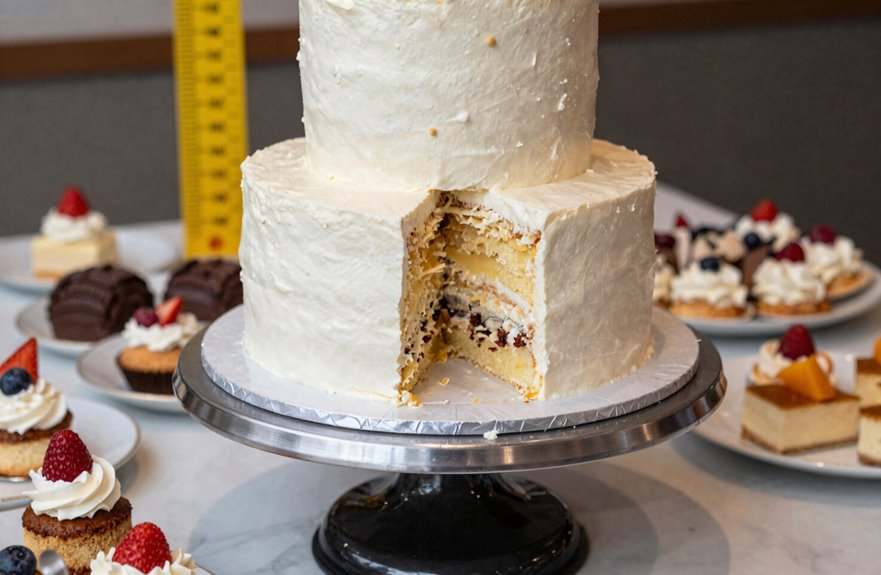
A cake for 40 people can be a memorable centerpiece rather than a flat, forgettable option. When gathering with important guests, consider whether to go bold or stay understated.
A tiered cake fosters a sense of belonging. You can stack a 6″ and 8″ duo for about 30–40 servings, or opt for a 6″, 8″, and 10″ showstopper that serves 50–85 if you’re inviting more friends.
Either choice creates a communal experience.
A tiered cake turns gathering into shared ritual—layers of belonging built to be sliced together.
If you prefer something simpler, a 10″ round cake with three layers offers comfort without the need for spectacle. For added height without tiers, consider a fourth layer.
Select what suits your crowd. The goal here is to build connection, not just serve cake.
Pick Single-Tier, Multi-Layer, or Tiered Structure
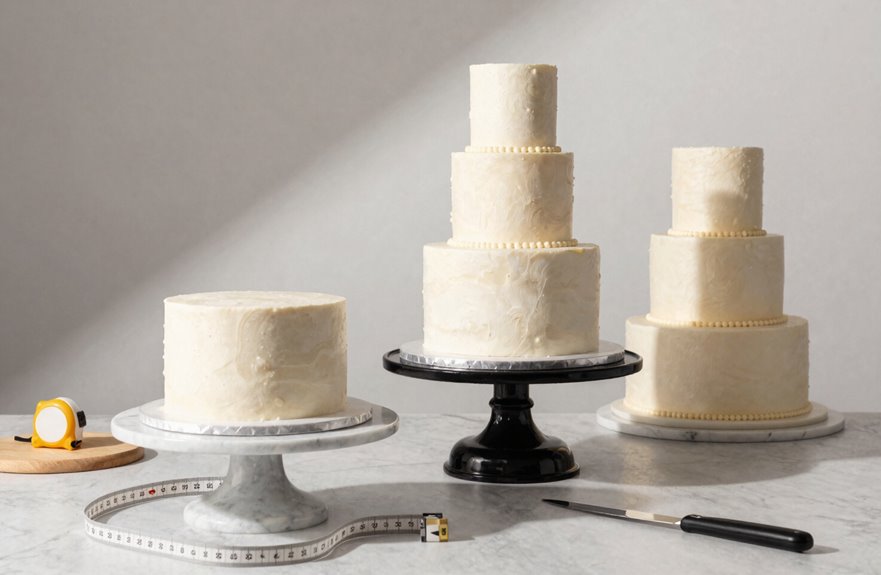
I’ll guide you through single-tier options and tiered alternatives to help you decide which structure works best for your 40-guest celebration. A single-tier cake with multiple layers, such as a 6″ and 8″ combination, typically yields 30–45 servings and maintains simplicity.
If you prefer more visual drama without excess cake, a modest three-tier setup like 5″, 7″, and 9″ provides roughly 50–60 servings, offering a bit more than needed, while the height creates a memorable impression.
Single-Tier Options
How do you decide between a sprawling tiered cake and a more streamlined option? I prefer single-tier cakes for their intimacy and impactful presence.
A round cake in the 9″ to 10″ range typically yields around 40 servings, which is ideal for gatherings that emphasize connection.
Stacking multiple layers within one diameter can increase both height and servings without expanding the footprint; think of three layers of 6″ or 7″ achieving that same goal.
For smaller groups, 5″ and 7″ sizes are excellent choices, while 6″ paired with 8″ or 9″ combinations can deliver 30-45 portions depending on how generously I slice.
Consider these single-tier possibilities:
- A cozy 5″ cake for your closest circle
- Stacked 6″ layers adding elegant height
- 7″ bases reaching upward, not outward
- 9″ to 10″ rounds serving your whole crew
- Multi-layer builds maximizing every inch
Tiered Alternatives
When space on the table feels tight but I still want a strong presence, I reach for a single-tier, multi-layer cake instead of spreading outward.
Four layers on a 10″ pan yield about 40 cake servings, which is perfect when you’re feeding a crowd without taking up too much space.
Tiered configurations create that wow moment many seek. Here is my serving guide for building upward:
| Tier Combo | Servings | Best For |
|---|---|---|
| 5″, 7″ | 20–25 | Intimate gatherings |
| 6″, 8″ | 30–35 | Small celebrations |
| 6″, 9″ | 40–45 | Your 40-guest mark |
| 5″, 7″, 9″ | 50–60 | Medium weddings |
| 6″, 8″, 10″ | 75–85 | Grand receptions |
Smaller wedding cuts stretch portions further. I always keep sheet cakes ready backstage; no one knows, and everyone belongs at the table.
Pick a 10-Inch Round for Simple 40-Person Serving
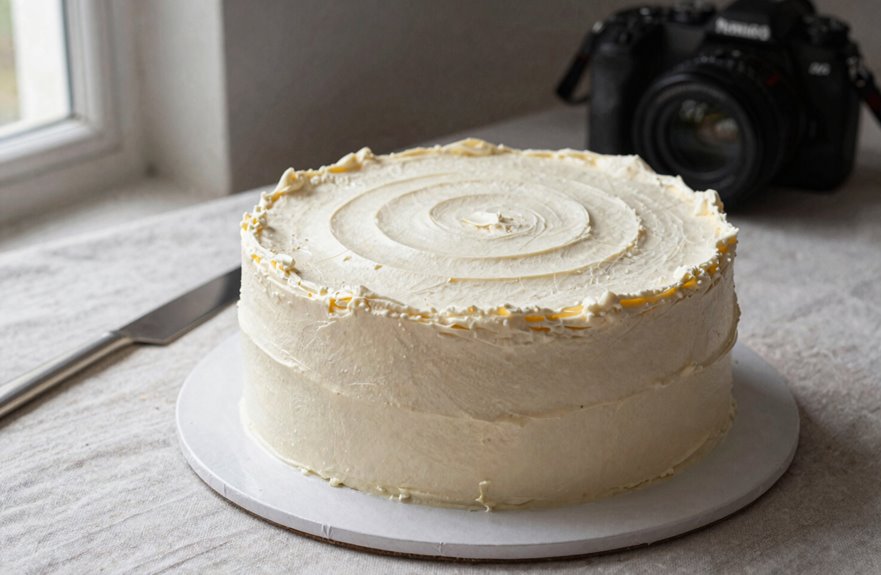
Most cake guides indicate that a 10-inch round is ideal for a 40-person event. I choose this round cake for its straightforward, crowd-pleasing results.
Here are the reasons this size works well:
- Three generous layers stack up to hit that sweet 40-serving mark.
- Two layers maintain a classic look for those who prefer simplicity.
- Four layers provide dramatic height and allow for varied portion sizes.
- Each slice feels substantial, ensuring guests leave satisfied.
- Many bakers I know also rely on this 10-inch size.
When planning for a gathering, I prefer to keep things uncomplicated. This round cake provides the servings I need, allowing me to focus on celebrating rather than worrying about portions.
Compare 9-Inch vs. 10-Inch: Why One Inch Matters
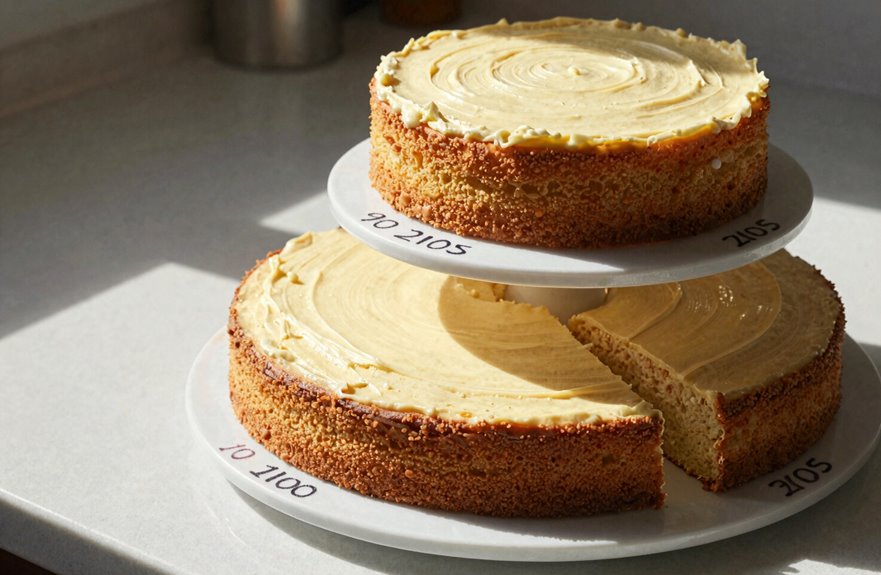
Why does a single inch make such a noticeable difference? When planning for 40 guests, that extra inch significantly impacts the overall experience.
A 9-inch cake leads to tighter portions, while a 10-inch allows for generous slices that everyone remembers.
Here’s what I’ve learned comparing these sizes:
| Feature | 9-Inch | 10-Inch |
|---|---|---|
| Typical yield | ~30-35 servings | ~40 servings |
| Portion size | Smaller, tighter cuts | Substantial, satisfying |
| Serving confidence | Risky for 40 | Comfortable buffer |
I prefer the 10-inch when I want guests to feel included rather than shortchanged.
The choice between a 10-inch and a 9-inch cake isn’t just about numbers; it’s about creating moments where no one has to wonder if there’s enough.
That single inch allows for hosting with confidence and assurance of ample servings.
Build a 6-Inch and 8-Inch Two-Tier for 35–40
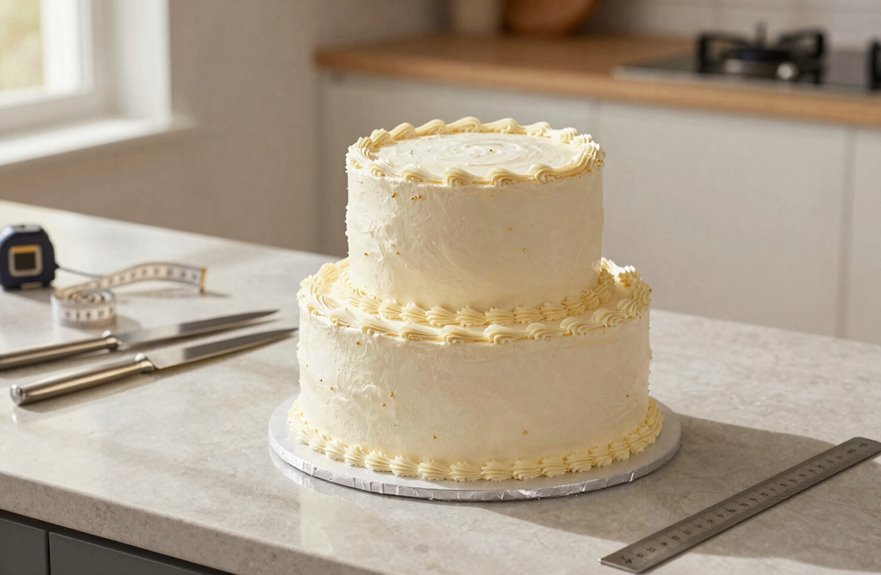
A two-tier cake with a 6-inch top over an 8-inch base serves 35–40 guests effectively. This round cake sizing balances presence and practicality, providing enough servings for medium-sized gatherings without excessive leftovers.
Consider how this setup works well:
- A 6-inch crown tier on its 8-inch foundation creates a classic celebration silhouette.
- Three layers per tier add height that photographs beautifully from every angle.
- Standard cuts comfortably serve 35–40 people, with the option to offer larger party portions if needed.
- The two-tier cake fills the table without overwhelming the space.
- Adjusting layer counts is possible if the final guest count changes.
This configuration accommodates everyone while remaining manageable.
Add a Third Layer Inside Your Two-Tier Cake
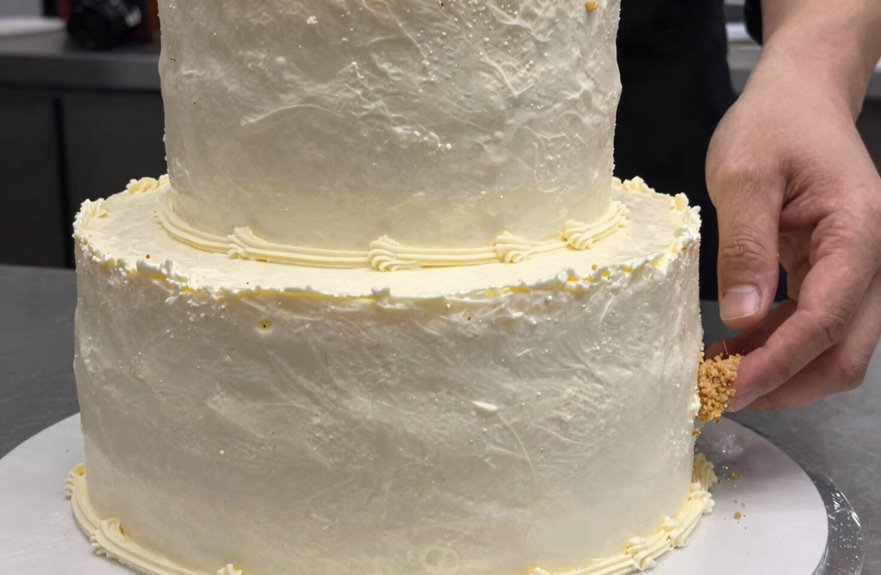
If you’re looking to enhance that two-tier design, adding a third layer inside each tier can significantly increase your serving count without altering the overall footprint. This simple adjustment transforms your tiered cake into a welcoming centerpiece for gatherings.
By incorporating an extra inner layer into each tier, you can add approximately 35–40 cake servings while maintaining the same 6″ and 8″ pans that bakers are accustomed to using.
I recommend stacking three evenly thick layers per tier, making sure to adjust bake times so everything cooks evenly and remains stable.
This method allows you to create tall, impressive cakes without expanding outward, making it an effective strategy for catering to larger groups.
Stack a 4-Layer 10-Inch for Extra Height and Slices
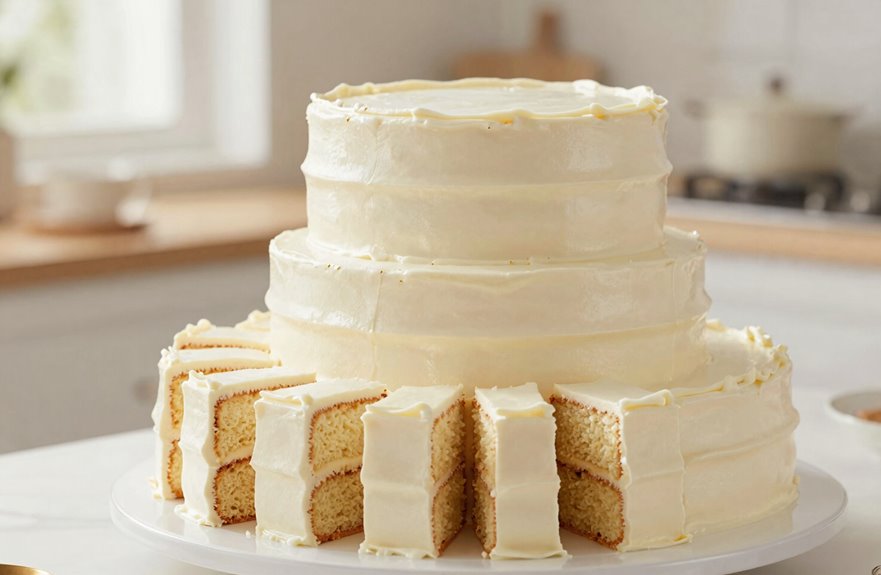
How else can you reach that 40-serving mark without expanding the size of the tiers? I stack a 4-layer 10-inch multi-layer cake.
This size provides extra height and slices while maintaining the same footprint on your table.
Consider this:
- Four fluffy cake layers stacked tall with generous filling between each one.
- Height that captures every guest’s attention as they enter your celebration.
- Clean vertical slices that hold together beautifully when served.
- A centerpiece that feels grand without overwhelming your space.
- The ability to reach target servings through smart layering, not wider pans.
This multi-layer cake approach demonstrates our commitment to both presentation and practicality. This cake size allows for an inclusive experience without compromise.
Choose Wedding-Style or Party-Style Slice Dimensions
What slice size should you plan for? It depends on the vibe you’re creating.
Wedding-style slices are about 1 x 2 inches—petite and elegant, designed to stretch your cake servings across more guests. Party-style slices are around 1½ x 2 inches or larger, providing generous portions but reducing your total count.
This choice significantly impacts your servings. A 10-inch round cake cut wedding-style will serve more guests than a 9-inch cake cut party-style.
Making informed decisions helps ensure your guests are satisfied without creating excess.
Align your slice dimensions with your event’s personality. For a formal celebration, opt for wedding-style.
For a casual gathering, party-style is appropriate. Refer to standard charts, use your judgment, and you will meet your crowd’s needs effectively.
See How Cutting Style Changes Your 40-Person Count
I will show you how party cut portions and wedding cut portions affect your serving math. When I slice generous 2×2 inch party pieces, I get fewer servings from the same cake compared to cutting tidy 2×1 inch wedding portions.
Your choice between these two cutting styles determines whether a 10-inch round or a two-tier setup actually meets that 40-person target.
Party Cut Portions
- A 10-inch round with generous layers delivers hearty 1.5″ by 2″ slices that satisfy.
- Tiered cake sizing like 6″ plus 9″ creates visual drama while hitting 40–45 servings.
- Taller builds stretch perception so guests don’t notice smaller footprints.
- The 12″ two-layer option spreads abundance across a wider surface.
- You’ll avoid the awkward “who gets seconds” moment when portions feel substantial.
I recommend party cuts for casual gatherings where people want to linger and connect. These bigger slices convey hospitality and ensure everyone leaves feeling satisfied.
Wedding Cut Portions
Why does the same cake feed more people at weddings than at birthday parties? It’s all about the cutting style.
Wedding portions are sliced smaller—about 2 by 1 inches—allowing for more servings without anyone feeling shortchanged.
When helping friends plan their big day, I recommend tiered cake sizes that maximize yield. A 6″ and 8″ two-tier setup delivers roughly 35–40 wedding portions.
For larger gatherings, a 5″, 7″, 9″ three-tier configuration serves 50–60 guests beautifully. For even bigger celebrations, I’ve seen 6″, 9″, 12″ tier combinations reach 75–85 servings.
If your guest count creeps up, consider supplementing with sheet cakes hidden in the kitchen. This approach ensures you have enough dessert for everyone.
Plan for Seconds, Late Arrivals, and Bigger Appetites
How often do we cut a cake perfectly to the guest list, only to watch latecomers arrive empty-handed or hear “just a sliver” turn into requests for seconds? I build in breathing room so everyone feels included.
Picture your coworker rushing in 20 minutes late, relieved to find cake still waiting. Imagine your uncle’s eyes lighting up when he realizes seconds won’t leave anyone short.
See friends comparing generous slices instead of measuring thin ones. Feel the collective sigh of comfort when the last guest gets a proper piece.
Watch your tiered creation become the generous heart of the gathering.
I use round cake sizing with adjusted servings calculation, bumping standard portions or choosing 10″ rounds for about 40 solid servings. Tiered cake options like 6″ and 8″ combos create flexibility without waste.
For bigger appetites, I stack 3-4 layers on 10″ or 12″ bases, boosting height and portions while keeping cuts clean.
Adjust for Kids Who Eat Less and Adults Who Eat More
I count kids as three-quarters of a serving since they typically want smaller slices. For adults, I increase the portion to one and a quarter when I expect hearty appetites.
When planning for a mixed crowd, I combine these estimates to reach a realistic average instead of overbuying. If the final cake size calculation falls between tiers, I round up to ensure there is enough.
Kids Smaller Portions
When planning cake for a mixed crowd, the best way to avoid running short is to adjust portion sizes so that everyone is included without waste. Kids simply don’t need standard cake servings, so planning differently is essential.
- Picture a five-year-old’s eyes lighting up at a perfectly petite wedge.
- Imagine tiny hands wrapping around a 4-inch round made just for them.
- See half-empty plates avoided with smarter kid portions.
- Feel the relief when every guest finishes their slice.
- Know your 6–8 inch tier will stretch further with this approach.
I assign children 0.75 servings and round up when unsure; this helps protect the gathering’s joy. A 6″/8″ two-tier setup accommodates mixed ages well.
This inclusive math ensures nobody feels left out and nothing goes to waste.
Adults Larger Slices
Adults often want more than the standard sliver, so I adjust my math upward. I plan around 1.25 servings per guest when expecting hearty eaters.
A 6″–8″ two-tiered cake setup provides roughly 35–40 servings, which accommodates varying appetites. For substantial cake slices, I choose a 4-layer 10″ or 12″ base; those taller cuts satisfy hungry adults without anyone eyeing the last piece.
Rounding up servings ensures our gathering is stress-free, as no one wants to feel shorted at our celebration. When building a tiered cake with 6″, 8″, and 10″ layers, I create something that welcomes everyone at our table.
Each adult can leave satisfied.
Mixed Group Balance
How do you keep everyone happy when your guest list mixes big appetites with tiny ones? Mixed groups require smart math, not guesswork.
I plan one standard portion for adults and three-quarters for kids. This approach stretches cake servings without leaving anyone hungry.
My go-to strategies include:
- A 6-inch, 3-layer round serving 12–18 as a kid-focused mini centerpiece.
- Combining 6-inch and 8-inch tiers for 30–40 total servings with built-in flexibility.
- A single 10-inch, 3-layer option yielding 28–40 servings depending on cut style.
- Adding a 5-inch or 7-inch second tier to boost servings while keeping portion sizes right for younger guests.
- Scaling portions down strategically so nothing goes to waste.
This method ensures every guest feels included.
Try a Cake Calculator for Your Exact 40-Person Event
Why guess when a cake calculator can do the math for you? These tools relieve the stress of planning and help me feel connected to a community that consistently gets it right.
When hosting 40 guests, I turn to a cake calculator to determine my servings accurately. It considers guest count, portion size—small (0.75), standard (1), or large (1.25 servings)—and whether I want round, square, or sheet cake.
For my crowd, a 10-inch round with 2–3 layers or a 6″ and 8″ tiered cake provides 35–40 servings. Sheet cake charts also assist, with ranges like 25–48 servings for my group size.
I always round up to ensure everyone’s included and minimize waste.
Enter Guest Count, Portion Size, and Shape Right
Once I’ve chosen a cake calculator, I can plug in the details that shape my order.
I start by entering my guest count and deciding if this cake stands alone or shares space on a dessert table; that changes how much I need.
Then I pick my serving size: Small (0.75”) for light appetites, Standard (1”) for typical celebrations, or Large (1.25”) for generous slices. Next comes cake shape, which determines how cleanly I can cut and serve without waste.
A cake calculator turns guest count, serving size, and shape into a precise order—no guesswork, no waste, just the right amount for your celebration.
For my gathering, I will:
- Count every name on my list so no one feels left out
- Choose Small portions for an afternoon tea vibe
- Select Standard slices for my main celebration cake
- Pick Large pieces when cake is the star attraction
- Match Round, Square, or Sheet shapes to my serving style
Finally, I explore tiered combinations like 6” and 8” tiers or 6”, 8”, and 10” stacks to reach my target numbers with visual impact.
Know When to Round Up Calculator Results
What happens when my calculator indicates 38 servings and I’m hosting 40 guests? I round up, as I’ve learned that calculator estimates often don’t reflect reality.
I treat those numbers as starting points, not guarantees. When planning a celebration, rounding up ensures I avoid the awkward situation of running short.
That extra buffer accommodates generous portions, taller tiers, or an unexpected plus-one.
I’ve noticed that multi-layer designs complicate things. Portions vary between round and square pans, and cutting styles can change everything.
I use the calculator as my foundation and then adjust upward to the nearest whole number or tier increment.
Belonging means ensuring nobody leaves hungry. I prefer having two slices remaining rather than two guests without.
Rounding up is a way to be welcoming, not wasteful.
Read a Standard Serving Chart for Round Cakes
I start every cake order by checking whether the event requires 1 x 2-inch wedding slices or 1.5 x 2-inch party portions, as this choice directly influences how I read the serving chart.
After selecting the slice style, I match it to the round cake sizes that will deliver my target count without guesswork. This step ensures my portions are accurate and my guests are satisfied.
Standard Wedding Slices
How do wedding cake portions differ from everyday party slices? When planning a wedding celebration, I choose smaller, elegant slices—typically 1 x 2 inches—that allow me to stretch each round cake further while maintaining a refined presentation.
For your special day, consider the following:
- A delicate 6″ tier yielding 12–14 slender wedding servings
- An 8″ round cake offering 24–28 graceful portions
- A stately 10″ tier providing 38–56 slices for your guests
- A grand 12″ base delivering 65–100 servings
- A classic 6-8-10″ combination feeding roughly 50–60 loved ones
These cake sizes maximize wedding servings through efficient cutting, ensuring that all guests are included in the celebration without excess. This approach allows for a thoughtful distribution of cake among attendees.
Party Size Portions
When hosting a celebration, I need heartier portions than those dainty wedding slices. Party servings run about 1½ x 2 inches, providing guests with a satisfying taste rather than a polite nibble.
I consult a standard round cake servings chart before deciding on cake sizing.
Here’s what I’ve learned about party portions. A 6-inch round cake yields roughly 12–15 servings.
An 8-inch option provides about 20–24 party servings. When feeding a bigger crowd, a 9–10 inch round delivers 28–40 portions.
For large gatherings, a 12-inch cake produces approximately 40–60 servings.
These estimates depend on how I slice, but they’ve proven reliable. Understanding round cake servings helps me choose the right size so everyone is included, and no one leaves hungry.
Decode Square, Heart, and Specialty Pan Servings
Why do square pans yield more servings than round ones of the same width? It’s all about the corners.
I always check serving charts because pan shapes make a significant difference. Those extra edges mean more pieces, especially when comparing wedding and party portions.
- Dense corner slices that guests often prefer
- Heart pans with their unique curves and adjusted cutting lines
- Hexagon and petal shapes that enhance your dessert table
- Two-layer builds achieving height targets in unconventional dimensions
- Shape-specific charts ensuring you don’t short hungry guests
I never guess with specialty pans. Whether you’re feeding forty or four hundred, consult the manufacturer’s guide.
Your cake deserves accuracy, and your guests deserve every promised bite.
Why Short Cakes Give You Half the Servings
I want you to understand why height is important when counting portions.
When I cut a cake that’s under 3 inches tall using the same pattern as a taller one, I get about half the servings because there’s simply less cake to go around.
This is why the serving chart explicitly reduces the stated yield in half for shorter cakes; height directly affects how many people you can feed, not how you slice it.
Height Affects Portions
How does a cake’s height determine how many guests you’ll actually feed? This is important when we’re planning together.
- A 3-inch cake and a 6-inch cake in the same pan provide identical servings when cut the same way.
- Drop below 3 inches tall, and you’ll serve about half the portions you expected.
- The cutting pattern remains the same regardless of height; only the cake volume changes.
- I always check total batter volume, not just pan dimensions, to ensure my guests are well-fed.
- Taller cakes don’t require special cutting techniques to maintain proper servings.
When I bake for my community, I focus on height to ensure everyone gets their fair share. Short cakes might look appealing, but they can leave people wanting more.
Let’s make sure our portions reflect the celebration we want to share.
Standard Cutting Rules
Where do standard cutting rules come into play when planning a cake for 40 people? They are important because I’m part of a community that dislikes running out of dessert.
I’ve learned to follow the serving chart using proper round cake servings calculations while watching the height. Cakes under three inches tall yield roughly half the portions I’d expect from the same pan.
My cutting pattern remains the same whether I am slicing a three-inch or six-inch cake; the thickness and servings per round cake do not change. Height only influences frosting and presentation, not portion count.
For my group of forty, I check the serving chart against my target height and cutting style to ensure everyone has dessert. We all enjoy cake together.
Serve Taller Cakes Using the Same Cutting Pattern
Why assume height equals more slices? I used to think taller meant more portions too, but I’ve learned the truth about round cake servings.
When cutting a 6-inch high cake the same way as a shorter one, I get identical servings. The cutting pattern remains consistent, making it clear that volume alone doesn’t create more pieces.
Here’s what I’ve discovered when serving my crowd:
- I slice a triple-layer dream and watch guests savor extra frosting, not extra cake.
- I stack layers high and still make eight clean wedges from my 6-inch round.
- I see eyes widen at the towering presentation while portions stay familiar.
- I choose larger pans or more tiers when my guest list grows, never just height.
- I trust my pattern every time, building confidence in each celebration I host.
Ask Your Baker About Recipe-to-Pan Compatibility
When sizing up pans for my celebration, I start with a conversation about whether my baker’s recipe can meet my needs.
Recipe compatibility isn’t guaranteed across every pan size, and scaling batter volume doesn’t automatically ensure the right finished height.
I ask my baker how many layers each pan size yields and if we can adjust layer counts to meet my target servings without compromising structure.
We also review how the recipe’s crumb and frosting ratios translate to my chosen dimensions, particularly for buttercream coverage and borders that create a cohesive cake.
I request a serving chart or portion guide for the exact pan sizes I’m considering. This helps ensure my guest list is covered and our celebration is genuinely inclusive.
Check Doneness Timing With Your Baker, Not Just Charts
I’ll confirm my baker’s specific timing recommendations first, since their experience with the actual oven and pan combination is more relevant than any generic chart.
I’ll start testing for doneness at the earliest suggested time, inserting a toothpick until it emerges clean or with just a few crumbs attached.
Before I serve anything, I will do a final collaborative check with my baker during cooling to ensure the cake is fully baked and ready for decoration or tiering.
Confirm Baker’s Timing
How do you know when your cake is done? I confirm doneness timing with my baker rather than relying solely on generic charts.
When planning a celebration that brings people together, I recognize that oven performance and pan type can affect bake times, so I prioritize baker coordination from the start.
Here’s how I ensure everything aligns perfectly:
- I agree on the recipe’s stated bake time and temperature, then check at the shortest listed time to prevent overbaking.
- I use a toothpick or internal thermometer because visual cues can be misleading across different cake sizes and shapes.
- I consider altitude and my oven’s quirks, adding extra minutes when my baker advises.
- I share my event schedule early so cool and delivery windows fit seamlessly.
- I communicate throughout the process, making adjustments as needed to stay in sync.
This teamwork guarantees my cake is ready to share.
Test Before Serving
Every successful celebration deserves a cake that’s perfectly timed, so I always bake a test run with my baker before the big day.
Oven quirks and recipe nuances mean chart estimates rarely match reality, and I want us serving something flawless together.
I start with the shortest baking time listed, checking doneness early to avoid overbaking. A tester in the center should emerge clean or with just a few crumbs; that’s our sweet spot.
When scaling recipes across pan sizes, I run multiple tests since volume and geometry shift timing. I document every temperature tweak and minute adjustment, building a playbook that ensures our cake feeds forty perfectly.
This shared preparation allows us to walk into the event confident, connected, and ready to celebrate together.
Know How Much Frosting Comes With Your Cake Order
When ordering a cake for 40 guests, understanding the frosting included is crucial. Buttercream amounts vary based on thickness, height, and pan type.
Using a cake calculator helps match your serving size with the appropriate buttercream estimate, ensuring you have enough.
Here are the factors that influence your frosting allocation:
- A coat on sides and top plus a simple border
- Cake height and whether pans are standard or deep
- Single-tier versus multi-tier scaling needs
- Minimal decoration versus planned extras
- Inputting accurate serving size into your calculator
Clarifying these basics will ensure your cake arrives as envisioned, without any surprises or stress.
Add Extra Frosting for Detailed Piping and Decorations
Once you confirm your base frosting amount, I need to account for any detailed piping or decorations that go beyond a simple coat and border. Adding intricate designs increases buttercream icing needs by 10–30%, depending on complexity.
For any cake size, I plan thicker coats and decorative piping by allocating extra icing per tier. Taller or more intricate piping decorations require additional buttercream beyond simple borders; my chart confirms this.
When working with 4-inch-high or multi-layer cakes, I factor in extra frosting to cover raised edges and smooth tier transitions.
When creating a showpiece with elaborate borders, scrollwork, or flowers, I consult decorating guides to estimate icing per inch of perimeter. This ensures I have enough buttercream icing to complete my vision without last-minute mixing.
Serve 40 With a 12-Inch Round and Fewer Layers
How can you feed 40 guests without building a towering cake? I opt for a 12-inch round with fewer layers.
This setup allows me to provide around 40 servings without the complication of high tiers that can be difficult to slice.
For your gathering, consider this:
- A broad 12-inch round on a simple stand, appearing generous without being overdone.
- Two layers that offer enough height to feel festive without being unstable.
- Standard cuts yielding neat 1 x 2 inch pieces that are easy to serve.
- Three layers if I want a bit more visual appeal while maintaining 40 servings.
- Clean slices from a cake that feels approachable, not daunting.
Choosing fewer layers eliminates the risk of a cake wobbling. This approach ensures simple servings without any stress, delivering just the right amount of cake to bring everyone together.
Try Unexpected Tier Combos Like 6-Inch and 9-Inch
Why stick to a single tier when a striking pair can do the work? Tier combos like a 6-inch and 9-inch cake deliver both drama and smart servings for your gathering.
These cake sizes stack beautifully, providing height without overwhelming your table. Together, they yield roughly 40–45 servings depending on how you slice.
I typically count 12–14 servings from the 6-inch tier and 24–30 from the 9-inch, landing right near our target. This combo allows for flexibility.
You can cut standard 1-inch by 2-inch portions for generous plates or opt for smaller party slices to stretch servings further. This approach adapts to your crowd while creating something memorable that guests will want to photograph and share.
Design a Dessert Table to Shrink Your Main Cake
Where should your cake sit when it doesn’t need to carry the whole party?
I place mine at the heart of a thoughtfully arranged dessert table, allowing smaller treats to share the load so I can reduce my cake size without diminishing the celebration.
- A two-tier 6″/8″ or three-tier 5″/7″/9″ configuration serves as my stunning centerpiece.
- Tiered stands draw every eye upward while cookies and bars fill the surrounding space.
- Height and color coordination ensure that my main cake is impossible to miss.
- My servings plan lives on the planning board, confirming I’ve matched tier combinations to guest count.
- Mini desserts nestled nearby guarantee that no one leaves hungry.
This approach allows me to choose a modest cake size that still feels generous. I create abundance through variety, not volume, ensuring my guests feel welcomed into something intimate and complete.
Plan 3–4 Mini Desserts per Guest With Cake
Once I’ve settled on my centerpiece cake, I focus on rounding out the dessert table with mini treats that keep guests satisfied without overwhelming them.
I plan for 3–4 mini desserts per guest when adding cookies, bars, or cupcakes alongside my main cake. These bite-sized portions allow everyone to graze and sample a variety without feeling stuffed.
Smart dessert planning really pays off; those mini desserts let me adjust my cake size downward. Since I’m offering multiple sweets, I can choose smaller cake sizes and still ensure generous servings for my crowd.
For tiered designs, mini treats fill the table beautifully and provide guests with options beyond cake slices alone. Remember that custom orders need a two-week lead time so everything arrives coordinated and fresh.
Order a Kitchen Sheet Cake as Backup for Large Events
I recommend ordering a kitchen sheet cake when planning larger gatherings to avoid running out of dessert. This strategy provides uniform portions that I can serve discreetly from the kitchen, keeping my main centerpiece cake intact.
I schedule this extra cake at least two weeks in advance to ensure I have scalable servings available if my guest count increases or if second helpings are requested.
Kitchen Cake Benefits
Why stress about running short when you’re planning for forty guests? A kitchen cake effectively addresses this concern by serving as a backup option, providing substantial servings without overspending on elaborate tiers.
Here’s how this approach benefits hosts:
- Your tiered cake can shine as the focal point while the kitchen cake supports your serving needs.
- You can quickly slice generous portions when your guest count increases unexpectedly.
- You can feel assured knowing that extra servings are available in the kitchen, preventing any empty plates.
- Your caterer will appreciate the straightforward serving solution that keeps lines moving.
- You can relax knowing you ordered this backup option in advance, ensuring a smoother experience on the big day.
Backup Serving Strategy
How do you ensure no guest leaves hungry when feeding forty? I always order a kitchen sheet cake as my backup plan for large events; it’s saved me more than once when guest counts swelled unexpectedly.
| Event Type | Sheet Cake Size | Servings |
|---|---|---|
| Small gathering | Half-sheet | 25–48 |
| Large wedding | Full-sheet | 49–96 |
| Backup combo | Half + tiered cake | Flexible |
A sheet cake includes everyone in the celebration without stress. I pair mine with multi-tiered designs to simplify cutting and guarantee abundance.
When hosting, that extra backup plan eliminates shortages and ensures every guest feels welcome and satisfied.
Cut Smaller Slices That Still Look Generous
Where do you draw the line between a satisfying slice and a skimpy one? It’s all about technique.
When I’m serving a crowd, I use these standards to keep everyone happy:
- Wedding-style 1-by-2-inch cuts for elegant, lighter bites
- Party-style 1.5-by-2-inch portions when guests want something heartier
- A 10-inch round cake yielding extra servings through precision cutting
- Taller layers that appear abundant despite smaller surface area
- Rounding up my headcount so nobody leaves empty-handed
Your portion size shapes the entire experience. I’ve stretched a single round cake to feed surprising numbers without anyone feeling shortchanged.
It’s about inclusion—ensuring every guest feels welcome and satisfied. Smart slicing allows everyone to celebrate together, enjoying their share.
Don’t Rely on 8-Inch Alone for 40 People
I won’t rely on an 8-inch cake alone for your 40-person event since it typically serves only 24–28 people, which would leave some guests hungry.
Instead, I will explore tiered options and height adjustments to increase the serving count toward 40 without sacrificing portion size. Portion size is important, so I will demonstrate how combining tiers or adding height provides a practical solution.
Portion Size Matters
Why settle for a cramped 8-inch cake when you’re feeding forty? Portion control starts with honest math about cake servings.
An 8-inch round simply can’t deliver the serving size your guests deserve without slicing portions so thin they’d spark complaints.
Here’s what actually works for our crowd:
- A 10-inch round gives everyone a satisfying slice without apology.
- A 9-inch works if you’re precise with knife skills.
- A four-layer 10-inch builds height that stretches portions beautifully.
- A two-layer 12-inch creates that classic celebration presence.
- A two-tier 6-inch plus 8-inch combo hits our number with style.
Guests should feel included, not shortchanged. When planning for forty, I choose configurations that honor both the moment and the appetite.
Tiered Cake Options
A two-tier cake effectively serves 40 people with a combination of a 6″ and 8″ tier, each having three layers. This setup provides 35–40 servings, making it suitable for your gathering without appearing insufficient.
For larger crowds, a combination of 5″, 7″, and 9″ tiers can extend to 50–60 servings if your guest list increases. For substantial celebrations, configurations like 6″, 9″, and 12″ or 6″, 8″, and 10″ can yield 75–85 servings.
Wedding-style cuts (2×1 inches) can increase your total servings from the same tiered cake, ensuring all guests are accommodated.
Height Adjustments Help
How does height factor into your cake planning? Height adjustments won’t increase your round cake servings if you’re cutting slices the same way.
A six-inch tall cake and a shorter one from the same pan yield the same number of plates filled.
Here’s what this means for your gathering:
- A six-inch cake serves the same whether it’s three or six inches tall.
- You’ll need different pan sizes, not just layers, to boost headcount.
- That eight-inch alone won’t cover forty guests.
- Tiered cake sizing with six and eight-inch rounds works well.
- A straight ten-inch round also achieves the needed servings.
Plan smarter, not just taller.
Know When 5-Inch and 7-Inch Combos Fall Short
Where do a 5-inch and 7-inch tiered cake land you? This tiered cake size typically delivers about 20–25 servings.
When planning for a crowd of 30–40 people, the 5″ and 7″ combination often falls short. I now opt for a 6″ & 8″ or 9″ & 10″ setup instead, as those configurations reliably provide the 30–40 servings needed.
A single 9″ or 10″ round cake often serves better than the smaller pair. If I have to use 5″ and 7″ components, I prepare extra tiers or sheet cake to ensure there is enough for everyone.
Book Custom Cakes at Least 2 Weeks Before Events
Why scramble at the last minute when booking custom cakes two weeks ahead saves my sanity? This lead time transforms event planning from stressful to seamless, especially when determining cake sizing for my gatherings.
Here’s what this buffer actually provides:
- Securing my preferred baker before their calendar fills
- Time to test flavors and adjust details without panic
- Space to coordinate with my venue’s delivery windows
- Room to use a cake calculator and lock in accurate servings
- Flexibility for dietary tweaks or design revisions
If I’m unsure about exact dimensions, I book the slot anyway; I can finalize specifics later. This approach keeps me in control and prepared, allowing my guests to enjoy a better cake experience.
Request Specific Layer Counts From Your Baker
When I’m ready to nail down the details, I ask my baker exactly how many layers my cake will have.
Two identical-looking sizes can serve wildly different crowds depending on whether they’re built with two, three, or four layers inside.
For my gathering of 40, I specify my serving goals upfront. A 10″ round with 3 layers meets that mark, but so does a 6″ x 8″ two-tier setup.
I always verify if each tier uses 3 layers or fewer, as this can significantly affect the outcome. Here’s how I compare my options:
| Configuration | Layer Count | Servings |
|---|---|---|
| 10″ round | 3 layers | ~40 |
| 6″ + 8″ two-tier | 3 layers each | 35–40 |
| 10″ round | 4 layers | ~40+ |
I share my budget and decoration preferences as well, so my baker assigns layer counts that feed my crowd without waste.
Bring Inspiration Photos to Finalize Size and Style
How do I translate my 40-guest headcount into a cake that looks right on the table? I bring 3–5 inspiration photos that bridge the gap between cake size and servings.
Here’s how I convey my vision:
- One photo showing my exact serving goal, such as a 40-serving round 10″ cake or a 3-tier 6″, 8″, 10″ wedding cake setup.
- Another capturing my preferred cutting style, whether slim wedding slices or generous party portions.
- A shot highlighting height and presence, like a single statement tier or a dramatic multi-tier cascade.
- Color and theme references that illustrate how style influences perceived size.
- Each image is paired with a quick note on guest count, centerpiece impact, or budget so my baker understands my vision clearly.
Email Your Baker: What Info Speeds Up Quotes
Once I’ve narrowed down my vision with inspiration photos, I email my baker with everything they need to quote efficiently.
I include my guest count, event type, and preferred serving size so they understand how many servings we’re planning for. I attach inspiration links showing tier arrangements and decoration styles to minimize back-and-forth messages.
I also share my timeline, delivery date, and venue access details so they can confirm their availability. I list any dietary considerations upfront, such as nut-free, gluten-free, or vegan needs, since these affect both cake size and flavor options.
Finally, I request specific quote details: cake dimensions, tier configuration, total servings, and per-serving price. This breakdown allows me to compare options and make informed decisions alongside my baker.
Download: Serving Chart for Round, Square, Sheet Cakes
Where do I turn when I need to determine exact cake dimensions? I refer to a serving chart for round, square, and sheet cakes.
This tool breaks down cake portions, ensuring I have accurate quantities.
Inside, you’ll find:
- Round cake guidance showing a 10-inch round yields roughly 40 servings.
- Two-tier 6/8-inch combos covering 35–40 servings for intimate gatherings.
- Sheet cake ranges spanning 0–24, 25–48, and 49–96 servings by pan size.
- Wedding servings alongside party cuts to match the occasion.
- Input fields for guest counts and portion sizes—small, standard, or large.
I input my numbers, and the chart tells me how many cakes I need. This approach minimizes stress and waste while ensuring everyone is fed.
Check These 8 Details Before Ordering Your Cake
With my serving chart in hand, I’m prepared to move from planning portions to finalizing the actual order. First, I estimate my guest count and decide if this cake will stand alone or be part of a dessert spread.
This decision shapes every subsequent choice. For intimate gatherings, I prefer 5″ and 7″ single tiers.
When feeding thirty to forty guests, I opt for 6″ and 8″ or 6″ and 9″ combinations. A tiered cake enhances the occasion; 5″, 7″, and 9″ tiers provide fifty to sixty servings, while 6″, 8″, and 10″ can serve up to eighty-five.
I keep in mind that wedding-style servings are smaller, allowing for more portions. Finally, I input my numbers into a cake calculator to determine portion sizes and cake types, ensuring that every serving is accounted for and minimizing waste.
Confirm Your 40-Person Cake Ticks Every Box
How do I know I’ve landed on the right cake for my crowd? I check that my servings calculation covers everyone without stress.
I have options: a 10″ round cake sizing gives me approximately 40 generous slices, or I can layer up for drama. Here’s what I picture:
- A classic 10″ round with tall layers, slicing clean through the celebration.
- A 6″ and 8″ multi-tier cake stacked high, creating a “wow” moment when I carry it in.
- A 12″ round keeping things simple but still festive.
- Height added to a single tier, turning modest into memorable.
- Leftovers I actually want, because we’re family here.
My round cake sizing matches my circle. I have confirmed my 40-person cake meets all requirements.