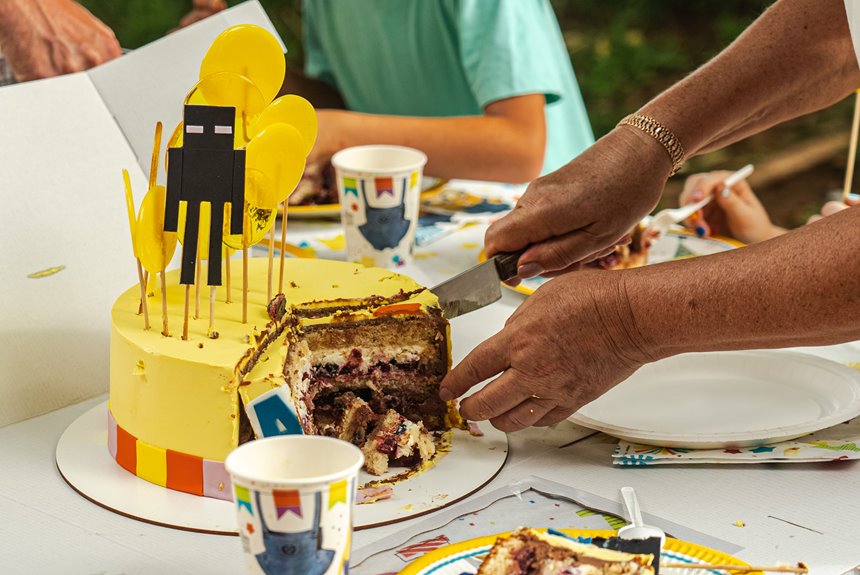
For fifty guests, I recommend a 12-inch round cake or a 14×14 inch square cake, both yielding roughly fifty servings with standard cuts. A 14-inch round cake also works, providing sixty-five portions for a small buffer.
If you’re serving finger portions at a buffet, you’ll need less cake per person, but for dessert portions where cake is the main feature, stick to one serving per guest.
Below, I will guide you on how to match your cake size to your event style.
What Size Cake Serves 50 Guests? (Quick Answer)
How do you quickly determine the right cake size? I focus on servings first.
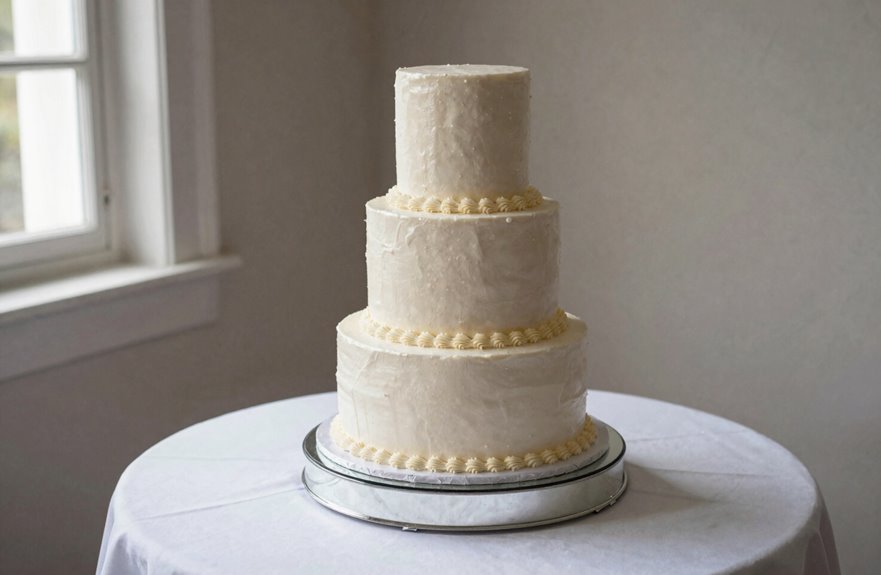
For 50 guests, a 12-inch round cake provides about 50 servings with standard one-inch slices. If I expect a slightly larger crowd, I choose a 14-inch round, which offers roughly 65 servings.
A 10-inch round will not suffice alone; it yields only 38–45 servings, so additional cake is necessary.
When I mix things up, I pair two quarter sheet cakes (that’s 48 servings) with something smaller, or combine a 12-inch round with a sheet cake to meet the needs.
It’s important to match portions to the number of guests to ensure everyone is satisfied.
Finger Portions vs Dessert Portions: Which Do You Need?
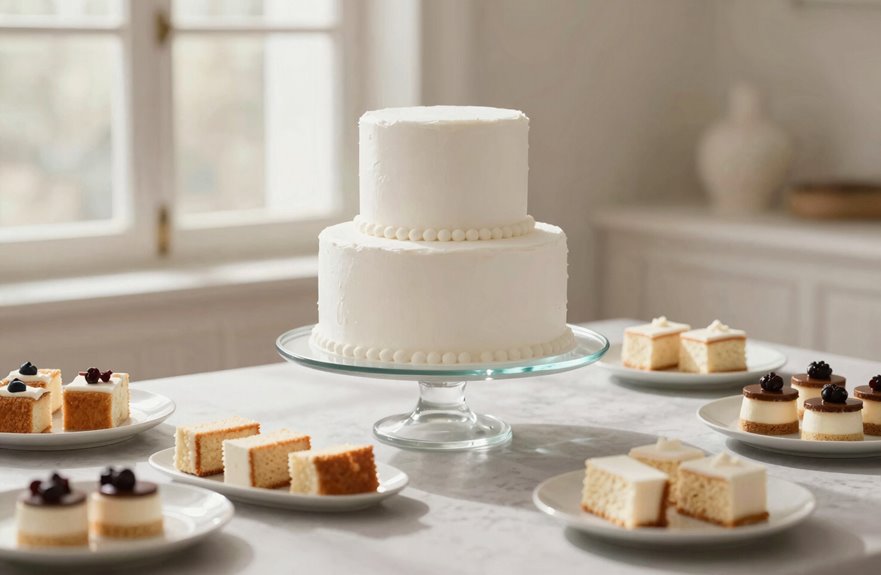
I need to determine whether you’ll want finger-thin slices or hearty dessert portions based on what else you’re serving. The choice between these two cuts directly affects how much cake you’ll need for your 50 guests.
Let me explain how portion sizes, event style, and final serving counts work together so you can order confidently.
Portion Size Differences
Why does the same cake feed anywhere from 25 to 50 guests? It all comes down to portion size differences.
A finger portion—about 1 inch wide by 5 inches tall—doubles my servings compared to a dessert portion at 2 inches wide by 5 inches tall. When hosting and the cake stands alone, I serve dessert portions to keep everyone fully satisfied.
However, when building a dessert spread for guests to explore, I switch to finger portions, which significantly boosts my total servings.
My practical rule is to start with finger portions for dessert buffets where variety creates a welcoming, abundant feel. I size up to dessert portions only when the cake is the main feature of the sweet course.
This strategic choice allows my cake to stretch further.
Event Type Considerations
Most events fall into one of two categories: either the cake is the star or it is one of many options. This distinction shapes your serving sizes significantly.
When the cake stands alone as the primary dessert, I recommend dessert portions—those generous 2-by-5-inch slices that fully satisfy. You’ll want about one per guest.
In contrast, when your celebration features a dessert buffet or multiple sweet options, I switch to finger portions. These slender 1-by-5-inch slices allow guests to sample everything without the risk of overcommitting.
| Event Style | Portion Type | Serving Sizes | Per Guest |
|---|---|---|---|
| Cake-centric celebration | Dessert portion | 2″ × 5″ | 1 |
| Multiple desserts offered | Finger portion | 1″ × 5″ | ~0.75 |
| Wedding reception | Wedding slice | ~1″ wide | 1 |
| Casual gathering | Flexible | Either | Varies |
| Elegant buffet | Finger portion | 1″ × 5″ | ~0.75 |
For fifty guests, that’s roughly fifty dessert portions versus twenty-five finger portions. The rhythm of your event determines which approach fosters connection among attendees.
Serving Count Impact
The size you choose directly influences the number of people your cake feeds. Let’s look at finger portions versus dessert portions to help you make this decision.
A finger portion measures about 1 inch by 5 inches, ideal for dessert spreads where you want everyone included without overindulging. A dessert portion is 2 inches wide, necessary when the cake is the main attraction.
Your serving chart is essential here. A standard 10-inch round cake yields 38–45 finger portions but only 28–38 dessert portions.
The same cake provides different serving counts.
When planning for fifty guests with multiple sweets, finger portions are a smart choice to stretch servings. If the cake is the only dessert, dessert portions will ensure everyone is satisfied.
I always round up and include extra treats so that no one feels overlooked.
Round vs Square: Which Shape Serves More People?
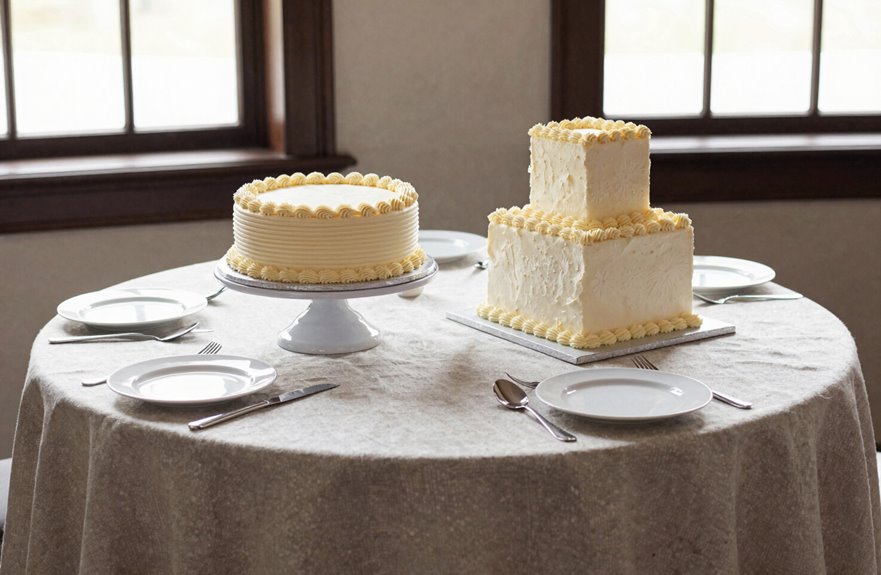
When deciding between round and square cakes for an event, I prioritize yield. Square cakes provide more servings from the same pan area because straight edges minimize wasted space.
We want to feed everyone efficiently without overspending.
- Square cakes maximize every inch with clean, even cuts.
- Straight edges make portioning feel effortless and professional.
- More servings per tier allows us to accommodate the entire guest list.
Square layers also enable mixing shapes for visual interest while still meeting that fifty-person target. When hosting, it’s important that everyone feels included and satisfied.
Choosing square is a practical decision that helps ensure no one leaves hungry and that everyone feels welcome at our table.
What Size Round Cake Feeds 50 Guests?
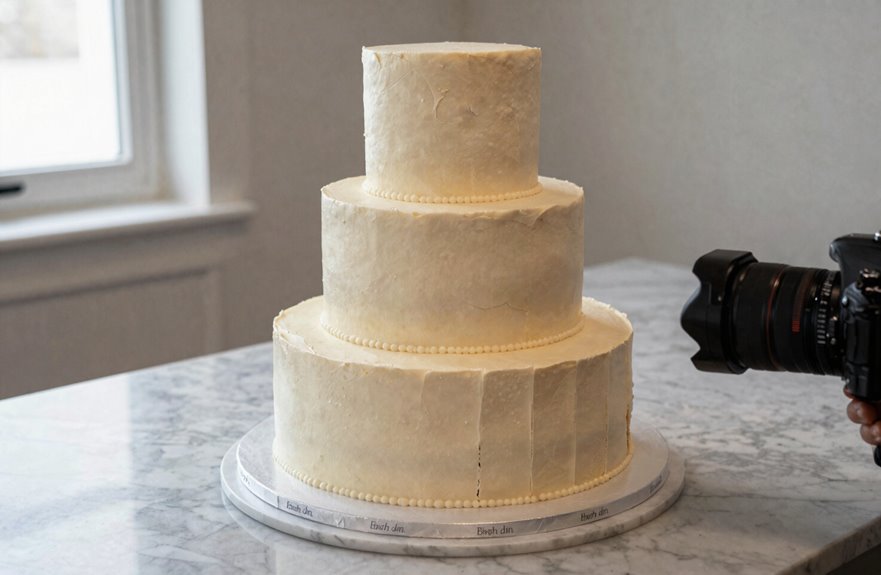
How do I determine which round cake will feed all fifty guests? It depends on how we’re slicing and the type of party we’re hosting.
Here’s what I’ve learned about round cake servings:
| Cake Size | Standard Slices | Wedding Slices |
|---|---|---|
| 10-inch round | 28–38 servings | 35–45 servings |
| 12-inch round | 38–56 servings | ~50 servings |
A 12-inch round typically provides about 50 servings, especially with wedding-style cuts that are narrower at 1 by 2 inches. Round cakes slice evenly from the center outward, ensuring fair portions for everyone.
If we’re offering multiple desserts, I recommend the 12-inch cake, but expect closer to 40–45 servings, allowing other treats to help reach fifty.
Square Cake Dimensions That Serve 50 Exactly
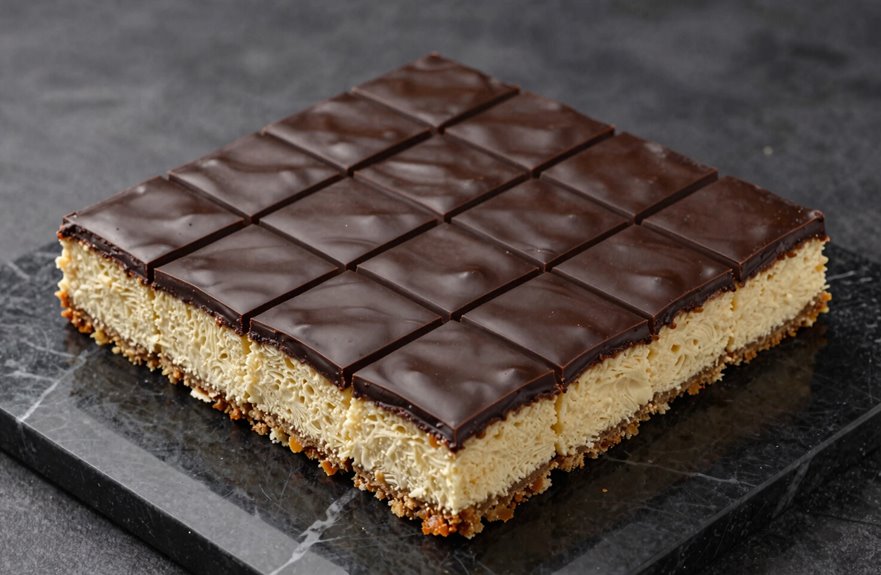
I’ll walk you through the square options that serve fifty portions without leaving you short or with excess. A single twelve-inch square tier provides exactly fifty servings when you cut standard two-inch squares.
Ten-inch rounds fall short, while fourteen-inch tiers exceed the target. For a multi-tier presentation, a ten-inch stacked on a fourteen-inch square meets the base count.
Additionally, adjusting your slice dimensions or cutting style can fine-tune your numbers without changing pans.
Single-Tier Square Options
Why choose round when a single-tier square cake offers clean lines and precise portions? Square tiers provide a modern aesthetic while allowing for efficient serving.
For exactly 50 servings, sizing is crucial. I typically opt for a 14×14 inch tier sliced into 2×2 inch portions, resulting in 49 to 50 servings.
If you need flexibility, a 12×18 inch arrangement works beautifully for achieving a square grid.
Here’s what we bakers rely on:
- A 14×14 inch square yields those clean 49 to 50 servings with standard cuts.
- A 16×16 inch tier allows for trimming down from 64 to your desired number.
- A 12×18 layout fits the single-tier look while hitting your target precisely.
Welcome to the square cake club.
Standard Slice Dimensions
Square cakes offer mathematical precision once you understand how slice dimensions translate to headcounts. A standard 12-by-12-inch square, sliced into 2-by-2-inch pieces, yields 36 servings, falling short of our goal.
To achieve 50 servings, you need two such cakes or a 14-by-14-inch square.
The serving size is crucial. A half sheet cake (12-by-18 inches) cut into 2-by-3-inch portions delivers about 60 servings, providing flexibility without waste.
This single-cake solution is ideal for gatherings where you want to accommodate everyone without shortages.
For precise planning, I use cake calculators that translate dimensions into guaranteed headcounts. Matching your serving size to your crowd eliminates guesswork and ensures everyone is taken care of when hosting.
Alternative Cutting Styles
How do you hit that perfect 50-serving mark with square cakes? Alternative cutting styles help achieve the exact serving size your crowd needs.
- A 12×12 inch square, sliced into 2.5×2.5 inch portions, gives 20 servings per layer; stack two or three layers for additional servings.
- Two 10×10 inch squares cut into diamond portions yield about 74 servings; trim carefully to reach 50.
- Pair two 9×13 inch quarter-sheets, cut into 2×2.5 inch pieces, for 48–60 servings depending on how generously you slice.
Square cakes allow for creative geometry in serving sizes. Whether hosting close friends or a larger gathering, these dimensions ensure everyone can enjoy dessert.
How Tall Should Your Cake Be for 50 Servings?
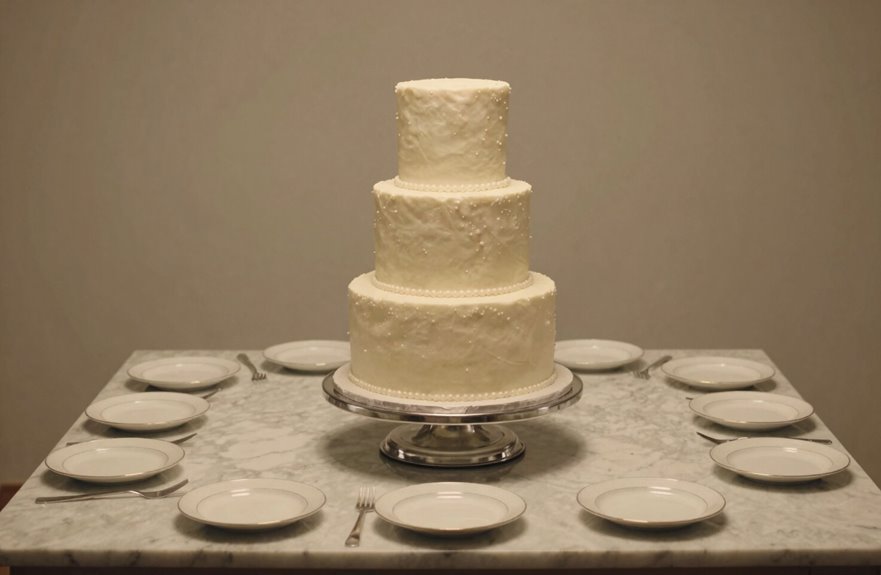
What height should you aim for when feeding 50 guests? Three to four inches of total cake height is ideal for most gatherings.
A standard 12-inch round with three layers provides approximately 38–56 servings, which is suitable for your crowd. I typically build mine to about four inches tall, consisting of three cake layers with frosting in between.
If I opt for a smaller size, like a 10-inch round, I pair it with a sheet cake to reach 50 servings without making it too tall. Some prefer a dramatic six-inch tall cake, but slicing becomes difficult beyond four inches.
Guests appreciate generous portions they can enjoy, rather than intricate designs. Sticking to that classic height ensures everyone is served comfortably.
Single-Tier vs Multi-Tier: What’s Right for Your Event?
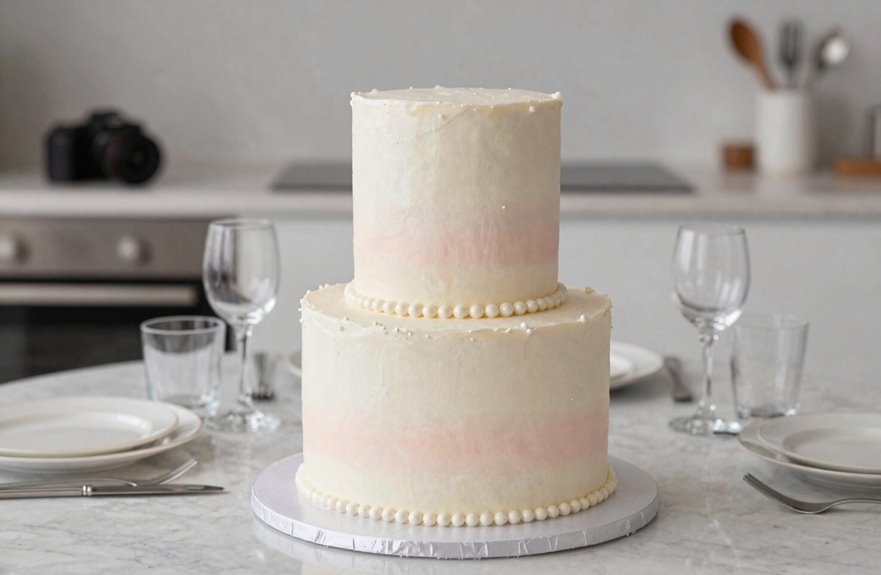
Consider whether you need a practical single-tier cake or a striking multi-tier design for your 50 guests. A single 12-inch round can accommodate the capacity effectively.
Stacked tiers, however, offer a dramatic visual impact. I will break down how each option serves your crowd and influences your event’s aesthetic.
Single-Tier Serving Capacity
Most events benefit from a single-tier cake when serving fifty guests, provided you pick the right size. A 12-inch round cake typically delivers the necessary serving count—about fifty portions when sliced 1 inch wide and 2 inches deep.
If you want extra for seconds, a 14-inch round yields roughly sixty-five servings. Square cakes work well too; an 11×11-inch square gives you about forty-six uniform portions.
Consider the following:
- A 10-inch round serves 28–38 guests, so you’ll need something larger for your crowd.
- Square single tiers maximize your serving count with cleaner edges and less waste.
- When cake isn’t the only dessert, cut smaller 1×4 inch slices to stretch one tier further.
Planning ahead is essential for your event.
Multi-Tier Visual Impact
When you’re feeding fifty guests, you can choose between one impressive tier or a stacked arrangement that turns heads. I prefer multi-tier designs for that centerpiece moment, creating something that draws everyone together and is worth gathering around.
A practical approach is a two-tier 6″ plus 8″ setup, which serves roughly 36 people. Pair it with a kitchen sheet cake to accommodate all fifty guests without sacrificing visual impact.
You achieve a stunning display for photos and the cutting ceremony while your caterer handles the rest in the back. Round tiers work well for classic slicing, while square tiers maximize portions if you’re tight on cake.
In either case, a multi-tier silhouette signals celebration and fosters a shared experience.
Two-Tier Cake Combinations That Serve 50
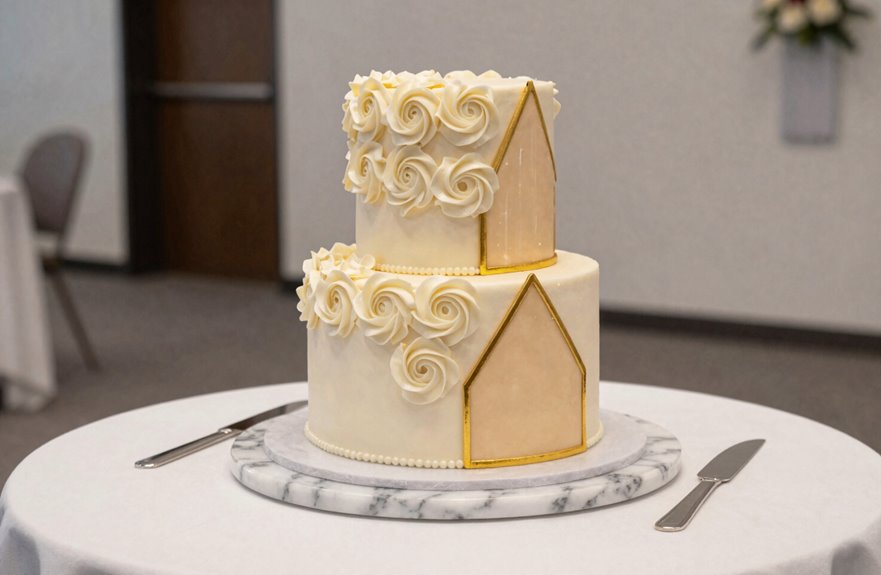
What size tiers should you choose when feeding 50 guests? Two combinations work well for this number of guests.
An 8-inch plus 10-inch tier provides approximately 62 servings, allowing for seconds or extra guests. A 6-inch plus 8-inch combination yields about 60 servings, ideal for a more intimate setting.
- 8″ + 10″ tiers offer generous servings with space for unexpected guests.
- 6″ + 8″ tiers create a cozy, exclusive feel for gatherings.
- Add a sheet cake behind the scenes to ensure everyone is satisfied.
I recommend the larger pairing to avoid running short on cake. Having enough cake helps to create a welcoming atmosphere, making sure all guests feel included.
Three-Tier Cakes: When 50 Guests Deserve a Showpiece
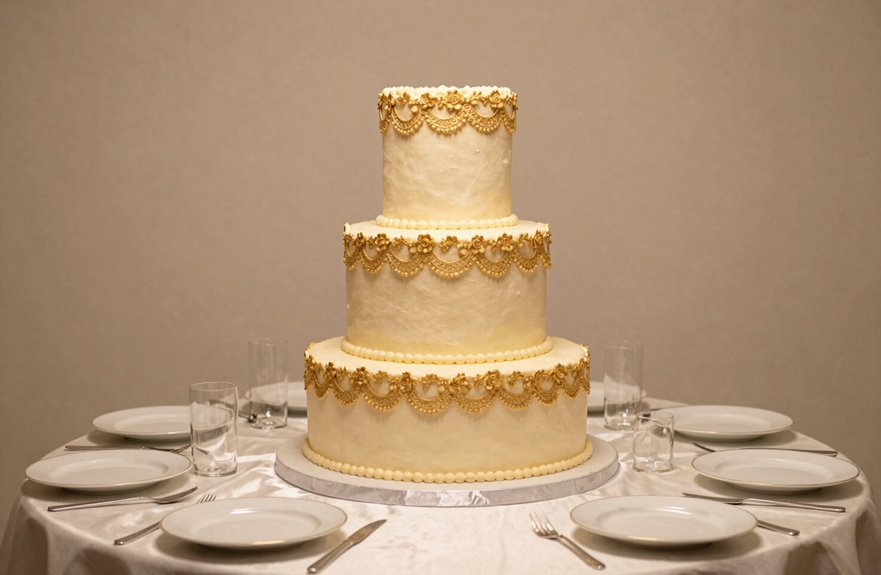
I recommend a 6″, 8″, and 10″ three-tier configuration when you want real visual impact for 50 guests, as this setup yields roughly 36–74 servings depending on how you slice it.
You need to decide whether your display cake stands alone or gets support from a kitchen sheet cake if you’re concerned about portions or variety.
Let’s break down the sizing math, serving counts, and when to keep that extra dessert hidden in the back.
Three-Tier Cake Sizes
Why settle for ordinary when you’re hosting 50 guests? Three-tier cake sizes can create the centerpiece your celebration deserves.
The sweet 6″ + 8″ + 10″ combo yields 36–74 servings, depending on how you slice it. Wedding-style portions provide approximately 72 servings, ideal for your crowd with room to spare.
If you prefer generous birthday cuts, you’ll land around 60–70 servings instead.
For extra drama, an 8″ + 10″ + 12″ setup delivers 74–118 servings, ensuring everyone is satisfied.
- 6″ + 8″ + 10″ tiers balance elegance and abundance.
- 8″ + 10″ + 12″ tiers maximize your showpiece potential.
- Pair with sheet cakes for variety and guaranteed coverage.
Your guests will appreciate being part of something truly special.
Serving Count Guide
How do you ensure 50 guests leave impressed? I plan three-tier combinations that deliver generous servings with visual impact.
A 6″ + 8″ + 10″ arrangement yields roughly 74 servings, while an 8″ + 10″ + 12″ setup provides about 118, both comfortably covering your crowd with a buffer for seconds.
Here’s how standard tiers break down:
| Tier Size | Servings | Best For |
|---|---|---|
| 6″ round | 12 | Top accent |
| 8″ round | 24 | Middle balance |
| 10″ round | 36–38 | Base foundation |
I always add 25–50% extra servings as a safety margin. Guests remember running out, not abundance.
Straight center-to-edge cuts optimize every tier’s yield. To ensure coverage without stress, I pair a three-tier display with sheet cake backup.
Your celebration deserves that certainty.
Display Versus Kitchen
Where does the real cake end and the illusion begin? Breathtaking three-tier displays and smart kitchen cakes work together to feed your crowd without breaking your budget.
When planning for fifty guests, I prefer using cake sizes like 6″ + 8″ + 10″ tiers. That combination delivers about 74 wedding-style servings, which provides ample portions for your party, ensuring everyone feels included in something special.
Here’s how I make it work:
- Pair a showstopping three-tier display with a hidden half-sheet kitchen cake for extra portions.
- Cut display tiers into elegant 1″ × 2″ × 4″ slices to stretch servings beautifully.
- Account for staff, dessert tables, and guests who might skip cake when finalizing cake sizes.
You can create an instagram-worthy moment while ensuring every guest enjoys a satisfying slice.
Sheet Cake Servings: The Budget-Friendly Option for 50
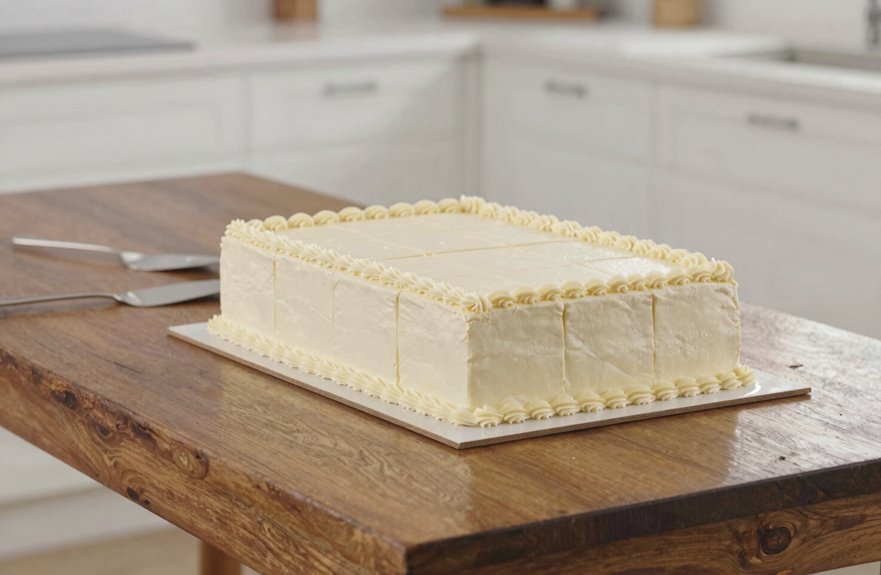
What if you need to feed 50 guests without draining your budget? Sheet cake servings are a practical choice for celebrations that welcome everyone without the premium price tag.
| Sheet Size | Dimensions | Typical Servings |
|---|---|---|
| Quarter | 9×13 inches | ~24 |
| Half | 12×18 inches | 24–36 |
| Full | 18×26 inches | 117+ |
For a gathering of 50, pairing a 12×18 half sheet with a smaller display cake is effective. This combination stretches your dollar further than round layers.
Adding a kitchen cake, which are simple sheet cakes cut behind the scenes, ensures that everyone gets a serving. Using 2×2 or 2×3 inch slices, you can easily achieve 50–60 servings.
Celebrating smart is essential.
How to Cut Sheet Cake for 50 Even Portions
I’ve found that even the best sheet cake won’t serve 50 guests if you don’t cut it right. Smart slicing makes all the difference between hungry friends and satisfied ones.
Here’s what works for our crowd:
- Use 2×3 inch cuts to boost your total servings without anyone feeling shortchanged.
- Pair two half-sheet cakes (12×18 inches) to guarantee 50 portions with beautiful presentation.
- Stack your sheets with a display tier so everyone feels part of something special.
A full sheet (18×26 inches) can deliver over 100 servings with standard 2×2 cuts, providing ample servings. Thoughtful cutting ensures that every person feels included at our table.
Wedding Cake Math: Smaller Slices, More Servings
I calculate wedding cake servings using slices that measure one inch wide, two inches deep, and four inches high, which stretches portions compared to standard party cuts.
A 6-inch tier yields around 12 servings, an 8-inch tier roughly 24, and a 10-inch tier about 38. Combining tiers dramatically multiplies your total count.
A multi-tiered design can feed 50 or more guests, while a single layer of the same diameter might fall short.
Wedding Slice Dimensions
Why do wedding cakes stretch further than you might expect? It’s all about wedding slice dimensions.
Wedding slices are smaller than birthday cuts—typically 1 inch wide by 2 inches deep by 4 inches high. This compact sizing allows us to serve more guests from each tier.
- A 6-inch round yields approximately 12 servings, while a 12-inch delivers around 56.
- Two-tier setups (8″ + 10″) provide roughly 62 wedding-sized portions.
- Straight center-to-edge cutting maximizes your yield.
When planning, it’s important to consider how to celebrate together without waste. These dimensions indicate that your 50-guest celebration requires less cake than expected.
I typically count my guests plus a few extras for seconds, then match my tiers to these precise measurements.
Serving Count Differences
How can a single cake serve two different crowds? It’s about the serving count differences between wedding and birthday celebrations.
I slice wedding portions smaller, about 1 inch wide, compared to the 2-inch birthday wedge. For a 10-inch round cake, that means 35–45 wedding servings versus 28–38 birthday ones.
You can stretch the same cake further because guests prefer smaller slices when grazing at a dessert table.
Stacking tiers enhances this calculation. A modest 6-inch plus 8-inch combo yields roughly 36 servings, while an 8-10-12-inch trio delivers about 118.
This approach maximizes efficiency.
When planning alongside other sweets, consider using wedding counts. This strategy helps hosts avoid over-ordering, as guests tend to sample a variety rather than take one large piece.
Birthday Party Slices Vs Wedding Slices for 50
Whether you’re planning a casual celebration or an elegant reception, the way you slice the cake significantly impacts your event.
Birthday party slices tend to be generous and welcoming—about 1-inch wide and 4-5 inches tall—while wedding slices are deliberately petite and refined. For 50 guests at a birthday party, a 12-inch round cake would yield 50-60 hearty portions.
In contrast, that same cake only serves 38-56 with thinner wedding-style cuts.
Here are the key details:
- 12-inch round cakes serve 50-60 birthday portions but only 38-56 wedding-style slices.
- 10-inch rounds provide 28-38 birthday cuts compared to 35-45 wedding servings.
- Sheet cakes offer 117 portions, making them ideal for relaxed gatherings where guests might want seconds.
How Much Cake for 50 With Other Desserts?
When planning a dessert table alongside cake, I typically scale back to about 0.75 servings per guest, which amounts to roughly 37 portions for 50 people. This allows for a smaller, attention-grabbing cake while complementing the spread with other sweets.
I often choose a kitchen sheet cake to provide the extra servings without overshadowing the main display piece.
Dessert Table Ratio
Why stress over a full-sized cake when you’re planning a dessert spread? I recommend scaling back when offering variety.
For fifty guests with other sweets available, I plan 0.75 cake servings per person, which totals 37–38 servings. A half sheet cake or 12-inch round works well here.
Here’s what I’ve learned about dessert table balance:
- Round up to 50–60 servings to avoid shortages.
- Mix sizes: pair a 6-inch (12 servings) with an 8-inch (24 servings) for visual interest.
- Let guests sample everything without overindulging in cake alone.
This approach keeps your spread abundant without unnecessary waste. It creates an experience where everyone can choose how they want to indulge, whether that’s a small slice of cake or a full plate of treats.
Smaller Cake Option
How do you prevent cake from dominating a dessert spread? Scaling down works effectively when offering multiple treats alongside cake portions.
When planning for 50 guests with other desserts, I aim for 35–45 modest cake portions from a 10-inch round, or 24–36 servings from a half sheet.
A 12-inch round provides about 56 wedding-style slices, which is often too much when brownies and cookies are included. Pairing two quarter sheets for that same 24–36 range allows for variety without excess.
I calculate roughly 0.75 servings per guest when the dessert table is crowded with options.
This translates to about 37 cake portions for 50 people, ensuring everyone feels included while avoiding the need to box up leftover cake at the end of the event.
How Much Cake for 50 as the Only Dessert?
Planning a celebration where cake is the only dessert means you’ll want to ensure every guest gets their fill without running short.
When cake is your only sweet offering, you’ll need roughly 50 standard servings—one per guest—for complete satisfaction.
Here is what works best for gatherings:
- A 12-inch round cake delivers 50–56 servings, perfect for covering everyone.
- Combining an 8-inch and 10-inch tier reaches about 50 generous portions.
- A full sheet cake (18×26 inches) yields 117+ servings when you want abundance without worry.
Ordering slightly more than your headcount is advisable. When cake is the star, no one wants empty plates, and this approach ensures everyone is included in the shared moment of sweetness.
Gluten-Free and Allergen-Free Cake Options for 50
I will choose allergen-safe ingredients that replace wheat and common triggers without sacrificing structure or flavor.
I will adjust portion sizes since gluten-free cakes often yield fewer servings per tier than traditional recipes, so I am planning extra layers or a backup sheet cake to reliably serve 50.
I will also prevent cross-contamination by keeping all pans, utensils, and frostings completely separate from standard bakery tools.
Allergen-Safe Ingredients
When baking for fifty guests with dietary restrictions, I start by choosing a certified gluten-free cake base and building from there, whether that’s a 12-inch round yielding 38–50 servings or pairing it with a 9×13 sheet cake to ensure everyone is accommodated.
I keep my allergen-free cake safe by using dedicated bakeware and separate utensils to prevent cross-contact. I select dairy-free and egg-free options, then color-code labels so everyone knows they are included.
- Use certified gluten-free, dairy-free, and egg-free bases with clear labeling.
- Maintain separate utensils and dedicated bakeware to avoid cross-contact.
- Pair vegan buttercream or dairy-free frosting with color-coded identification.
Creating a welcoming space for every guest is essential. Serving this thoughtfully means I am not just feeding fifty people; I am making sure everyone feels included.
Portion Size Adjustments
Once I have secured safe ingredients and set up separate prep stations, I’m ready to calculate portions. For fifty guests, I count gluten-free servings by finished product, not pan size, since these cakes vary in density.
A standard 10-inch round yields 38–50 servings; however, I will likely need two tiers or a sheet cake to meet my target.
I will bake a separate 11×15 gluten-free sheet cake to prevent any mix-ups with regular options. If I am serving both kinds, I will label them clearly and aim for 50 total portions rather than splitting 60/40 unless everyone is gluten-free.
I always run my numbers through a cake calculator, selecting “Standard” or “Small/Allergen-Free” to determine exact servings. This ensures that everyone receives a portion.
Cross-Contamination Prevention
Where does cross-contamination pose the greatest risk? It most often occurs when we reuse utensils or bake on shared racks without proper cleaning.
For fifty guests, cross-contamination prevention is essential; nobody wants to feel excluded from the celebration.
- Designate separate prep areas with color-coded tools and fresh parchment for gluten-free and allergen-free cakes.
- Label every cake clearly and maintain strict ingredient trace lists so guests trust what they are eating.
- Communicate openly about risks while offering certified alternatives that make everyone feel welcome.
I bake allergen-free options in cleaned spaces with dedicated bowls, and I always keep emergency protocols ready. Prioritizing safety ensures that every guest belongs at your table.
Does Vegan Cake Change Portion Sizes?
Why would vegan cake require different portion planning? Most vegan cakes use plant-based fats and aquafaba instead of eggs, so standard serving guidelines still apply—roughly 1-by-2-by-4 inch slices for wedding-style portions.
Some vegan recipes can turn out denser or moister than traditional cakes. This may affect the number of servings if the height differs, even when slice dimensions remain the same.
For fifty guests, an 8–10 inch round typically yields 24–38 servings, while a 9×13 sheet cut into 2×3 inch portions gives about 24–36. To achieve a polished presentation, pairing a smaller display cake with sheet options behind it can work well.
This approach allows you to meet your target without altering slice sizes.
How Much Batter Do You Need for 50 Servings?
I will guide you through calculating how much batter you’ll need for 50 servings without creating excess. We will cover the math behind batter volume, which pan sizes provide those portions, and how to adjust your favorite recipe accordingly.
By the end, you will know whether to use a 14-inch round pan or a sheet pan, and how many cups of batter to prepare.
Batter Volume Calculations
How do you translate “50 servings” into cups of batter? Let’s go through batter volume calculations so you can confidently feed your crowd.
- Two 9×13 layers need roughly 16 cups total (8 cups each).
- One 12×18 half-sheet requires 22–24 cups per layer.
- Rise and pan depth directly affect your final yield.
For 50 people, you’re targeting 40–50 cups of batter across two standard layers. A 2-inch-deep pan with proper batter rises beautifully, providing the generous height guests expect.
I use the batter chart method myself; it’s reliable and helps eliminate guesswork. Whether you choose quarter sheets or half-sheet pans, you will achieve the desired results with these numbers in mind.
Pan Size Selection
What pan size delivers 50 servings without excessive leftovers? A full sheet cake provides around 117 servings, so it’s more effective to choose smarter combinations.
A single 12-inch round yields about 38 servings, which may leave your guests wanting more. Pairing that 12-inch round with an 8-inch round or a 9×13 sheet cake helps fill the gap.
Two quarter-sheet cakes (9×13 each) result in roughly 48 servings, which is sufficient for most gatherings.
For batter planning, two 9×13 sheets require around 4–6 cups per pan, totaling 8–12 cups overall. Whether you opt for rounds or sheet cake options, you’re ensuring enough to accommodate everyone, minimizing waste and avoiding shortages.
Recipe Scaling Methods
Where do you start when scaling up for 50 servings? Begin with the math, and you have two solid paths to choose from.
- Use the equation method: multiply your pan’s width, length, and height, then adjust for rise ratio and cubic inches per cup.
- Check a batter chart for pre-calculated yields per pan size and height.
- Test your recipe first; rise and density can significantly affect final portions.
For a classic two-layer sheet, plan about 16 cups of batter per 12×18 inch layer, so 32 cups total is needed. Keep in mind that your serving size matters: generous 1.25-inch slices result in fewer servings, while standard 1-inch cuts yield more.
A quick test bake can help avoid issues on the last day.
Baking Time Adjustments for 50-Person Cakes
Why does timing matter when scaling up? When baking for fifty people, larger cakes require different approaches.
A 16-inch round serves 72–85 guests, while a 14-inch covers 55–65. To meet my numbers without waste, I often pair these with a sheet cake.
Timing becomes tricky; large sheet configurations need longer baking times, and I sometimes run multiple batches to keep layers uniform.
I use 350°F as my baseline, but larger sheets sometimes require lower temperatures or extended baking times to avoid underbaked centers. I always test with a toothpick, as batter density and pan depth mean bake times vary.
For even cooling and stacking, I bake two layers or combine a display cake with a kitchen sheet cake portion.
How to Prep Pans for Large Cake Batches
I’ll guide you through preparing your pans for large cake batches, starting with selecting the right sizes for your crowd.
Next, I’ll show you how to calculate the amount of batter you’ll need so nothing overflows or falls short.
Finally, I’ll address the essential prep steps—greasing, flouring, and lining—that prevent large sheets from sticking or cracking when serving fifty.
Pan Size Selection
How do you choose the right pan when baking for fifty people? It’s essential to match your sheet cake to your crowd.
- Consider a full sheet (18×26) for simplicity, or stack two half sheets for height and easier handling.
- Plan for two layers with frosting between to maximize servings and create visual appeal.
- Pair a smaller display cake with a bulk kitchen sheet cake to feed everyone without added stress.
For fifty guests, half sheet pans are a practical choice. They are manageable yet generous, especially when doubled.
Adding heating cores or nails can prevent doming, and a 2-inch depth ensures even baking. This method will enhance your baking skills significantly.
Batter Volume Calculation
What’s the best way to avoid a mid-bake panic when scaling up for fifty guests? It starts with a solid batter volume calculation that considers how your specific recipe behaves.
I use this equation: (Width × Length × Height) divided by rise ratio, then convert cubic inches to cups using 14.4 cubic inches per cup.
For a two-layer 12×18 sheet cake, I estimate about 16 cups per layer, though I will test my actual recipe first since rise ratios vary.
| Cake Type | Rise Ratio | Batter per 12×18 Layer |
|---|---|---|
| Butter cake | 1.0× | ~16 cups |
| Sponge cake | 1.5× | ~11 cups |
| My tested recipe | Your result | Your yield |
If I’m short, I have a second batch ready. This approach ensures I stay organized in the kitchen.
Coating and Lining
Nothing ruins a batch faster than a cake that won’t release, so I don’t skip the prep. When baking for fifty, stuck layers are frustrating and can lead to costly mistakes.
I always line my pans with parchment paper first, then spray the parchment and sides for clean edges each time.
For these large batches, I need pans with real depth—two inches minimum—or I’ll watch batter overflow and waste time.
Here’s what helps me when scaling up:
- Pre-measure and label every batter portion so each sheet bakes evenly.
- Buttercream between layers seals everything without disturbing your lining.
- Apply that crumb coat early to lock in edges before final frosting.
Your future self will appreciate it when every layer slides out perfectly.
Cooling and Stacking Cakes for 50 Guests
Once your cakes come out of the oven, allow them to cool completely on wire racks before stacking. Warm layers can crack and slide, which can create a mess.
Patience during this step is crucial for a successful presentation.
For fifty guests, pair a 10-inch round cake with a sheet cake or add an 8-inch tier. This ensures everyone is included, plus there’s a little extra for the team.
Once cooled, wrap each layer in plastic wrap to lock in moisture, then chill them until firm. Cold cakes stack cleanly and transport without frosting squish.
Trim straight edges with a serrated knife for even portions. Together, we will build something stable, generous, and worthy of celebration.
Will Your Fridge Fit a 50-Person Cake?
How much space does a cake for fifty actually demand? I’ve learned the hard way that fridge capacity can significantly impact your celebration plans.
A 12-inch round cake measures about 14 inches across with a board, while a 14-inch version requires even more space. Two full sheet cakes take up roughly 18 by 26 inches of real estate.
Tiered designs also need vertical clearance.
Here are some tips for fitting your creation:
- Measure your shelves before you bake; height is as important as width.
- Remove fridge drawers temporarily to create flat, stable space.
- Consider assembling tiers on-site if your fridge capacity won’t accommodate them.
Checking dimensions early can help you avoid last-minute stress.
How to Transport a Cake for 50 People
Transporting a cake for fifty guests requires careful planning. I secure my cake in a rigid box with a tight lid and use a non-slip mat underneath to prevent sliding during the drive.
For longer trips, I transport unfilled layers separately and assemble them upon arrival. This approach maintains stability and reduces stress.
If you’re using a tiered display, I suggest baking a kitchen sheet cake for transport, while keeping your showpiece intact until serving. This allows for a beautiful presentation without risking a collapse on the road.
I also ensure that everything is carried on a completely flat surface, as any tilting could damage your hard work. These steps can help you feel more confident in your cake transportation skills.
Circle or Grid? Wedding Cake Cutting for 50
I want to show you how the shape of your slices affects your head count.
The Circle Cut Method curves your knife through the tiers to create elegant wedges, while the Grid Cut Method scores straight lines across the surface for uniform rectangles.
I will explain how each approach influences your serving math for fifty guests.
Circle Cut Method
When deciding between the circle cut method and the grid approach for a 50-person wedding cake, consider precision and portion yield. The circle cut method provides the classic wedge presentation that is commonly expected at weddings.
Straight cuts from the center to the edge create uniform wedges, and dividing each radius into equal portions ensures consistency.
A 12-inch round cake typically yields about 56 servings using this method, which is suitable for your 50 guests with a small buffer.
Here are the benefits of this approach for your celebration:
- Creates elegant, uniform wedges that photograph well
- Simplifies serving for your catering team or loved ones
- Maintains traditional wedding cake aesthetics that guests recognize
Adding a small kitchen cake can help alleviate concerns about portions, while the circle method keeps the process straightforward.
Grid Cut Method
How does the grid cut method compare when serving 50 guests? It creates clean, uniform portions that ensure everyone feels welcomed at your celebration.
The grid cut method works by slicing straight across your cake and then cutting perpendicular lines to form even squares. For round wedding cakes, I start from the center and map rows and columns on top before cutting.
You’ll want 1×1 or 1×2 inch portions to achieve approximately 50 servings.
I always grab my sharpest serrated knife and begin at the center for round tiers or make straight cuts across square cakes. This ensures every piece matches perfectly.
Experienced hosts recommend adding 10–15% extra servings. This way, your guests will have options, and you can avoid the situation where someone is left empty-handed.
Essential Tools for Cutting Cake for 50
Why struggle with uneven slices when the right tools make serving 50 guests straightforward? Cake serving becomes effortless when you’re properly equipped.
Whether you’re working with a 12-inch round or a multi-tier display, the right instruments ensure every guest feels included in the celebration.
The right tools transform cake serving from stressful to effortless, ensuring every guest feels included in the celebration.
Here is what I always keep on hand:
- A sharp serrated knife for clean, confident cuts through any frosting or filling.
- Warm water and a cloth to wipe the blade between slices; this prevents crumbling.
- A cake marker or ruler to guide straight center-to-edge cuts for consistent 1-by-2-inch portions.
With these essentials, you’ll slice through that 14-inch round or tiered setup like a pro. Your guests will appreciate the care you’ve taken, and everyone will receive an evenly sized piece.
What to Do If Your Cake Runs Short
Even with careful planning, I’ve found myself staring at a cake that’s clearly not going to stretch far enough.
When faced with this situation, I consider two practical paths: executing an emergency backup plan and making strategic portion size adjustments.
I will explain how I handle both scenarios to keep guests satisfied without anyone noticing the math didn’t quite work out.
Emergency Backup Plans
What happens when your carefully calculated cake disappears faster than expected? A solid backup plan keeps the celebration from crumbling.
Here’s my emergency kit:
- Order a kitchen sheet cake (13×18 inches) yielding approximately 74 servings as your safety net.
- Build a 10–15% overage into your baker’s contract for extra coverage.
- Arrange proper insulated transport or refrigeration so your reserve stays fresh.
For fifty guests, I always secure 60–65 servings rather than cutting it close. I specify this buffer upfront with my baker, ensuring there are extra slices ready without scrambling.
When we’re hosting together, everyone is included, and no one knows you planned for the unexpected. This approach ensures smooth celebrations.
Portion Size Adjustments
Despite my backup plans, I have faced moments where the cake I counted on looked alarmingly small once guests started lining up.
When cake servings run tight, I act quickly. I swap a 12-inch round for a half or full sheet cake, boosting portions instantly.
Sometimes, I shift guests to slim 1-inch wedding-style slices, stretching what I have without anyone feeling shorted. I have learned to deploy a cupcake tower or dessert table alongside the main cake so nobody leaves empty-handed.
I also call my baker immediately, recalculating cake servings based on actual cut styles—center-to-edge for rounds, straight or diagonal for squares. These adjustments help ensure every guest is included in something sweet we have built together.
How to Use Leftover Cake From 50 Servings
Why let good cake go to waste when there are plenty of options? I plan for 10–20% leftovers when hosting fifty people, giving my team seconds or take-home treats.
If desserts abound, I still stash 5–10 slices; better safe than sorry.
Here’s how I make the most of every crumb:
- Chill smart: I refrigerate frosted cake for up to 5 days or freeze wrapped layers for 1–2 months.
- Wrap tight: I seal individual slices in plastic and then place them in airtight containers to keep freshness locked in.
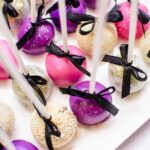
- Transform creatively: I crumble leftovers into trifles, cake pops, or layered parfaits.
We are all in this together, building celebrations that honor both our guests and our resources. Sharing tomorrow’s sweet surprise fosters a sense of belonging.
Cost Per Serving: Round vs Sheet vs Tiered
I’ve learned that saving leftovers only matters if I plan the right cake size from the start, and that begins with knowing what each style costs me per slice.
Round cakes offer flexibility; a 10-inch yields 28–38 birthday servings or 35–45 wedding-size portions, though the cost per serving is higher than with sheets.
Sheet cakes stretch my budget further; a half-sheet delivers 24–36 servings at a lower cost per piece, and a full sheet covers 117 servings for larger crowds.
Tiered cakes look stunning; a two-tier provides around 36 servings and a three-tier increases that to 74, though I pay for the visual impact.
For my group of fifty, I’ll choose either two rounds or a half-sheet alone, or a small tiered display plus sheet cake for additional servings.
DIY Vs Professional Cake for 50 People
I’ve considered the trade-offs between baking myself and hiring a professional for fifty guests. A DIY approach can significantly reduce costs, especially with sheet cakes.
However, I have found it challenging to achieve consistent serving sizes and polished decorations. Professional bakeries are more expensive upfront, yet they ensure precise portions and a flawless finish that impresses guests.
DIY Cake Costs
How much could you actually save by baking your own cake for 50 guests? You’ll spend roughly $30–$60 on ingredients versus $200–$400 professionally, but cake servings can get tricky when you’re doing the math yourself.
A 12-inch round gives you 56 servings, while sheet cakes provide more servings per dollar. However, you’ll need to bake multiple cakes to serve 50 people.
- Sheet cakes provide more servings per dollar than fancy rounds.
- You’ll juggle pan sizes, bake times, and stacking materials on your own.
- Be cautious of waste from generous cutting at your own party.
When you factor in your time, tools you’ll need to buy, and the stress of nailing portion sizes, it may not be as cost-effective as it seems. Sometimes, it’s best to let a professional handle the cake.
Professional Bakery Options
The professional route simplifies serving 50 people, though it comes at a cost. Bakers typically recommend a two-tier cake, such as an 8-inch plus 10-inch, which provides approximately 56–74 servings.
This is sufficient for our crowd of 50, with a small buffer for seconds.
Sheet cakes can be a valuable addition. Many professionals suggest including a half-sheet cake in the kitchen; it yields 24–36 servings and helps keep costs down while the display cake impresses guests.
Some couples choose a smaller three-tier showpiece paired with matching sheet cakes for slicing.
When placing an order, it’s essential to specify whether the cake stands alone or is part of a dessert spread. Wedding-style cuts result in smaller portions, so sizing needs to be adjusted accordingly.
Clear communication ensures everyone is satisfied.
Serving Size Accuracy
When cutting cake yourself, getting 50 servings proves trickier than expected. I’ve learned that round cakes slice unevenly, and my 10-inch cake might only yield 38 servings when I’m hosting.
That’s why I always bake two cakes or grab a 12-inch round plus extras to reach my goal.
To maximize servings, I’ve discovered the following:
- Square cakes provide more servings per inch than rounds, allowing me to reach 50 with less cake.
- Professionals achieve 50 servings using a two-layer 9×13 or a single 12×18 half sheet without the guesswork.
- Tiered display cakes paired with sheet cake backups ensure everyone is included, including staff.
When cake is the main dessert, I plan for one standard slice per guest—approximately 1 inch wide by 2 inches deep by 4 inches high.
How to Order From a Bakery for 50 Guests
Where should you start when planning a bakery order for fifty guests? Begin by understanding how a cake serves your crowd.
A standard 10-inch round provides about 38 wedding-style slices or 28–38 birthday portions, so one cake will not suffice for fifty.
You can pair a 10-inch round with a quarter sheet (9×13 inches, serving 24) for flexibility, or opt for a multi-tier display with 6″, 8″, and 10″ cakes, along with a kitchen sheet cake hidden in back.
This combination meets your needs without exceeding your budget.
If you’re offering other desserts, consider scaling back to roughly 38 slices in total. When you call the bakery, specify your cutting style upfront and request a clear breakdown.
Ensuring everyone is fed allows for a more enjoyable celebration with plenty to share.
Essential Questions for Your Cake Baker
I’ll ask my baker how they define a standard portion and whether they slice by the traditional wedding wedge or a party-size cut.
I need to know if they recommend a single tier or a smaller display cake paired with a sheet cake in the back.
Clarifying these details upfront helps ensure I order the right amount without paying for more than I need.
Portion Size Standards
Why rely on guesswork when I’m paying a professional? I’m asking my baker precise questions about serving size standards, and you should too.
After all, we’re both hosting events where no one wants hungry guests or awkward leftovers.
I’m learning about portion standards:
- Standard dessert portions measure 2 inches wide and 5 inches tall, while finger portions slim to 1 inch wide.
- Wedding slices are smaller at 1 inch by 2 inches by 4 inches compared to birthday portions.
- A 12-inch round tier yields roughly 56 servings, which is ideal for our fifty-guest crowd.
I’ve discovered that sheet cakes provide more servings per dollar, with quarter sheets offering about 24 pieces. For tiered elegance, I’m considering a 10-inch base, which serves approximately 38 guests, paired with an 8-inch top that serves around 24.
Together, we’ll accurately calculate our needs and host effectively.
Cutting Method Preferences
How do I want my cake sliced when the moment arrives? I’m asking my baker about the cutting method before we commit, as this affects everything.
For my round cake, I’m requesting center-outward straight cuts to ensure uniform portions for everyone. If I choose a square cake, I will select between straight or diagonal cuts for diamond-shaped servings.
My baker mentions that wedding-style slices are 1 to 2 inches wide by 4 to 5 inches tall, which suits our celebration.
With tiers, I’m insisting we cut from the top downward using straight center-to-edge cuts to keep every guest’s portion consistent across levels.
If I’m adding sheet cake for backup, I will specify whether I want smaller 2×3 inch portions or larger wedding-style slices to match. The right cutting method ensures that everyone receives a fair serving.
Tier Configuration Options
What tier setup delivers enough cake without leaving me drowning in leftovers? Matching servings to my actual guest count keeps me in control without waste.
- A 6″ + 10″ two-tier provides about 50 servings, which is ideal for fifty guests with no room for error.
- An 8″ + 10″ + 12″ three-tier offers 118 servings, ensuring I have enough for variety or generous slices.
- A display cake plus kitchen sheet allows me to showcase style while keeping backup servings for staff.
I always ask my baker about cutting style too. Center-out straight cuts on rounds or diagonal slices on squares can stretch my servings further.
Getting this right means I’m hosting wisely and managing costs effectively.
When to Start Baking Cake for 50 Guests
When should you block out time for a fifty-person cake?
Timing can significantly impact a gathering of this size. For fifty guests, plan for roughly fifty to sixty servings, depending on how generous you want those slices.
I recommend baking two to three days in advance, allowing sufficient time for cooling, filling, and proper chilling before assembly.
If you are building tiers, such as an eight-inch plus ten-inch round cake for those sixty servings, staggered baking sessions will be necessary.
Sheet cakes can supplement well; a half-sheet adds twenty-four to thirty-six extra servings if you are concerned about running short.
Rushing can lead to cracked layers and poorly applied frosting. Starting early allows for troubleshooting, rest, and the opportunity to enjoy the party with your guests.
Preparing in advance will prevent late-night piping sessions.
Can You Freeze Cake Layers Ahead for 50?
Why stress over a marathon baking session when you can spread the work across weeks? Freezing cake layers ahead transforms event prep from chaos to calm, especially when feeding fifty guests.
Here’s how this approach works for our community:
- Unfrosted layers freeze beautifully for up to one month when wrapped properly.
- Double-wrap in plastic, then foil, and store in airtight containers to lock in moisture.
- Thaw overnight in the fridge before assembling for stable, crack-free results.
I skip freezing finished cakes and stack fresh instead. The freezer serves as a valuable tool for baking efficiency, allowing me to tackle layers whenever inspiration strikes.
No one wants day-before panic when a celebration approaches.
Filling and Frosting Quantities for 50 Servings
Once my layers are baked, whether fresh or thawed from the freezer, I focus on the finishing details that make a cake memorable. For fifty guests, I know that frosting is as important as the cake itself.
When working with a two-layer 12×18 half-sheet, I plan for six to nine cups of frosting, spreading about half to three-quarters inch per layer on top and sides. This coverage achieves the generous, welcoming look we all want.
If I’m stacking a 6-inch and 8-inch tier with a kitchen sheet backup, I scale accordingly. I use roughly three to four cups for the tiered pair, plus another six to nine for that supporting sheet.
For dessert tables where the cake shares the spotlight, I adjust to thirty-seven servings worth, which allows me to reduce the frosting quantity while still creating an inviting atmosphere for guests.
Decorating a 50-Guest Cake on a Budget
How do you create a remarkable centerpiece for fifty guests without draining your wallet? Smart planning allows us to celebrate together without overspending.
- Pair a modest two-tier display cake with a sheet cake to stretch your budget across all fifty servings.
- Choose a half-sheet cake (13×17 inches) that yields 24–36 portions to supplement your showpiece affordably.
- Slice strategically—1-inch by 2-inch wedding cuts or slightly deeper birthday portions—to maximize every cake.
Building a 6-inch plus 8-inch or 10-inch display works well, while hiding the sheet cake in the kitchen for plating. This approach invites everyone to the table beautifully.
We are creating shared memories, not competing for extravagance. Your guests will feel included, and you will feel relieved.
Cake Boards and Dowels for 50-Person Cakes
After stretching your budget with smart display-and-sheet combinations, you’ll need proper support to keep those tiers standing tall through the celebration. Cake boards are essential for your creation’s stability.
For a 50-person design, whether you’re stacking an 8-inch over a 10-inch or building around a 12-inch base, your cake boards must be one full size thicker than your bottom tier.
If you skip this step, your masterpiece may sag before the first cut.
I place dowels beneath every tier, spacing them evenly to support the weight above. This keeps everything aligned when you’re feeding a crowd.
Your guests will appreciate a stunning cake that holds together until the last slice disappears.
How to Display a 50-Serving Cake
Where should your cake take center stage? Creating a display that encourages everyone to gather and celebrate is essential.
For a 50-guest event, a single 12-inch round typically provides about 38 servings.
To accommodate more guests, consider a two-tier setup, such as an 8-inch or 10-inch top tier over a 12-inch bottom tier, which yields 48 to 60 servings and adds visual height.
For additional portions, a three-tier arrangement (6″, 8″, 10″) can deliver approximately 74 servings, allowing for seconds or larger slices. A practical approach is to showcase a smaller 6 to 8-inch cake in front while keeping a half or full sheet cake in the kitchen.
This method ensures you have enough servings without exceeding your budget.
Here are my priorities:
- Height draws eyes; tier up for memorable visuals.
- Hidden backups; kitchen sheets maintain the display cake’s appearance.
- Slice smart; standard 1″x2″x4″ portions accurately extend your cake serving count.
How Cake Design Affects Portion Sizes
Why let a beautiful design go to waste? I always match my cutting strategy to the cake’s shape so every guest feels included.
Round cakes call for center-outward slices. Squares and rectangles allow for straight lines or elegant diamonds; each approach affects the portion sizes I can serve.
Tiered designs require careful planning since larger tiers yield more servings. I sometimes pair a display cake with a kitchen sheet cake to achieve fifty portions without sacrificing style.
Wedding slices are smaller than birthday cuts, so I adjust portion sizes accordingly. Intricate frosting or sculpted tiers require conservative portioning to ensure fairness.
Sheet cakes help stretch my budget and increase servings when my main design needs additional support.
Cupcake Backup Plans for 50 Guests
Even the most carefully planned cake can run short when guests want seconds or unexpected plus-ones arrive. That’s why I always have cupcakes ready as my backup for gatherings of 50 guests.
Here’s what works for me:
- Prepare 24–36 cupcakes as your backup alongside a 10-inch round cake. This covers extra cravings without overcommitting.
- Match flavors to your main cake’s family so everything feels cohesive and welcoming on the dessert table.
- Consider 50 cupcakes total if you’re skipping tiered cakes entirely; one per guest keeps things simple.
Coordinating decorations is essential. When cupcakes reflect your main cake’s design, guests feel they’re sharing something special together.
This approach is practical, appealing, and ensures no one leaves hungry.
Mini Cakes as Alternatives for 50 People
How can you satisfy fifty guests without committing to one large centerpiece? Mini cakes offer excellent flexibility for your gathering.
| Cake Size | Quantity Needed | Total Servings |
|---|---|---|
| 4-inch | 12 cakes | 48–60 |
| 6-inch | 4 cakes | 48–56 |
| Mixed sizes | 2–3 each | 50+ |
Mini cakes allow for a variety of flavors and styles, accommodating different preferences while providing ample servings for all guests.
Cake Pops and Petit Fours to Stretch 50 Servings
Mini cakes aren’t your only option for variety. Cake pops and petit fours can help stretch those 50 servings while ensuring everyone enjoys the selection.
When planning, I typically grab about 100–150 cake pops if they are the main attraction, or opt for a 60/40 split—roughly 60 pops and 40 petit fours to create a balanced dessert table.
Here’s what works for our crowd:
- 2–3 cake pops per guest when they’re the main bite-sized treat
- 1.5–2 petit fours each to round out the dessert table
- Tiered stands and matching trays that enhance the presentation
We aim to create an inviting atmosphere where guests can choose their favorites and feel included. This approach to variety elevates the experience.
How to Label Allergen-Free Options for 50
Where do you start when you’re feeding fifty and need to keep some guests safe from allergens? I begin by ensuring everyone feels welcome at the table.
I clearly mark each tier or flavor with specific allergens avoided—dairy-free, nut-free, gluten-free—using visible signs on the display and individual slices. I create an allergen-free zone to prevent cross-contact, with dedicated tools for safe handling.
I keep separate ingredient lists and double-check everything before serving. I provide a written allergen sheet so guests and staff know exactly what’s in each option, and I offer separate tastings for allergen-free slices when possible.
When you label thoughtfully, you communicate to every guest that they belong here and that their safety is a priority.
Serving Utensils and Plates for 50 Guests
Once I’ve cleared guests to enjoy their slices safely, I focus on the mechanics of serving fifty people smoothly. Matching cake servings to utensil count helps avoid awkward moments at the dessert table.
I grab two sturdy cake servers, with one as a backup, so I’m ready when everyone wants their share.
I stack sixty dessert plates, slightly more than my planned cake servings, because someone’s often bringing a plus-one or wanting seconds. I tuck fifty forks into a tidy holder, making it easy for guests to dig right in.
I also keep a damp cloth nearby for sticky fingers. With these details in mind, everyone can relax, connect over their slices, and enjoy the gathering.
Cake Storage During a 50-Person Event
How do I keep fifty servings of cake fresh from kitchen to final crumb? Sheet cakes are a great choice for large gatherings.
I bake mine ahead and freeze them for up to a month, thawing overnight before the big day. On event day, I keep frosted sheet cakes chilled until moments before serving; this protects every swirl of buttercream.
I use half-sheet or full-sheet sizes to restock easily without fuss. Once sliced, I wrap uneaten portions in airtight containers, pressing plastic directly against cut surfaces.
Nobody wants dry cake at their celebration. With proper storage, every guest enjoys that just-baked taste, allowing me to focus on making memories rather than worrying about dessert.
How to Prevent Dry Cake When Baking for 50
Baking for fifty guests means I can’t afford a single dry crumb, so I’ve developed a few reliable habits.
I choose moisture-rich batters, such as butter or oil-based ones with proper creaming, to lock in that tender texture everyone craves.
I never rely solely on the timer; I pull my cakes when a toothpick shows just a few moist crumbs clinging on. We are in this together, building confidence slice by slice.
Here’s what keeps my crowd-pleasing cakes perfectly plush:
- Start with fat-forward formulas that promise moisture from the first mix.
- Pull early, not late; overbaking steals the softness we want.
- Chill then frost layers baked ahead, so assembly day feels effortless and fresh.
These steps ensure every guest enjoys a moist cake.
Emergency Fixes for Cracked or Damaged Cakes
What happens when your carefully baked cake cracks right before the big event? I panic, then I fix it.
For hairline cracks, I pipe a bead of frosting and smooth it with a spatula. For larger breaks, I insert dowels, reassemble with frosting between layers, and chill to set.
If the sides are crumbling, I scrape away loose pieces and cover with fresh buttercream. I have learned to refrigerate before transport, use non-slip mats, and secure with collars to ensure my servings stay intact for fifty guests.
| Damage Type | Quick Fix | Prevention Tip |
|---|---|---|
| Hairline cracks | Frosting patch and smooth | Don’t overbake |
| Large cracks/breaks | Dowels and reassembly | Level layers properly |
| Crumbling surfaces | Scrape and re-cover | Proper cooling time |
| Transport cracks | Chill and secure | Non-slip mats |
| Broken layers | Frosting glue and supports | Sturdy cake board |
Flavor Pairings That Work for 50 Guests
Why settle on one flavor when feeding fifty? I’m creating a spread where everyone can find their perfect bite.
I’ll anchor my display with a 12-inch round cake delivering roughly 50 wedding-style servings, or I might pair a smaller showpiece with backup sheet layers.
Either way, I’m planning complementary flavors that cater to different cravings, ensuring a cohesive cake experience.
Here’s how I’m fostering a sense of belonging through flavor:
- Classic vanilla bean with salted caramel buttercream; comfort that feels like home
- Rich chocolate stout with espresso ganache; bold enough for the chocolate devotees
- Bright lemon raspberry with cream cheese frosting; refreshing balance that encourages everyone to come back for seconds
I’m choosing two harmonizing profiles because guests tend to linger longer when they have options to discuss and share.
Cake and Dessert Pairings for 50
How do I ensure fifty guests leave satisfied without a single dessert monopolizing the table? I build a spread that invites everyone to find their place in the celebration.
| Cake Base | Companion Desserts | Total Servings |
|---|---|---|
| 16-inch round (72–85 servings) | Mini fruit tarts | 50+ shared abundance |
| 12-inch round (56 servings) | Chocolate truffles, coffee | 50 gathered close |
| Two quarter sheets (48+) | Cookie platter | 50 welcomed in |
| Half sheet + small cake | Cheesecake bites | 50 comfortably fed |
| Tiered 6″/8″/10″ (74) + sheet | Macarons, petit fours | 50 generously served |
Pairing a smaller tiered cake with a hidden sheet cake in the kitchen creates an elegant presentation with ample servings, ensuring no one feels left out. Two quarter sheets work beautifully for casual gatherings where everyone is included.
Buy Pre-Sliced or Cut It Yourself?
Where do you draw the line between convenience and control? I’ve faced this question each time I’m feeding a crowd, and I’ve learned a few things about getting our fifty servings right.
Where do you draw the line between convenience and control? I’ve learned a few things about getting fifty servings right.
- Pre-sliced cakes guarantee predictable servings; there’s no guesswork or awkward uneven pieces among friends.
- Cutting myself allows me to size slices to the occasion: generous birthday triangles or modest wedding slivers.
- Sheet cakes provide efficient bulk; combining a 12×18 with smaller cakes helps us hit our target while maintaining variety.
I prefer pre-sliced when I’m managing setup chaos, but I choose to cut the cake myself when I want that communal moment of fairness, ensuring everyone gets their perfect piece.
For fifty servings, I match portion style to our gathering’s vibe, making sure everyone feels satisfied.
Last-Minute Cake Prep Checklist for 50 Guests
When time is short and fifty guests are arriving soon, a solid last-minute checklist helps me stay organized. I bake a 12-inch round cake for 56 servings, or I pair a 10-inch with a sheet cake to cover everyone.
For dessert tables, I estimate 0.75 servings per guest since variety encourages smaller portions. I select practical options: a 12×18 sheet cake handles bulk, while a small display cake adds visual appeal.
When time is tight, I build a two-tier cake—either 6 inches plus 8 inches or 8 inches plus 10 inches—yielding about 74 servings and accommodating uneven cuts.
I keep my oven at 350°F, perform the toothpick test for doneness, and chill layers before stacking to expedite assembly on the big day.