
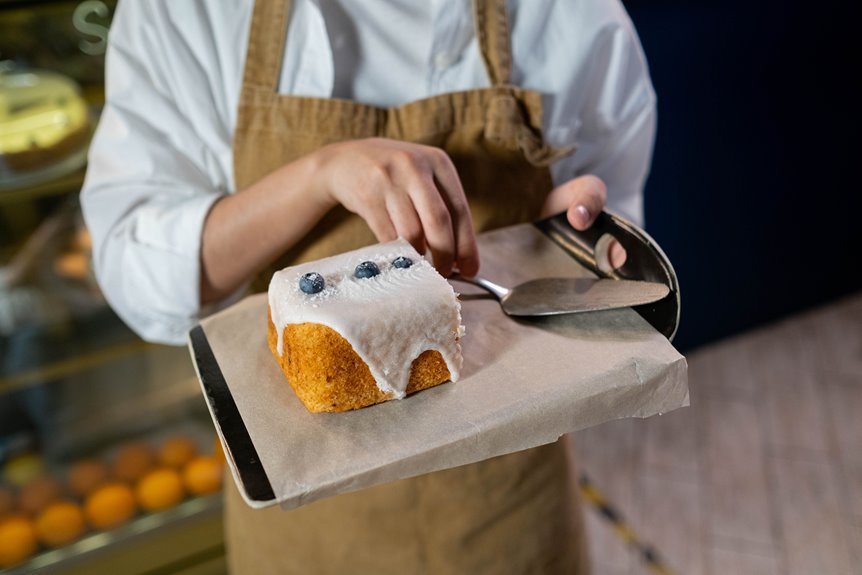
I always plan for 25 servings when feeding 20 people, since leftover cake tends to disappear quickly, and running short is less than ideal.
For 20 guests, an 8-inch round cake with generous party slices is a good choice, or I can opt for a 10-inch round for cleaner portions.
A quarter sheet (9×13) also works well, offering about 24 servings.
Slice size is crucial; wedding-style 1×2 inch cuts stretch further than hearty 1.5×2 inch party pieces.
Additional considerations may arise if you’re deciding between layers, heights, or discussing options with your baker.
Cake for 20 Guests: Round, Sheet, or Layered?
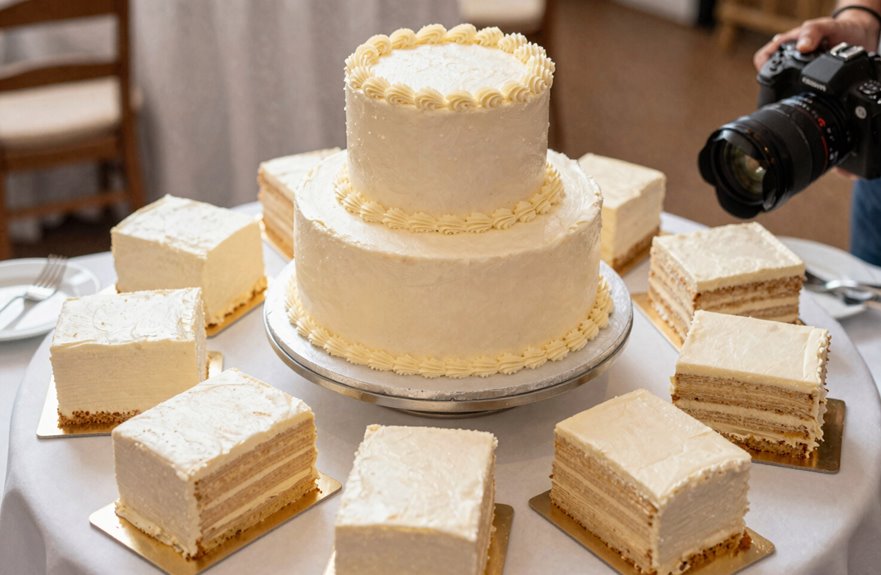
When planning cake for 20 guests, I start by asking what shape best fits the occasion. Matching pan sizes to my headcount helps me stay organized in the kitchen.
For intimate gatherings, I prefer an 8-inch round or 9×13-inch sheet. These options are approachable and manageable.
I always consult my serving chart first. A quarter sheet yields roughly 24 servings with modest cuts, while layered rounds in 10–12 inch dimensions can serve 28–45 portions, depending on how large the slices are.
To create visual appeal without excess, I build a tiered display using varied pan sizes. This approach ensures that everyone has enough cake without resulting in an abundance of leftovers.
Round vs. Sheet Cake: Which Serves 20 Better?
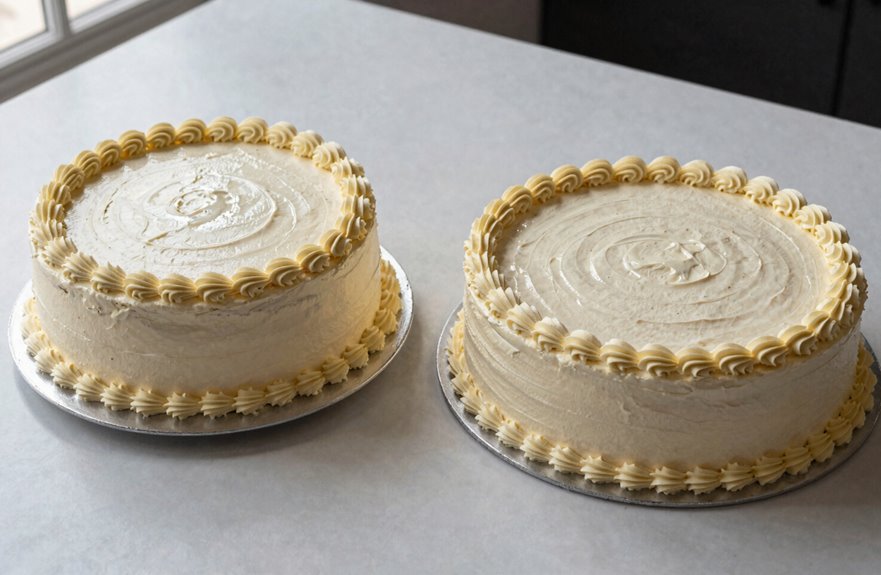
Why do I keep revisiting this question when planning a party? Getting the servings right is crucial when hosting people you care about.
Let’s break it down. A round 8-inch cake can technically serve up to 24 guests, but those portions often feel tight.
A 10-inch round exceeds at 38 servings. Meanwhile, a quarter sheet cake (9×13) offers about 24 servings with cleaner, more predictable portion sizes.
For exactly 20 people, a half-sheet cake is generous without waste, while a 12-inch round works if I slice carefully. The sheet cake is more flexible, making slicing easier and eliminating guesswork about portion sizes.
Guests tend to notice when servings are uneven.
Pick One Layer or Two for Your Guest Count
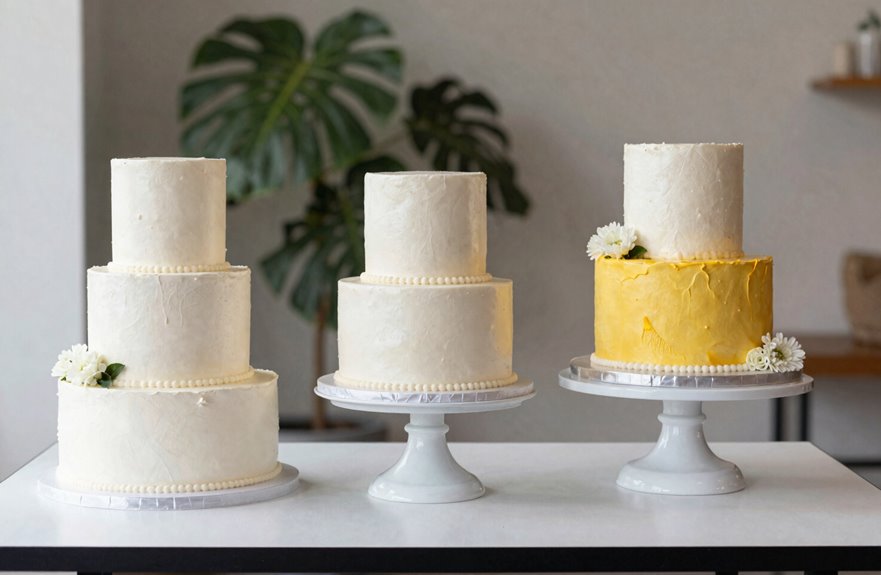
How do I decide between a single towering layer or doubling up? I start by counting my closest friends and family, then I bake with confidence.
A solitary 8-inch layer cake gives me roughly 24 servings—enough if I cut modestly. I prefer generous portions and seconds, so I often choose two layers to ensure everyone’s included in the celebration.
Here’s my quick guide:
| Setup | Servings | Best For |
|---|---|---|
| One 8-inch layer | 22–24 | Intimate gatherings |
| Two 8-inch layers | 40–48 | Larger crowds, leftovers |
| 8-inch + 6-inch tier | 32–38 | Visual impact, flexibility |
| Stacked layer cake | 45–50 | Milestone moments |
I always check my serving chart before baking. When I align portions with my guest count, I create something beautiful that brings us together.
No one leaves hungry, and nothing goes to waste.
Will an 8-Inch Round Cake Feed 20 People?
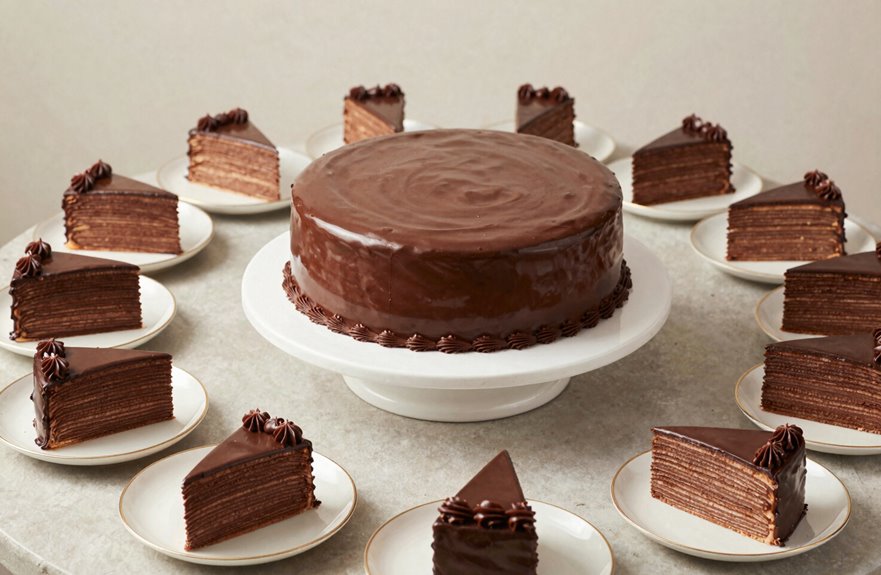
I’ve sized up my layer options and now I’m focusing on a practical question: can a single 8-inch round cake satisfy 20 guests?
The short answer is yes, but it’s tight. An 8-inch round cake typically yields about 20–24 servings when cutting standard birthday-style slices.
That puts you right at the edge of comfort for a group of twenty.
If everyone is expecting a modest slice and you have other treats available, you should manage. Wilton’s charts list roughly 24 servings for party cuts, so accommodating twenty guests is feasible.
If your crowd leans hungry or you’d like some leftovers, consider increasing the cake size. However, for a simple gathering with lighter appetites, an 8-inch round cake should meet your needs.
Slice Size Beats Cake Size: Here’s Why
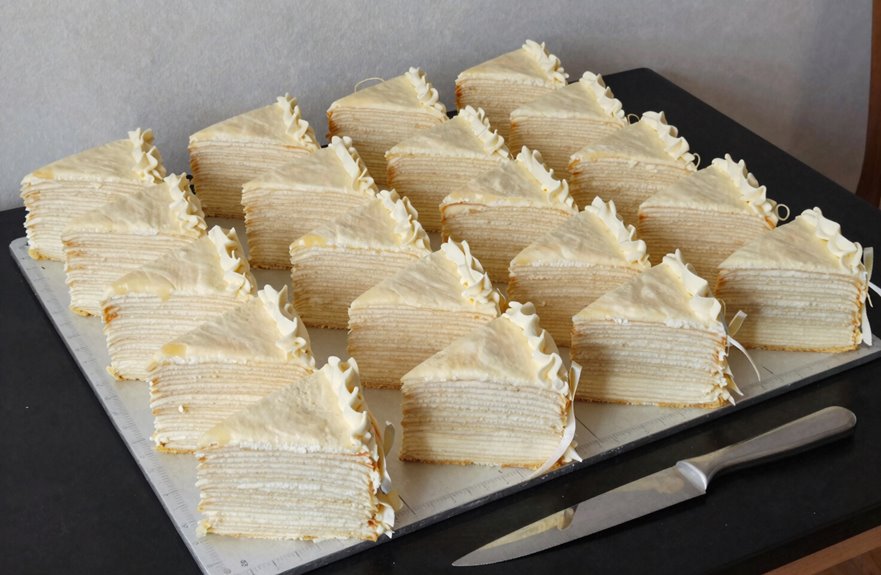
When you’re trying to stretch a cake to feed a crowd, slice size is crucial. The same cake can serve 20 or 25 people depending on how generously I cut the portions.
A small 0.75 portion versus a large 1.25 portion changes total servings by up to 25%. This can mean the difference between having enough cake and an awkward shortage.
For your 20-guest gathering, choosing a 1.25 “large” portion increases your requirement to about 25 servings. Slice dimensions and cutting style directly affect the usable area, so identical pans can yield different portions based on technique.
Sheet cakes often provide more servings per dollar than round cakes, making your chosen slice size even more significant. Mastering this ensures you won’t run out or overspend.
Party Slices vs. Wedding Slices: Choose Your Style
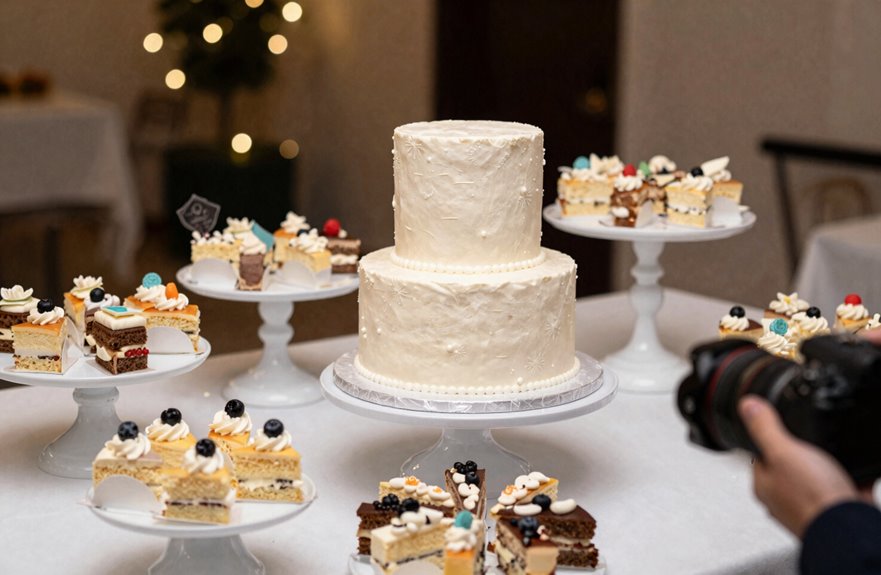
Your cutting style is important, as the size of your cake slices can significantly affect your dessert table.
Here’s what you need to know:
- Party cake slices run about 1.5 x 2 inches, which are generous and satisfying.
- Wedding cake slices shrink to 1 x 2 inches, allowing space for multiple sweets.
- That same 10-inch round serves 28–38 with party portions, but 35–45 with wedding cuts.
- For 20 guests, I recommend an 8-inch round with party slices or sizing up if you choose wedding-style.
Wedding-style portions require more cake to ensure everyone is served. I always specify my slice standard upfront to prevent any awkward moments when cake slices run short and someone is left without dessert.
The 2-Minute Serving Calculation
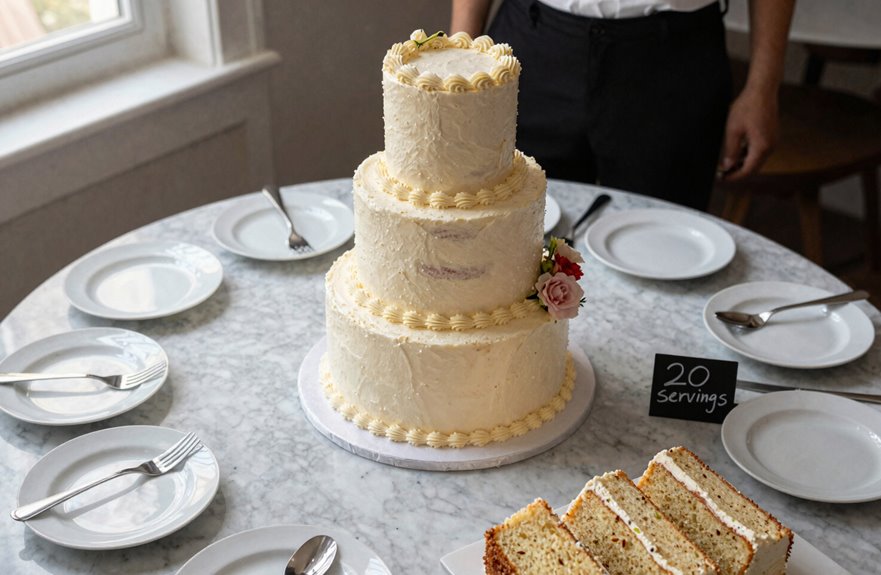
How do I figure out cake servings without second-guessing myself? A quick serving calculation keeps me confident.
I multiply my guest count by my chosen slice sizes—small (0.75), standard (1), or large (1.25)—then check my cake type’s yield. For 20 guests wanting generous portions, I plan for 25 servings.
Round, square, and layer cakes all serve differently, so I can’t swap shapes blindly. A 3–4 layer 8-inch round often falls short for 20 people, prompting me to consider a larger diameter or extra layers.
I stopped bouncing between charts; I picked one reliable source, documented expected yields per pan, and stuck with it. Now my baking aligns perfectly with my serving calculation every time.
Sheet Cake Math for 20 Guests
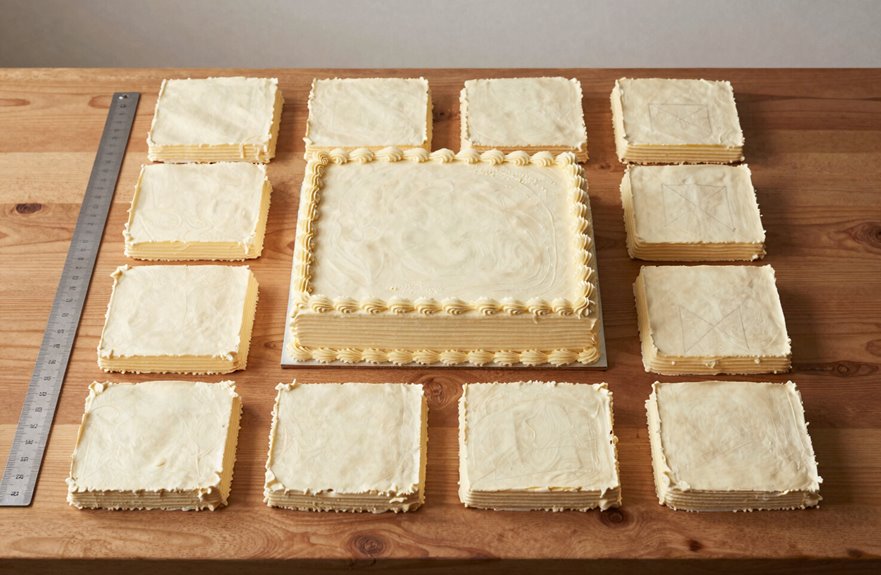
Why guess when a 12×18 sheet cake does the heavy lifting? This size delivers 40–48 standard servings, which comfortably covers your 20 guests with room for seconds or unexpected plus-ones.
Here’s how the math works for our group:
- Start with 2×3 inch slices, the classic serving size that keeps everyone satisfied.
- Scale down to 2×2.5 inch pieces when offering multiple desserts alongside.
- Double the layers; a two-layer 12×18 sheet cake transforms simple servings into something memorable.
- Verify with calculators; I always confirm my numbers using online tools that factor pan size and slice dimensions.
Whether you choose a single sheet cake or pair a 9×13 with something smaller, there are options to ensure that everyone gets enough.
How to Cut Sheet Cake for 20 Clean Slices
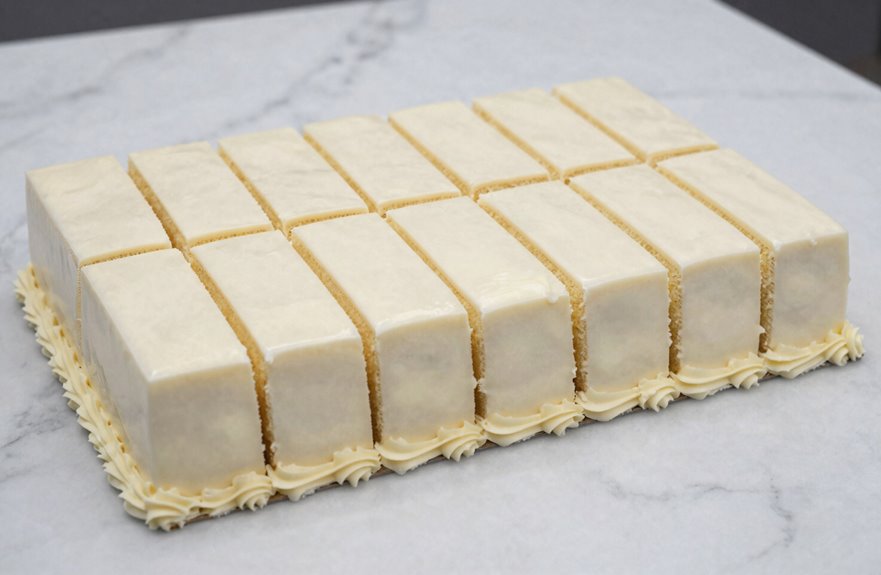
Where should I place the first cut to ensure twenty neat portions? I start by identifying the center of my sheet cake and then work outward with intention.
For twenty clean servings, a half sheet (12×18 inches) provides ample space. I mark gentle guides first—there’s no guessing—creating a grid of 2×3 inch slices.
This results in four rows by five columns, or I can adjust slightly for 2×2.5 inch pieces if I want larger servings. Either way, I’m achieving twenty servings.
Pre-scoring has greatly improved my technique. I lightly trace with a knife before making the final cuts, ensuring my sheet cake yields uniform servings every time.
This method allows guests to easily grab a piece without crumbling the cake. Everyone deserves a clean edge.
Feed Mixed Appetites: Kids, Adults, and Seconds
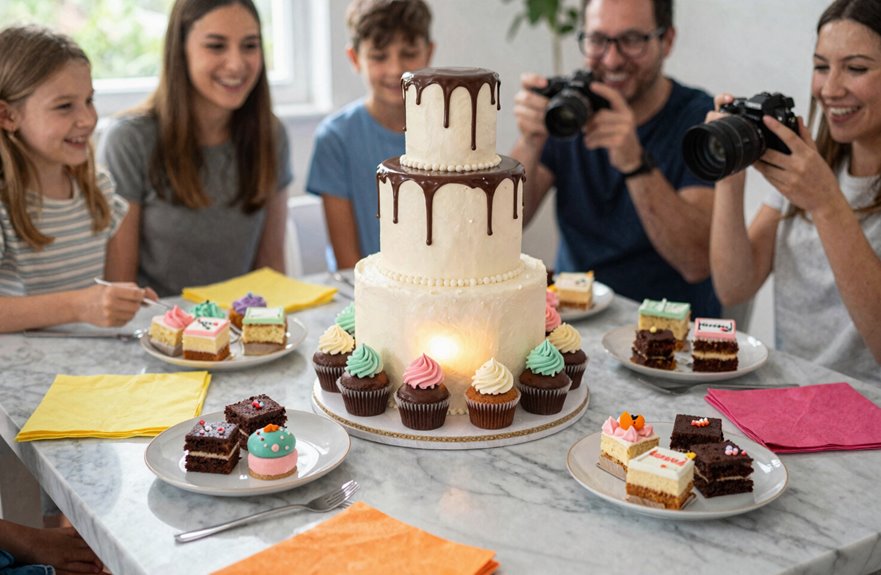
Clean cuts matter, but who I’m feeding is just as important. When hosting a mixed crowd, kids typically grab smaller slices, while adults often go for seconds.
I plan 0.75–1.25 servings per person to keep everyone satisfied without waste.
Here’s how I balance my table:
- Count kids as half servings; they’re here for the fun, not the feast.
- Add one extra serving per adult who loves dessert.
- Match cake sizes to hunger levels, not just headcount.
- Use a calculator to translate my guest list into total servings needed.
For twenty guests, I’ll choose a 10–12 inch cake or pair an 8-inch with a small kids’ cake. This way, nobody leaves hungry, and I avoid having leftovers for days.
Tall vs. Short Cakes: Height and Serving Counts
Cake height affects your serving count in specific ways. Standard height servings rely on the same pan-based charts, whether your cake is two inches or six inches tall.
A taller cake provides more dessert per slice, while a short cake reduces portion size without increasing guest count.
Standard Height Servings
How does cake height affect feeding your guests? Let’s break this down for clear planning.
When considering standard round cake servings, I focus on the 3-inch height as our baseline. Here’s what I’ve learned:
- An 8-inch round cake serves roughly 24 guests at standard height.
- A 10-inch round cake serves about 38 guests.
- A 12-inch round cake serves around 50 guests.
- Shorter cakes under 3 inches yield only half these counts.
Tall cakes do not increase servings; the same width and length are cut regardless of height. The pan’s footprint determines portions, not additional height.
Stick to 3-inch standards to ensure you meet your serving needs.
Taller Cake Equals
The height of your cake won’t change how many guests it feeds if you’re keeping the same cut size and serving style. When planning for 20 people, adding height mainly creates drama and extra frosting layers, not extra servings.
A 6-inch tall cake and a 3-inch tall cake, both in the same pan, provide identical servings when sliced the same way.
You are joining a community of bakers who understand that taller tiers require smaller slices for stability; however, that doesn’t increase your count. Always choose your serving size first, then adjust the height for aesthetics.
Remember that anything under 3 inches halves your portions. Align your height with your vision rather than your calculations.
Short Cake Halves
A short cake can complicate your serving math more than help it. Height can trick us into thinking we’re getting more, but servings depend on the slice’s footprint, not its altitude.
Here’s what matters when feeding your crew:
- An 8-inch short cake serves 24 with 1-inch slices, which is enough for 20 guests.
- A 6-inch short cake maxes out at 14 servings, leaving someone hungry.
- Tall cakes do not increase servings if you cut them the same way.
- A 10-inch short cake delivers 28 to 50 servings depending on your slice style.
When planning for twenty, I match the short cake’s diameter to my crowd. It’s important that everyone gets dessert.
Batter Amounts for 20 Servings
When planning cake batter for 20 people, I start by deciding how generous I want each slice to be. Approximately 0.75 portions per guest keeps things light, while 1.25 allows for seconds.
Once I settle on my servings target, I check the corresponding batter volume.
| Servings Target | Pan Type | Batter Needed |
|---|---|---|
| 15 (0.75/guest) | Two 9×13 layers | ~8–10 cups |
| 20 (1.0/guest) | Two 8- or 9-inch rounds | ~10–12 cups |
| 25 (1.25/guest) | Two 12×18 sheet layers | ~32 cups total |
| 20 (1.0/guest) | Single 12×18 sheet | ~16 cups |
| 25 (1.25/guest) | Two 9×13 plus cupcakes | ~14 cups plus |
I always round up my batter to account for tricky ovens and uneven cuts. A quick calculator check ensures I have enough for everyone at the party.
Use the Wilton Chart Like a Pro
Once I’ve nailed down my batter amounts, I refer to the Wilton chart to finalize my serving numbers. It serves as my primary reference for matching pan size and shape to the servings I need for 20 guests.
I rely on the Wilton chart to match pan size and shape to the servings I need for 20 guests.
Here’s how I make it work:
- Study it: I know my rounds, squares, and sheets inside out.
- Pick one: I document my preferred yield and stick with it.
- Share it: I pass the chart to customers at pickup to ensure we’re aligned.
- Adjust it: I consider cutting style and height, which can shift actual servings.
The Wilton chart provides a solid foundation. When you bake alongside others who rely on these same standards, you become part of a larger community.
Buttercream Quantities for 20 Portions
How much buttercream do I need? It depends on your style, but here’s what works for me when frosting for twenty servings.
For a standard two-layer cake, I plan about one to two cups of buttercream—just enough for a thin coat and simple border.
For a three-layer round or two-layer sheet cake, I increase that to two or three cups to achieve a smooth finish for gatherings.
One challenge I’ve encountered is that those charts assume modest decoration. If you’re adding swirls, rosettes, or tall piping, you’ll need more buttercream than the baseline.
I always check my recipe’s yield against the chart’s assumed thickness and adjust upward for any elaborate designs. Running out mid-decorating can lead to complications.
Gluten-Free or Vegan: Serving Adjustments for 20
I’ve noticed that swapping in gluten-free or vegan recipes changes how generously the cake actually serves. Denser batters often slice smaller, so I plan for fewer portions per pan unless I add extra layers to compensate.
For 20 guests, I’d lean toward a 10-inch round or verify my recipe’s specific yield and adjust my cutting accordingly.
Dietary Substitutions Impact
Why do gluten-free and vegan cakes sometimes yield fewer servings than their traditional counterparts? Dietary substitutions can alter batter density, rise, and crumb structure, which affects how cleanly you slice and how substantial each portion feels to guests.
When I plan for 20 people, I account for these variables:
- Gluten-free cakes often crumble more, producing smaller, less stable slices.
- Vegan batters vary in rise, so I verify each recipe’s yield before baking.
- Frosting and filling densities shift with alternative ingredients.
- Extra portions ensure everyone feels included, regardless of dietary needs.
For 20 guests, an 8-inch gluten-free or vegan round typically yields 12–16 servings, so I add a 6-inch tier or a second small cake. I communicate that dietary substitutions may adjust servings slightly, and I bake extra to cover variability.
Portion Size Consistency
Where do serving sizes start to drift when you’re working with gluten-free or vegan batters? The density and crumb structure can impact your counts if you’re not careful.
That’s why I rely on a single trusted serving chart and stick with it; no guessing when you’re feeding twenty guests who expect accuracy.
Check your pan yield and slice dimensions ahead of time. Gluten-free and vegan cakes sometimes require smaller cuts to feel satisfying, which can reduce your total servings from the standard 24–32 to about 20–28 for an 8-inch tier.
It’s important to communicate with your group that cutting method affects portions, and I round up so no one feels left out. Consistent portioning ensures everyone has a place at the table.
Order Extra for Seconds and Leftovers
How much extra cake should you actually order? Nobody wants to feel like we’re rationing dessert at our gathering.
I plan for 10–20% more than my exact guest count, transforming those servings into welcome leftovers that keep the celebration alive.
Here are the reasons I always round up:
- Seconds happen – I want you reaching for another slice without worry.
- Cutting varies – My knife skills aren’t perfect, so extra servings cover uneven portions.
- Belonging matters – I never want someone feeling excluded from the final piece.
- Morning-after joy – Those leftovers become tomorrow’s guilty pleasure with coffee.
For my 20 guests, I order 25–30 servings. Sheet cakes provide the best value here, stretching my budget while ensuring abundance.
I always clarify upfront that these extras are ours to enjoy later, not destined for the trash.
Talk to Your Baker: Size Communication Tips
Before I place my order, I sit down with my baker and map out what I’m envisioning. I bring a cake chart to show the tiers and dimensions that will yield the proper cake servings for my 20 guests.
I explain whether I’m expecting standard wedding slices or heartier portions so we are aligned. I email the chart when I order and bring another copy at pickup to maintain clarity.
I specify how I’ll cut the cake, aligning each slice to the chart’s measurements, ensuring everyone gets their fair share. I ask which shape maximizes servings: sheet, round, or stacked tiers.
Together we finalize a design that adequately feeds my crowd. This conversation keeps us on the same team and ensures my celebration feels complete.
Avoid These 5 Sizing Mistakes
Even with a solid plan from my baker consultation, missteps happen when I don’t double-check the details myself. Here’s how I avoid common pitfalls that leave us short on slices:
- I match cake dimensions to my serving chart; round, square, and sheet shapes yield completely different counts for 20 guests.
- I pick one portion size and commit; toggling between small, standard, and generous cuts mid-planning creates chaos.
- I verify my chart’s scale; documenting my chosen yield per pan keeps my calculations honest.
- I embrace backup layers; adding tiered height or sheet-cake options transforms a borderline 8-inch cake into a celebration everyone remembers.
Together, we will ensure that all guests are satisfied.
Baking Time and Temperature for 20-Serving Cakes
I bake most 20-serving cakes at 350°F, pulling them at the shortest suggested time to check doneness with a toothpick; it should emerge clean or with just a few crumbs.
Deeper pans require longer bake times than shallow ones, so I adjust my expectations when I change pan styles.
If I’m making a large sheet cake, I use heat rods or cores to ensure the center bakes evenly with the edges.
Oven Temperature Guidelines
Where should you start when you’re ready to bake? I preheat to 350°F (175°C) for most sheet cake sizes and layer preparations, though I follow my recipe if it calls for something different.
Here’s how I ensure every serving turns out perfectly:
- I rely on the toothpick test; clean or a few crumbs means it’s done.
- I add heat-conducting cores or nails for large bakes.
- I bake two-layer sheet cakes separately for even height.
- I start checking at the shortest bake time and extend only if needed.
This approach fosters a sense of community among bakers who prioritize consistency. We are all working to develop skills that make every gathering memorable.
Baking Time Estimates
How long should you bake a cake for 20 people? I bake at 350°F (175°C) as my starting point, then adjust based on what I’m making.
For two 9×13 inch layers serving 20, my bake time typically falls between 25 and 35 minutes, though I always monitor my specific oven’s behavior.
Larger sheet cakes or tall layered creations require longer bake times, so I begin checking early and continue with brief intervals. I stay present with my cake during the process.
For multi-layer or high-volume sheet cakes, I use heat-conducting cores or nails to ensure even baking throughout all those servings.
I keep in mind that oven quirks and altitude can affect timing. My kitchen’s unique conditions mean my bake time might differ from yours, which is common in our baking community.
Doneness Checking Methods
Knowing the estimated bake time only gets you partway there; confirming when the cake is actually done guarantees those 20 slices turn out fully baked, not just golden on top.
I start at 350°F, but I check early since ovens vary. Here’s how I ensure doneness every time:
- I insert a toothpick into the center; it should emerge clean or with a few crumbs.
- I probe deep into thick sheet cakes, not just the edges, catching underdone centers before they cool.
- I account for my oven’s quirks and altitude, relying on visual cues over rigid timers.
- I use baking cores or nails in large pans to ensure heat reaches every corner for uniform doneness.
Together, we can serve cake that is perfectly baked inside and out.
Final Checklist: Confirm Before You Order
Why gamble with your event? I always double-check my numbers before placing that order, and you should too.
I’ve learned that servings can vary significantly depending on who cuts the cake, so I rely on one trusted chart: Wilton works beautifully.
For twenty guests, I verify that my chosen pan actually yields enough portions; a standard 8-inch round often falls short unless I’ve planned extra layers.
I document the expected yield per pan and share that chart with whoever is handling the knife. Cut style matters; party wedges feed fewer than wedding slivers.
I treat my chart as essential, aligning cake size, layers, and batter precisely to my twenty-serving target. This approach eliminates surprises, ensures all guests are satisfied, and avoids awkward moments.
We work together to make it a success.