I use two cake mixes per layer for a standard half sheet cake, which means four boxes total for a two-layer cake.
A single layer needs about two boxes to fill a 13×18-inch pan properly and avoid thin, uneven results.
This provides the height and sturdiness needed for both casual gatherings and special occasions.
The specifics of pan size, batter depth, and serving goals influence these numbers.
How Many Cake Mixes for Half Sheet? (Quick Answer)
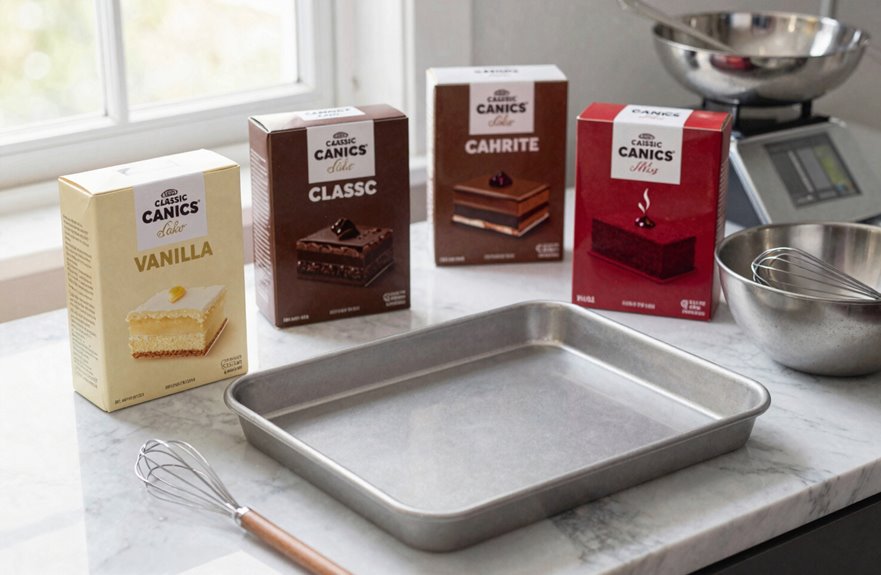
How much batter does a half sheet cake really need? For a single-layer half sheet cake in a 13×18-inch pan, I typically use one to two boxes of cake mix.
A standard 15.25-ounce cake mix usually yields enough batter for one layer, following the 3-2-1 sheet cake approach for reference.
If I’m building a taller two-layer cake, I’ll grab two to four boxes total, adjusting for how deep I want each layer. The pan size significantly influences the amount of batter needed.
I always buy one extra box of cake mix to cover variations in batter yield. Running short mid-prep can be frustrating.
What Size Is a Half Sheet Pan Exactly?
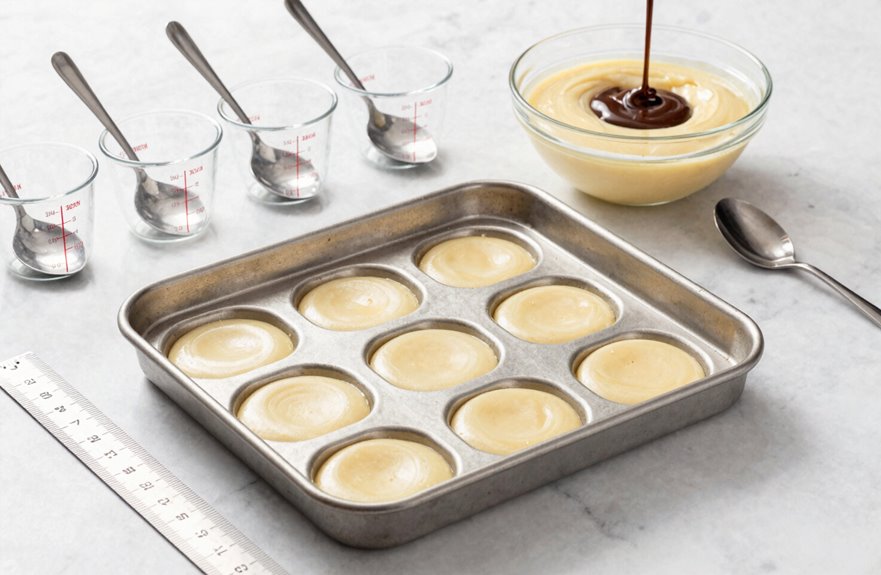
I need to clarify what you’re working with before we determine the right amount of batter. A standard half sheet pan measures 13 by 18 inches with a 2-inch depth; however, you’ll often see 12 by 17 inches available for home kitchens.
These variations are important because they affect how much cake mix you’ll need.
Standard Dimensions
When planning a half sheet cake, it’s essential to know the size of the pan you’ll be using. A 13×18 inch pan is the standard size that many bakers prefer.
This pan measures 13×18 inches with about 2 inches of depth, making it suitable for home baking.
Regarding cake mix quantity, you will typically need 2 to 3 boxed mixes per layer, depending on how thick you prefer the batter. Many bakers commonly use around 2 boxes for a standard layer.
While some guidance suggests this as half of a 16×24 full sheet, your specific requirements may vary by recipe. By sticking with the 13×18 inch pan, you align with other bakers who have successfully utilized this classic size.
Common Variations
While 13×18 inches can work well, 12×18 inches is the more widely accepted standard for a half sheet cake pan. These pan dimensions are important because they directly affect your cake mix quantities and the outcome of your half sheet cake.
I have baked with both sheet pan sizes, and that extra inch does make a difference. A 12×18 pan holds roughly 14-16 cups of batter per layer, while 13×18 accommodates slightly more.
This also impacts your bake time; thicker layers require longer in the oven.
When deciding between these common variations, I consider whether I’m making a single layer or stacking two. The 12×18 size is often more forgiving for home bakers, providing reliable results without overflow.
Knowing your exact pan dimensions helps you determine the batter per layer consistently.
What’s the 3-2-1 Ratio for Half Sheet Cakes?
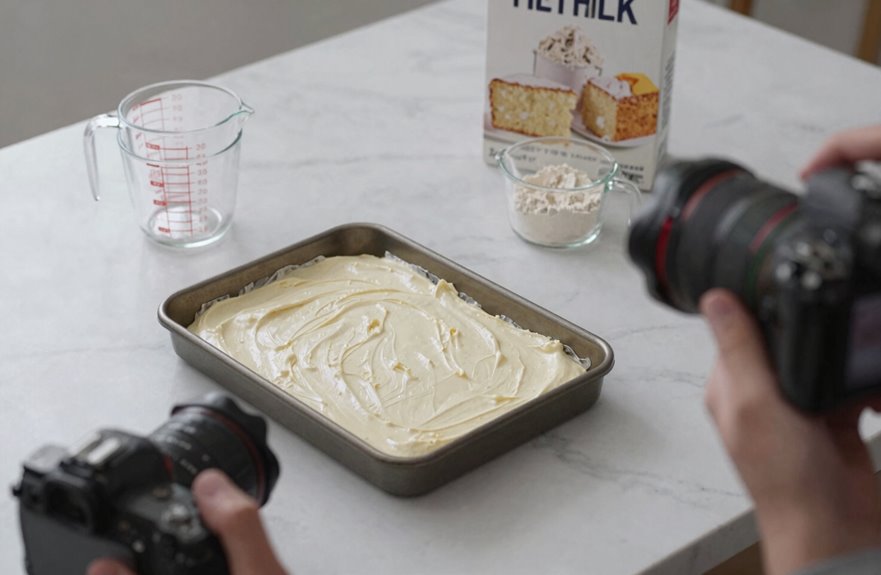
How does the 3-2-1 ratio simplify your sheet cake planning? It is a shared method among bakers to achieve consistent results.
Here’s how it works: 3 cake mixes fill a full sheet, 2 cake mixes fill a half-sheet pan, and 1 mix covers a quarter sheet.
For standard 13×18 inch half-sheet pans, using 2 cake mixes creates two layers with an ideal height of 1 to 2 inches each. This 3-2-1 ratio removes the uncertainty from scaling recipes, ensuring you avoid a sunken center or overly thin cake.
My bake time remains consistent at 350°F for 18–20 minutes per layer, whether building one layer or stacking two. It is a reliable guide for success.
How Much Batter Does One Box Make?
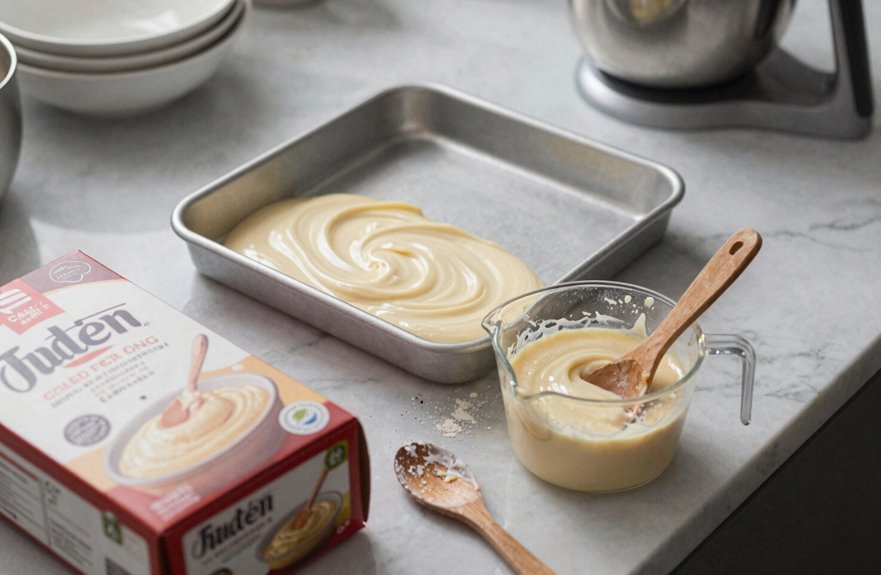
How much batter can you expect from a standard boxed cake mix? One box of mix typically yields 4–5 cups of cake batter after adding the required liquids.
This amount is enough for roughly one 9×13-inch layer. However, when baking a half sheet cake measuring 13×18 inches, more batter is needed.
For two layers, significantly more is required—often 2 boxes per layer, and sometimes 4 total if height is a priority. Here’s how the numbers break down for our baking community:
| Pan Size | Batter Needed (1 layer) | Boxes Required |
|---|---|---|
| 9×13 inches | 4–5 cups | 1 box of mix |
| 13×18 inches (thin) | 6–8 cups | 1–2 boxes |
| 13×18 inches (standard) | 8–10 cups | 2 boxes |
| 13×18 inches (tall) | 12–16 cups | 2–4 boxes |
Measuring the actual batter yield after mixing is important, especially when adding ingredients, to ensure the half sheet cake meets the needs of the crowd being served.
Why Use 2 Cake Mixes Instead of 1?
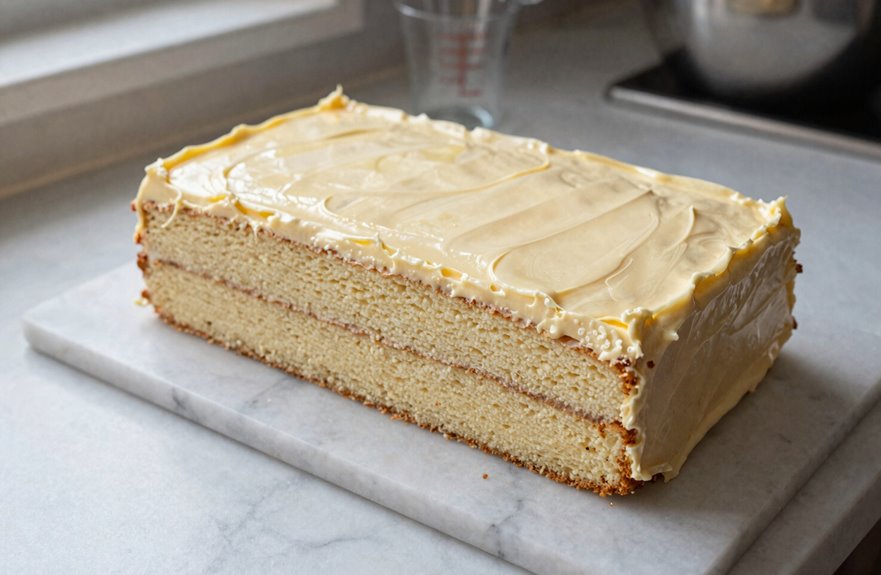
A single cake mix leaves me short on batter when I’m aiming for a proper two-layer half sheet cake. Box mixes simply don’t stretch far enough for this sheet cake size without affecting the quality.
Here are my reasons for using two mixes:
- I want layers that rise tall and proud, not thin sheets that feel like I cut corners.
- I need enough batter to fill my pan properly, ensuring my cake looks bakery-worthy rather than homemade.
- I crave stability when I stack, as a toppled cake at the party is not acceptable.
- I trust that two mixes provide consistent bake time, delivering even heat distribution without dry edges or raw centers.
Using two mixes elevates my half sheet cake from adequate to exceptional.
How Thick Should Half Sheet Batter Be?
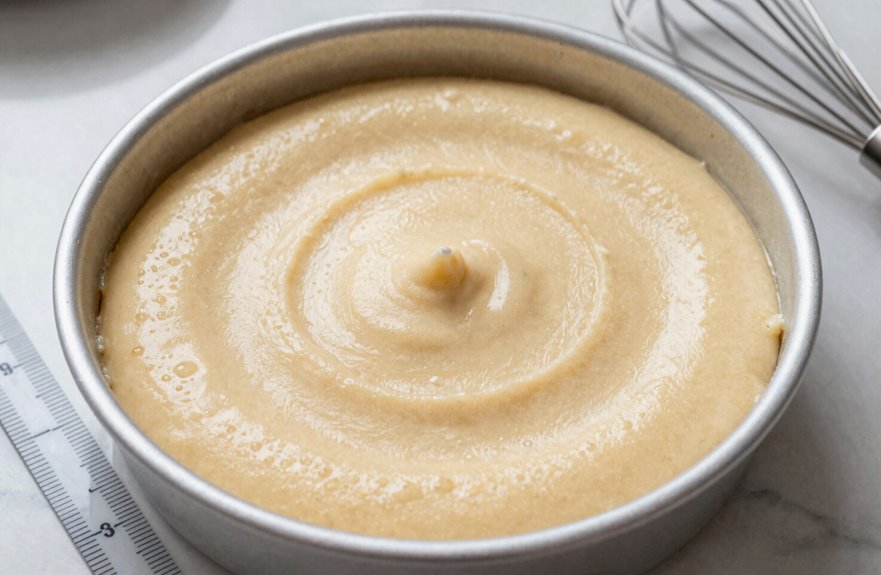
When pouring batter into my half-sheet pan, I aim for a depth of about 1.5 to 2 inches. This allows my cake to rise nicely without overflowing or baking unevenly.
For my 13×18 pan, achieving this batter depth typically requires using roughly two cake mixes per layer, following the “3-2-1” guideline shared among bakers. When building two layers, I double everything.
Sometimes, I measure 8–12 cups of batter to ensure accuracy. Testing for doneness works best at this thickness; a toothpick comes out clean when the crumb is just right.
If the batter is too shallow, the cake dries out; if too deep, the center remains raw. Getting this balance right ensures a successful bake.
How Long and at What Temperature Should You Bake?
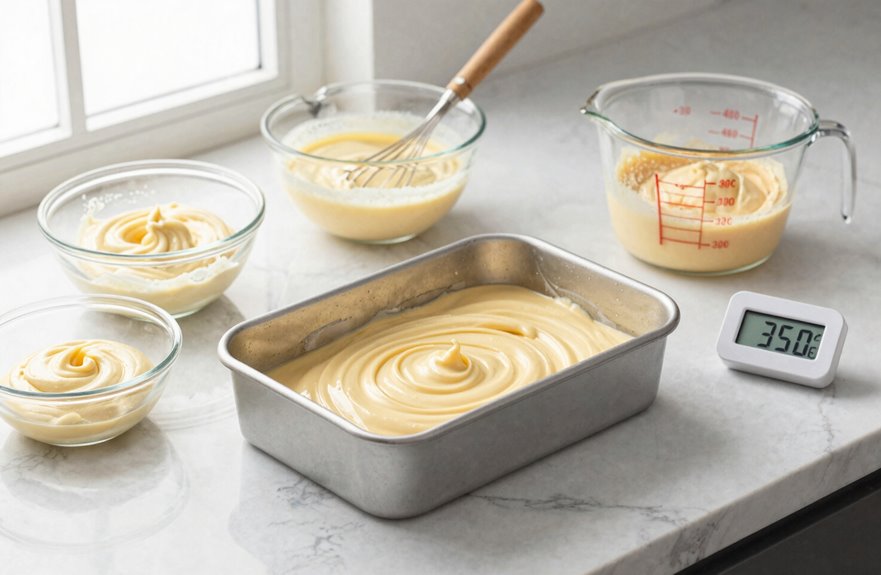
Where should you set your oven, and for how long? I bake my half sheet cake at 350°F (175°C), which works well for your box mix too.
Your bake time typically runs 18–20 minutes, though batter thickness can affect this. I’ve found that thinner layers cook faster; sometimes 16 minutes does the trick.
Here are some key points to consider:
- Set your temperature evenly to achieve that golden rise.
- Monitor your batter thickness for consistent results.
- Rely on the clock, but stay nearby to ensure proper timing.
- Use the toothpick test to confirm that it’s done; it should come out crumb-free.
Cool completely before frosting. This step helps achieve clean edges.
Do Extra Eggs or Substitutions Change the Mix Count?
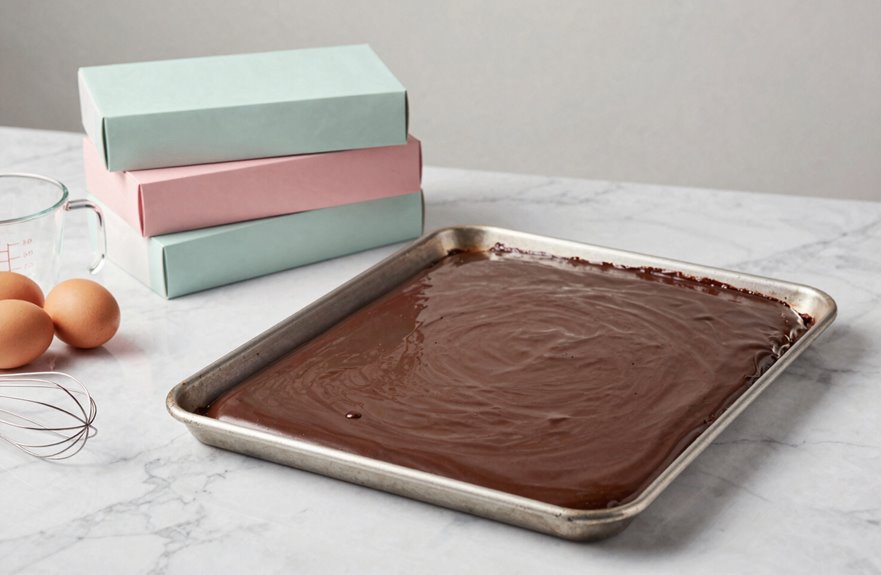
So you’ve got the bake temperature and timing down. I’m wondering if swapping ingredients means you’ll need to crack open more boxes.
Extra eggs or substitutions won’t change your cake mix boxes count for a half sheet cake.
I always doctor my mixes, and I’ve learned that batter yield and pan capacity stay steady whether I’m adding richness or swapping oil for sour cream.
| Substitution | Effect on Batter | Mixes Needed |
|---|---|---|
| Extra eggs | Slightly richer texture | No change |
| Sour cream replaces oil | Moist, dense crumb | No change |
| Added vanilla/pudding | Enhanced flavor | No change |
| Butter replaces oil | Fuller taste | No change |
| Melted chocolate added | Fudgier result | No change |
Rely on your standard half sheet cake measurements for consistent results. The baking community supports each other as we experiment and create.
How Many People Does a Half Sheet Cake Feed?
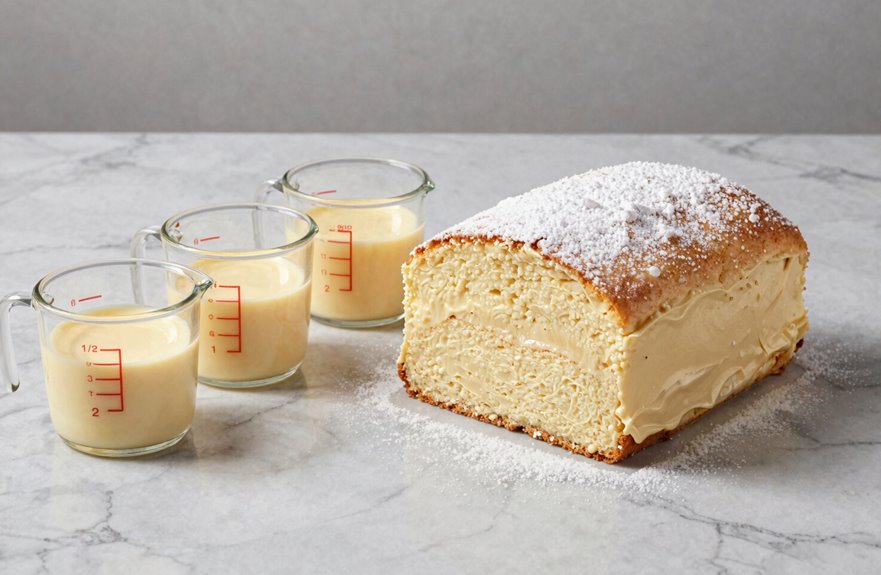
Serving size variables and event type significantly impact your final headcount. Party planners and wedding coordinators often cut slices differently, so your half sheet cake might feed 18 guests or stretch to 54 based on the occasion.
Let’s examine how these factors influence your serving estimates.
Serving Size Variables
How much cake do you actually need? I ask myself this every time I plan to feed a group.
A half sheet cake’s servings change significantly based on choices made before preheating the oven.
Your batter depth determines everything. Here is what I have learned:
- One thin layer feeds fewer mouths, leaving someone hungry.
- Doubling up transforms box mix quantities and creates real abundance.
- Denser cakes mean smaller slices can satisfy completely.
- Layer cake height indicates you’ve prepared for everyone.
When I stack two cake mix-filled layers, I convey inclusivity. Two boxes per layer—four total—create a towering cake that welcomes thirty-six guests.
Alternatively, you can keep it modest with two boxes for a single layer. In either case, I consider who will gather around my table, not just the calculations.
That is the true measure.
Event Type Impact
The number of guests I’m feeding is less important than the reason for their gathering. A casual backyard barbecue requires a different approach than my sister’s wedding shower.
For intimate gatherings, I’ll stick with one half sheet cake, which provides about 18 servings when I cut 2×3-inch pieces. I use one to two boxed mix packages depending on the brand’s batter quantity recommendations.
I watch that bake time carefully; thinner batter sets faster, typically around 16–20 minutes, though I never rush it.
Milestone celebrations require more. When I host something special, I double up.
Two half sheet cakes with rich layering and filling between them make my dessert memorable. Those servings jump to 36, ensuring everyone has a piece.
The nature of the event guides whether simple comfort or impressive height brings people together.
Half Sheet vs. Quarter and Full Sheet Sizes
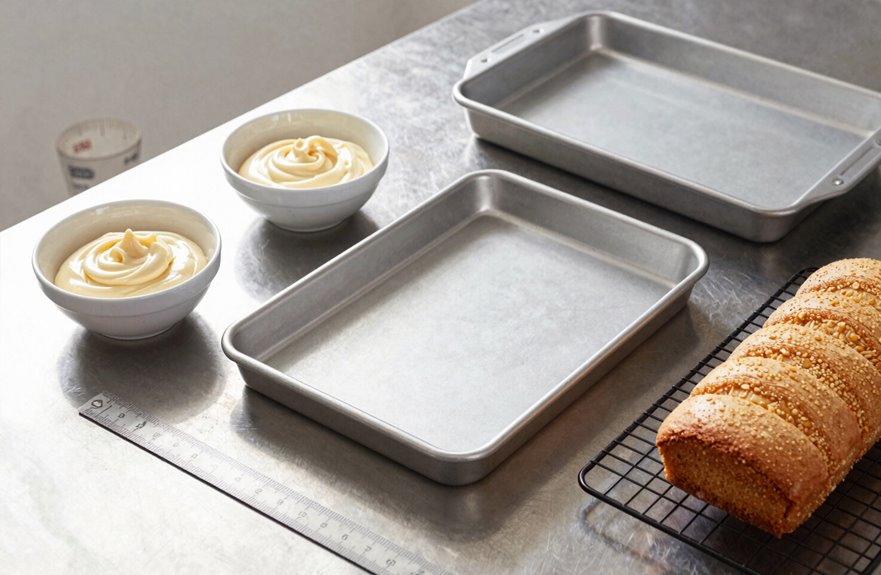
When planning a half sheet cake, it’s important to understand how it compares to quarter and full sheet options. A half sheet cake is ideal for gatherings, providing enough for everyone while minimizing leftovers.
A half sheet cake hits the sweet spot—generous enough for the gathering, restrained enough to skip the leftover guilt.
Here are some reasons why choosing the right pan size is essential for baking:
- A quarter sheet is intimate but may leave some guests without enough cake.
- A full sheet can overwhelm small celebrations and lead to unused cake mix.
- The 11x15x2 or 12x18x2 half sheet pan size accommodates 20-40 people comfortably.
- Getting the batter yield right ensures that everyone has a slice.
For a two-layer cake, I typically need about four boxes of standard cake mix total, roughly two per layer.
This 3-2-1 sheet cake ratio maintains the reliability of my half sheet, while adjusting the size allows me to adapt without losing my rhythm in the kitchen.
Half Sheet Cake Mistakes to Avoid
Why do I still occasionally botch a half sheet cake even after dozens of attempts? I’ve learned it’s usually because I misjudge the batter.
Here’s what I figured out to help you avoid the same mistakes.
I used to guess at boxes and hope for the best. This approach doesn’t work.
A half-sheet demands precise batter volume—about 16 cups per layer for a 13×18 pan size. When I skimp, I get thin, uneven sheet cake layers that bake too fast.
Now I measure batter carefully and adjust bake time based on my actual pan size, not the box directions.
Another common mistake is assuming one batch fills any half-sheet. It doesn’t.
I calculate batter per layer, bake in rounds if needed, and never overfill. This is a lesson learned through experience.