
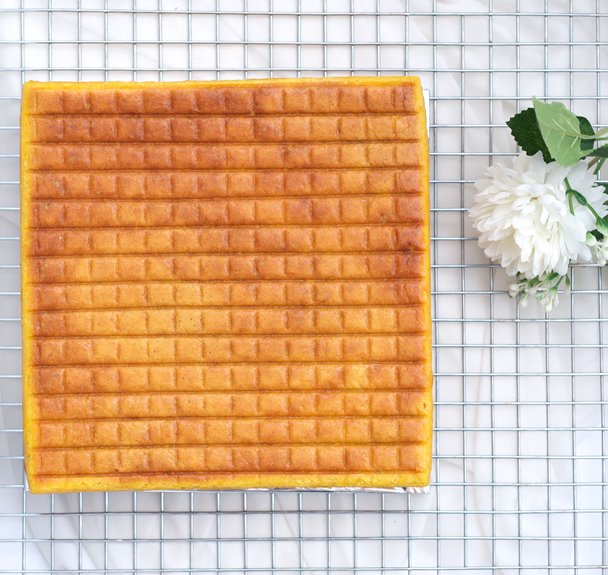
A quarter sheet cake typically measures 9 × 13 inches and stands 1 to 3 inches tall, providing roughly 117 square inches of cake. This size feeds about 20 to 24 people comfortably with standard 2 × 2 inch slices.
Some bakeries use slightly smaller pans, such as 8 × 12 or 9 × 12 inches, so it’s a good idea to double-check before ordering.
This size is ideal for small gatherings, ensuring there aren’t excessive leftovers, and there’s much to consider when getting this size just right.
How Many People Does a 1/4 Sheet Cake Feed?
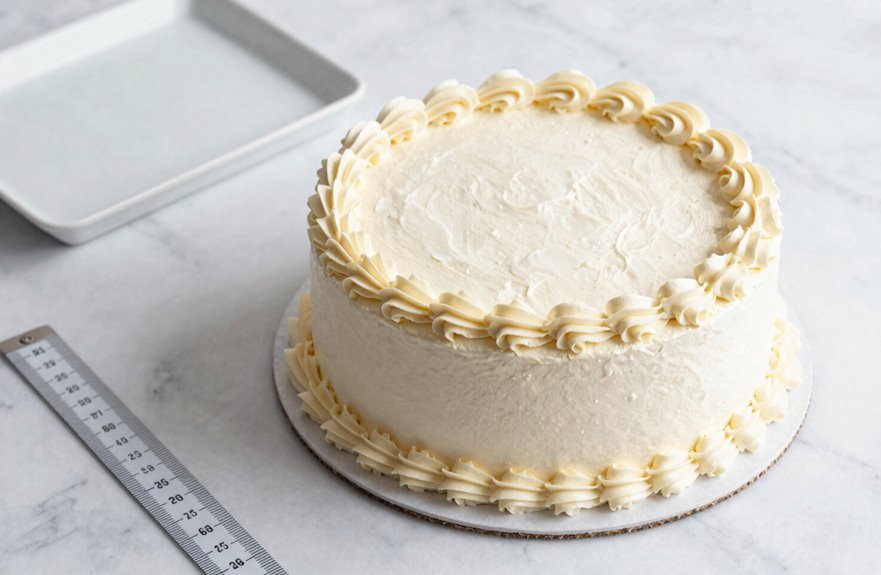
How much cake should I actually order? A quarter sheet cake typically feeds 20 to 24 people, depending on your desired serving size.
When I cut standard 2 × 2 inch slices, I get about 24 servings from this party cake. If I opt for larger 2 × 3 inch portions, that drops to around 20 servings.
Smaller slices can stretch toward 30, but that often feels insufficient at gatherings. The dimensions are less important than having enough for hungry guests.
For most birthday parties or intimate celebrations, this size provides enough cake to ensure everyone feels included without creating excessive leftovers.
1/4 Sheet Cake Dimensions and Size Variations
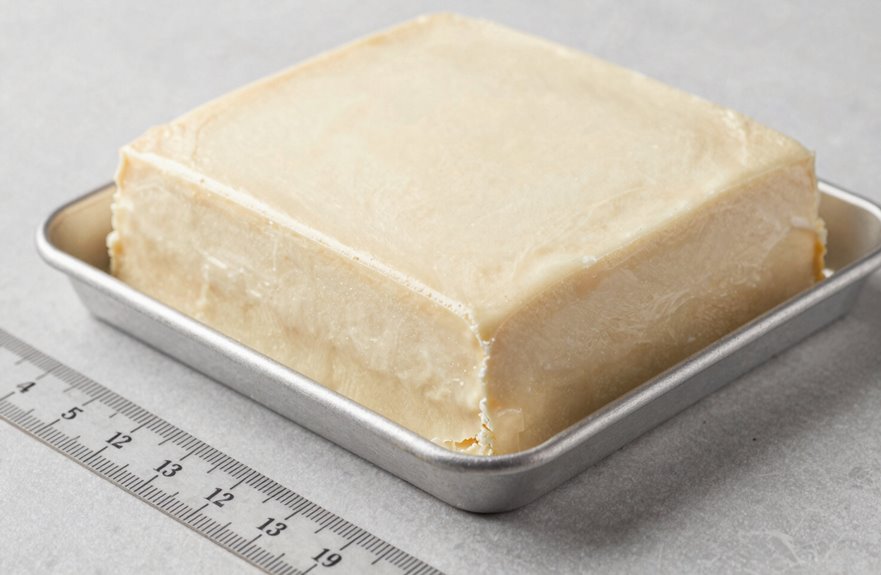
Now that we’ve covered serving sizes, let’s look at what determines how much cake you’re getting. A standard quarter sheet cake measures 9 × 13 inches, though some bakeries use 8 × 12 or 9 × 12 inches instead.
These sheet cake dimensions directly impact your serving size and how many guests you can accommodate.
Home bakers often refer to this as a 9×13 cake, and it’s a familiar pan for many. Heights range from 1 to 3 inches, with single-layer versions typically around 1 inch tall.
Different pan sizes mean it’s important to confirm dimensions when ordering, especially for small birthday parties or office celebrations where every slice is significant. Understanding these variations helps in planning and ensures everyone gets to enjoy dessert.
How a 1/4 Sheet Cake Compares to Half and Full Sizes
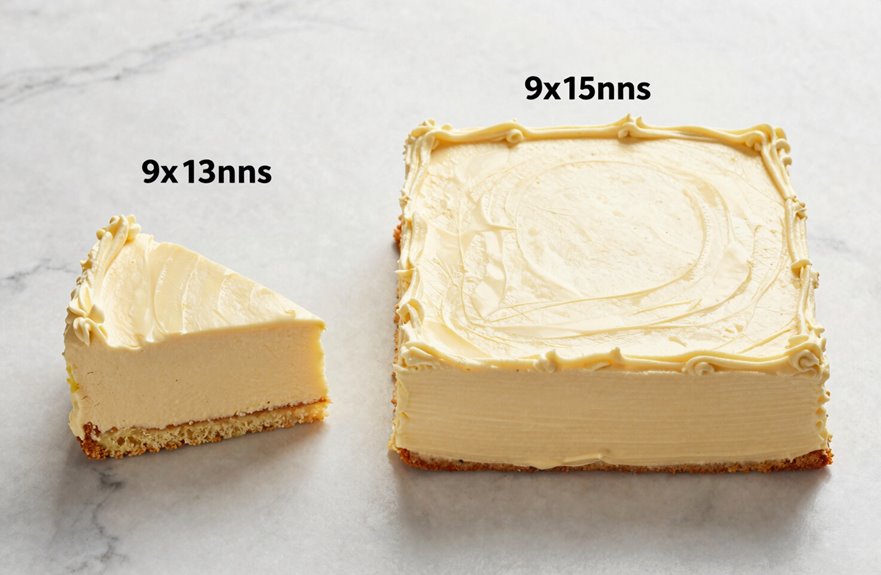
Why settle for more cake than needed when matching dessert to my guest count? Sheet cake sizes are essential when hosting.
My quarter sheet cake (9 × 13 inches) feeds about 20–24 people, making it ideal for smaller gatherings where I want everyone to feel included without creating excess.
| Size | Dimensions | Typical Servings |
|---|---|---|
| Quarter sheet cake | 9 × 13 inches | 20–24 |
| Half sheet cake | 13 × 18 inches | 36–48 |
| Full sheet cake | 18 × 26 inches | 64–96 |
I choose a half sheet cake for larger office parties and a full sheet cake when feeding a bigger crowd. Analyzing serving sizes helps me make informed choices.
My quarter sheet maintains a personal touch while being manageable for my group.
What Pan Do You Need for a 1/4 Sheet Cake?
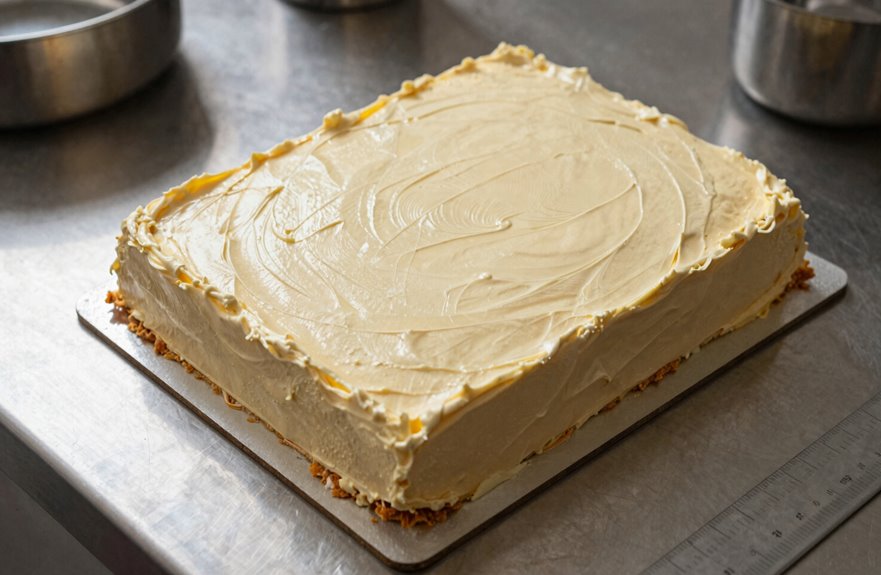
Once I’ve settled on serving 20–24 guests with a quarter sheet cake, I grab my trusty 9 × 13 inch pan. This pan size is familiar to many of us; it’s the standard we reach for when comfort and community are priorities.
The sheet cake dimensions for a quarter sheet cake typically measure 9 × 13 inches, though 8 × 12 and 9 × 12 variations can be found in some shops. These slight differences affect serving size, so I always check my pan’s exact measurements.
My 9 × 13 pan provides roughly 117 square inches of cake area, sufficient for gatherings. Most quarter sheet pans are about 1 inch deep, making them ideal for single-layer bakes.
While there are variations among manufacturers, this classic pan size is widely used by home bakers.
How Much Batter Fits in a 1/4 Sheet Cake Pan?
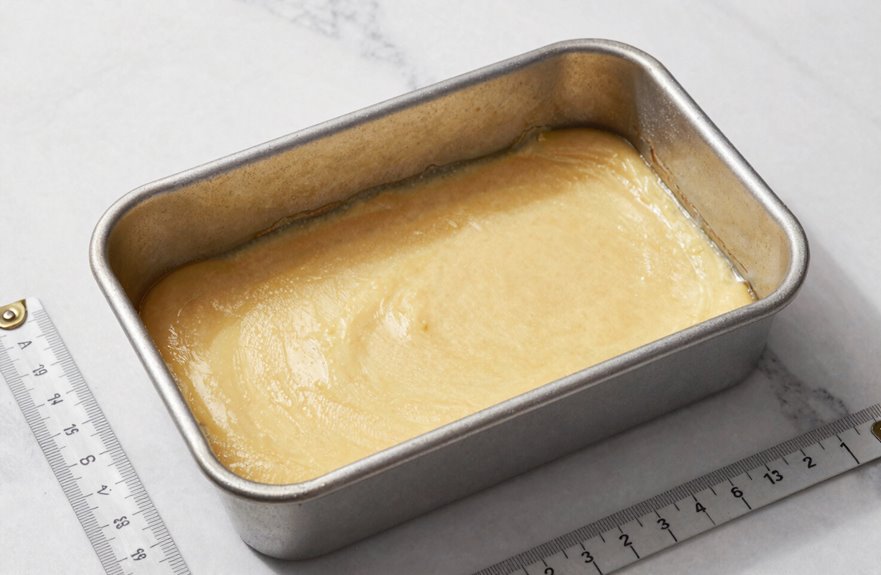
I typically need 4 to 5 cups of batter for a single layer in my standard 9 x 13 inch pan, though I adjust this based on whether I want a thinner cake or a taller layer.
I scale my recipes carefully when building a two-layer cake, since combining layers requires roughly 8 to 10 cups total to achieve proper height. When working from a box mix, one batch usually fills a single layer perfectly.
Therefore, I grab a second batch when stacking.
Standard Batter Capacity
How much batter fits in a 1/4 sheet cake pan? I typically fill my 9×13 pan with 8 to 10 cups of batter for a single layer, reaching halfway to two-thirds full before baking.
This approach allows for a good rise without overflow. When stacking two layers for a taller sheet cake, I plan for 16 to 20 cups total.
These volume measurements ensure consistent results.
| Layer Style | Batter Capacity | Cups Needed |
|---|---|---|
| Single layer | 8–10 cups | One batch |
| Two layers | 16–20 cups | Two batches |
| Boxed mix equivalent | 4–5 cups per box | 2–3 boxes |
Understanding your 9×13 pan’s limits helps you bake successfully alongside other home bakers who have learned these essentials.
Recipe Adjustments Needed
Why guess and risk an overflow when I can measure my batter to fit my 1/4 sheet pan precisely? I’m sharing this dimensions guide because getting it right means no more sunken centers or messy ovens.
My standard 1/4 sheet pan size is 9 × 13 inches, and I’ve learned that batter adjustment depends on my desired serving count. For a single layer yielding about 24 servings of 2 × 2 inch slices, I fill my pan roughly two-thirds full.
When adding frosting and filling between layers, I divide my batter for two thinner cakes instead of one thick one. This prevents overflow and bakes more evenly.
Taller configurations change everything. Doubling recipes for extra height requires extending bake time and lowering temperature slightly.
Precise measuring transforms anxious baking into confident creating.
Baking Time and Temperature for 1/4 Sheet Cakes
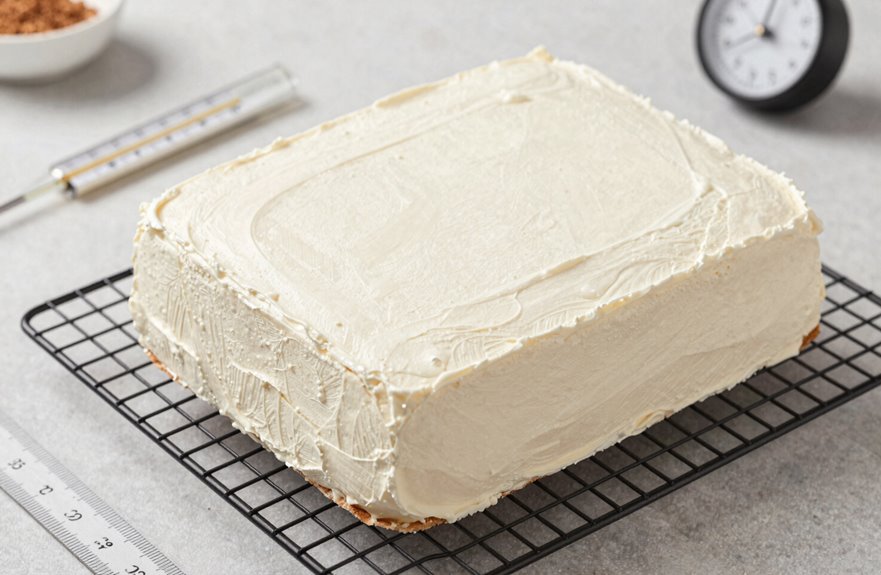
When you’re ready to bake, set your oven to 350°F (175°C). A 9 x 13 inch cake typically takes 25–35 minutes.
The temperature remains the same across most sheet cake sizes, though bake time may vary slightly based on your pan’s depth and batter density.
Set your oven to 350°F (175°C). A 9 x 13 inch cake bakes in 25–35 minutes, with time varying by pan depth and batter density.
These three principles help ensure success:
- Always run a doneness test by inserting a toothpick in the center; it should come out clean or with just a few moist crumbs.
- For a 9×13 pan, add heat-conducting cake nails if there’s uneven browning around the edges.
- Allow the cake to cool completely to prevent cracking later.
Mastering temperature and timing leads to delicious creations that you can share with others.
Single-Layer vs. Double-Layer Quarter Sheet Cakes
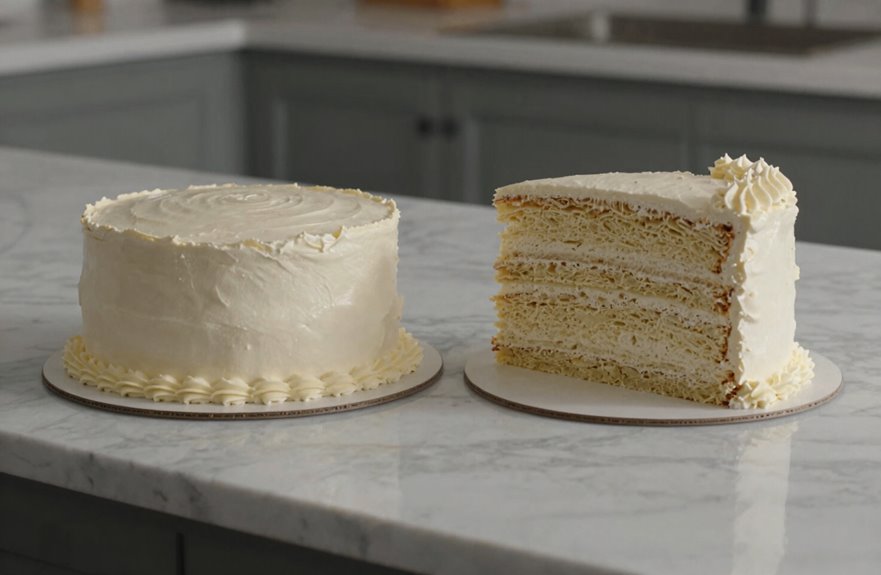
I will explain the key differences between single-layer and double-layer quarter sheet cakes, starting with how the additional layer changes the dessert’s structure. A single-layer cake sits at roughly 2 inches tall.
When I stack a second 9 × 13 inch layer with filling, the height increases to over 4 inches. This change transforms each slice into a more substantial portion.
As a result, I need to adjust my cutting and serving method. What appears to be a modest 2 × 2 inch square becomes a larger bite that feeds fewer people, despite sharing the same base footprint.
Structural Height Differences
How does stacking change a quarter sheet cake’s presence? Let’s explore the sheet cake height differences to help you choose confidently for your next gathering.
A single-layer quarter sheet cake typically measures 1 to 3 inches in height, providing that classic low-slung look.
When you opt for a double-layer cake, you double the visual impact, increasing the total height to 2 to 6 inches with filling and frosting between those 9×13 dimensions.
The serving count by height remains similar, at about 20 to 24 slices, yet guests perceive double layers as more generous.
Here’s how height affects your cake:
- Stability – Taller cakes require sturdier support and careful transport.
- Frosting ratio – More layers result in more creamy filling in every bite.
- Presentation presence – Double layers attract attention on any dessert table.
Portion Adjustments Needed
Stacking layers changes more than just appearance; it requires a rethink of portions too. A single-layer quarter sheet measures roughly 9 x 13 inches, yielding 20 to 24 servings with standard 2 x 2 inch slice dimensions.
When I double the layers, I am not just adding height; I am essentially doubling the cake volume without expanding the footprint.
This means my serving size calculations shift significantly. That same 9 x 13 inch area now feeds closer to 40 guests if I maintain modest slice dimensions, or I can cut more generously since each piece contains twice the cake.
Some bakeries use slightly smaller pans—8 x 12 or 9 x 12 inches—which complicates portion adjustments. I always verify actual pan dimensions before promising specific counts to my guests.
How to Cut a 1/4 Sheet Cake for Maximum Servings
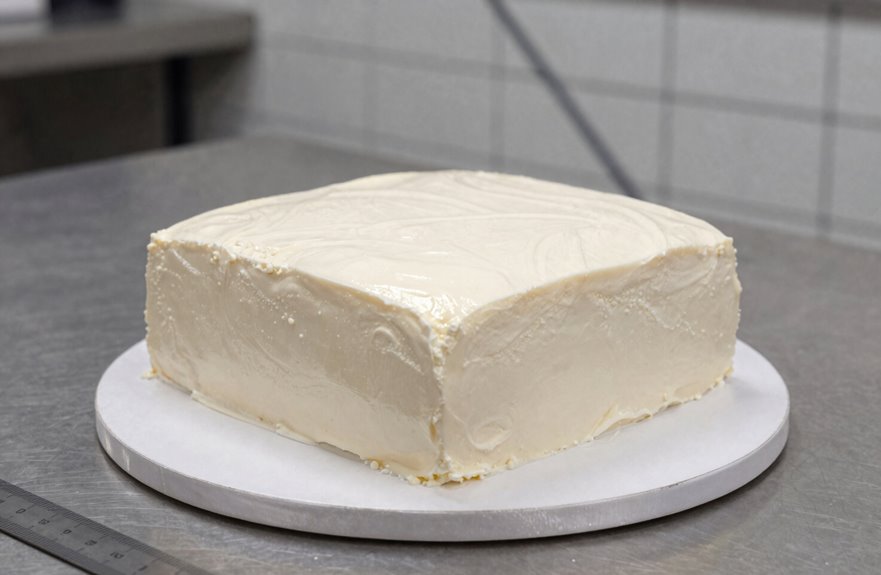
Wondering how to get the most out of your 1/4 sheet cake? This cutting guide helps maximize servings while keeping everyone satisfied.
- Measure twice before slicing. I mark my 1/4 sheet cake into equal sections using toothpicks, ensuring uniform serving sizes and no uneven pieces.
- Cut across the shorter side first. For a 9 × 13 inch cake, follow the 9-inch edge to create neat rows that yield about 24 portions.
- Adjust for your guests. Smaller 1½ inch squares stretch my 1/4 sheet cake to 30 servings for kids, while hearty 2 × 3 inch portions work better for adults wanting larger servings.
Follow this method, and you will achieve great results every time.
Fillings, Frostings, and Decoration Ideas
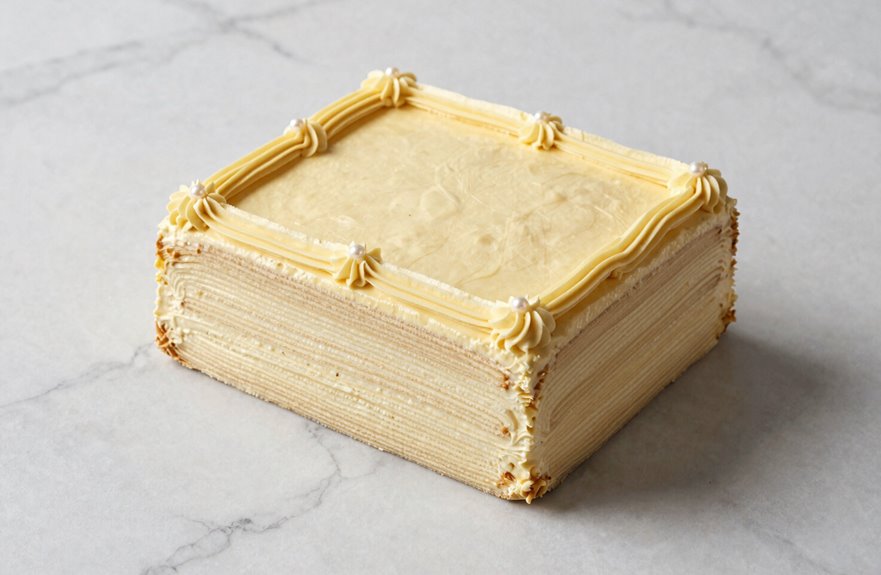
Once I’ve portioned out every last slice, I focus on what makes a 1/4 sheet cake memorable: the fillings, frostings, and decorations.
Sheet cake sizes like the 9 × 13 standard may seem modest, but the right finishing touch can transform any gathering into something special.
| Filling Options | Frosting | Decorations |
|---|---|---|
| Raspberry jam, lemon curd, chocolate ganache | Vanilla buttercream, cream cheese, whipped ganache | Fresh berries, edible flowers, sprinkles |
| Salted caramel, mocha, fruit compote | Chocolate fudge, Swiss meringue, peanut butter | Piped borders, fondant shapes, message plaques |
I match my choices to serving guidelines and crowd size. For intimate celebrations yielding 20-30 portions, I layer taller cakes with generous filling options and stable frosting.
These details create an inclusive atmosphere, turning simple slices into shared moments that everyone remembers.
How to Store and Transport a 1/4 Sheet Cake
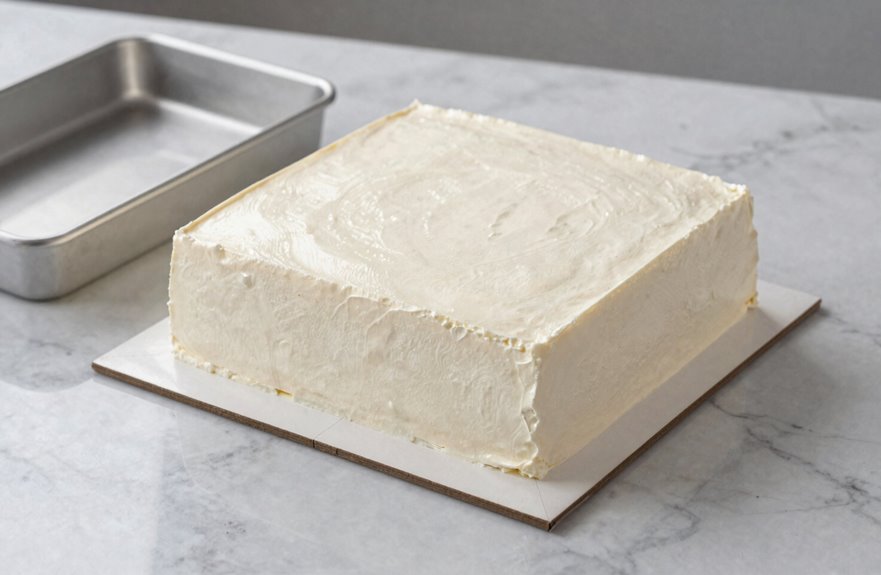
Proper storage keeps a 1/4 sheet cake fresh and ready to serve. Here’s how to refrigerate or freeze it without damaging the frosting or texture.
Additionally, I will explain how to secure it for safe transport, ensuring your cake arrives in perfect condition.
Storage Best Practices
A quarter sheet cake’s compact 9 × 13 inch frame makes it manageable to store, and the right approach is essential to keep it fresh.
Whether working with a frosted cake or unfrosted layers, proper storage ensures the cake maintains its delicious flavor.
Here’s how I protect my investment:
- Sheet pan freezing: I place unfrosted layers on a sheet pan, freeze until firm, then wrap tightly for freezer storage up to one month.
- Room temperature holding: My frosted cake stays perfect on the counter for about two days when covered loosely.
- Refrigeration strategy: I chill briefly if my frosting contains dairy, but always let it come to room temperature before serving to enjoy that soft, welcoming texture.
Transport Preparation Tips
How do you keep a 9 × 13 inch cake intact from your kitchen to the party? Smart transport preparation makes all the difference between a showstopper and a disaster.
First, chill your cake. Firm buttercream won’t smudge during transport.
Slide the cake onto a sturdy board, then place it inside a box that fits snugly. This prevents sliding and sweating.
For sheet cake transport, clear your vehicle’s flat surfaces and turn on the AC. Warm cars melt frosting quickly, which can be problematic.
When handling catering logistics for your group, pack towels to wedge around the box. They absorb bumps and keep everything level.
Your 20–24 guests will appreciate the effort put into ensuring that 117 square inches of goodness arrived safely.