I always check ingredients before assuming a cake is safe for me. Most traditional cakes contain gluten since they are made with wheat flour, which provides structure and elasticity to the crumb.
Gluten-free cakes use special flour blends, starches, and binders like xanthan gum to recreate that texture without any wheat.
If you’re interested in how to spot or bake these alternatives yourself, I’ve gathered plenty of useful details along the way.
What Makes a Cake Gluten-Free?
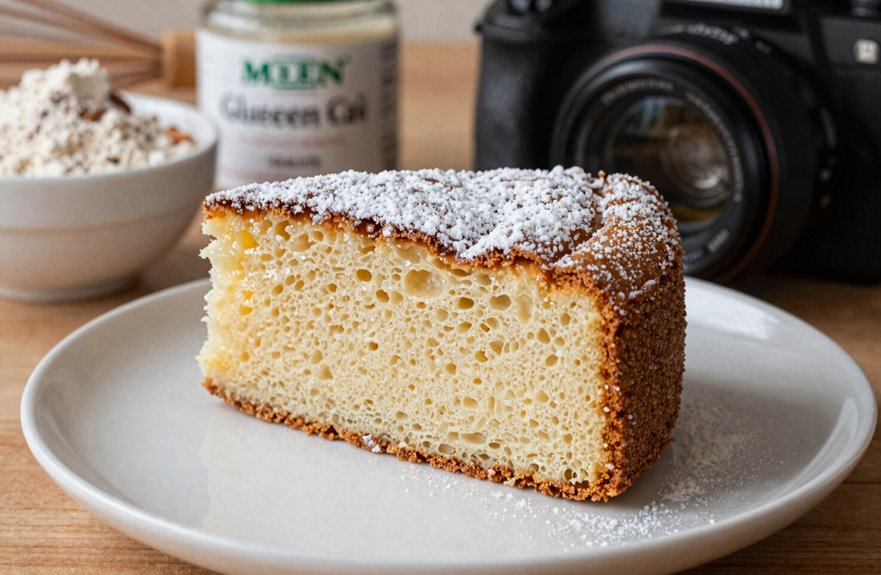
How do we create a gluten-free cake without losing its essence? I blend gluten-free flours, such as rice and potato starch, sometimes incorporating oats to replicate the qualities of wheat.
Each flour has its limitations, but together they form a familiar texture we can enjoy without concern.
To bind the batter, I add xanthan gum, which mimics gluten’s elasticity so our cakes remain cohesive. Ingredients alone aren’t sufficient; I also look for gluten-free certifications, verifying that products contain 20 ppm or less.
The label “gluten-free” holds little value without this assurance. I remain cautious about cross-contact; those “may contain” warnings from shared facilities can pose a risk.
When we bake with care, we don’t just participate in celebrations; we reclaim our place at the table.
How Do Gluten-Free Cakes Differ From Regular Cakes?
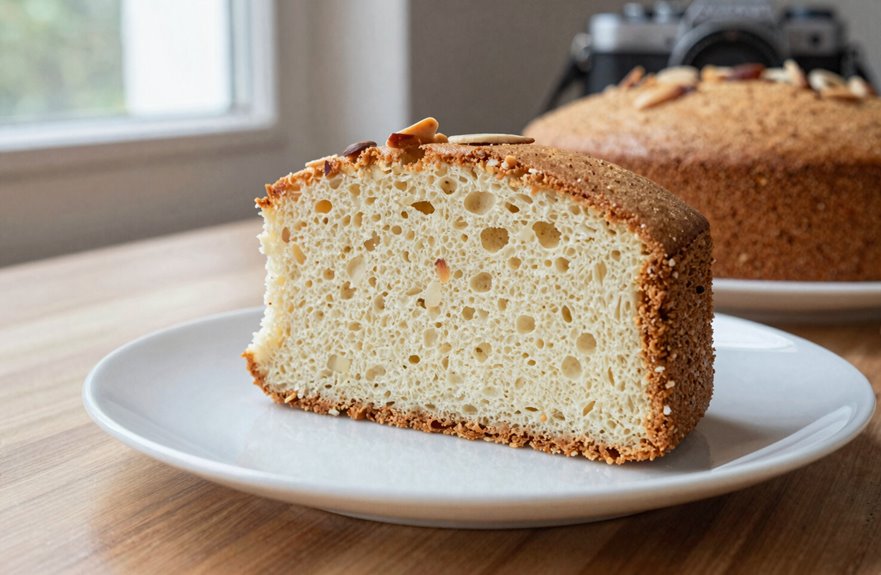
Why do gluten-free cakes behave so differently in my kitchen? It’s all about what’s missing: gluten.
Regular cakes rely on gluten from wheat flour to create that stretchy network that traps air and builds height. Without it, I need gluten-free flours and binding agents like xanthan gum to rebuild that structure from scratch.
I’ve noticed gluten-free batters require more liquid and often longer rest or bake times. Early recipes led to crumbly, dry results that made me feel like an outsider at gatherings.
However, modern blends have changed everything. I can now achieve a texture nearly identical to traditional cakes when I use quality ingredients.
The crumb and flavor still vary by flour choice, but I have found my place in baking alongside everyone else.
Which Flours Work Best in Gluten-Free Cakes?
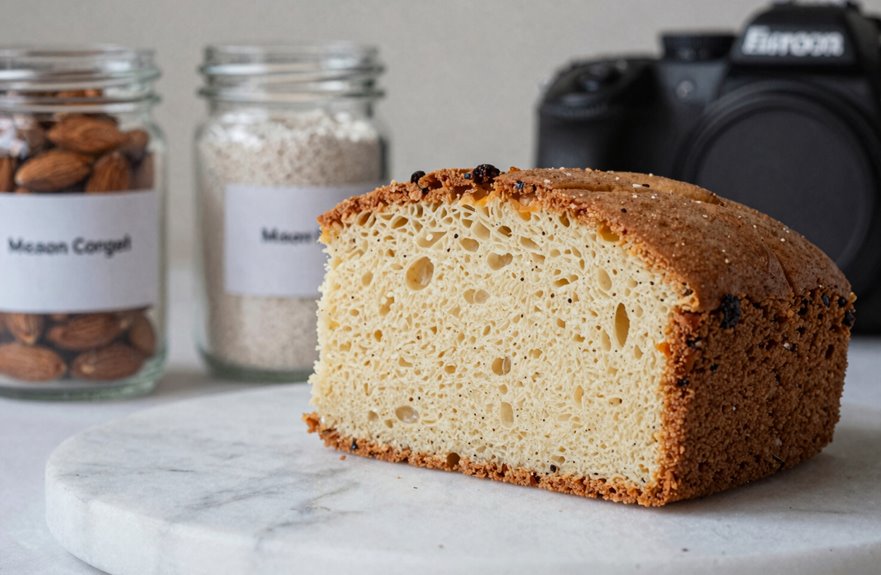
The best gluten-free cakes rely on blends rather than any single flour. White rice flour combined with tapioca or potato starch creates the desired structure and moisture, while mixed flours consistently deliver a better crumb than standalone alternatives.
This blend approach allows for improved texture and flavor. Starches play a crucial role in these mixtures, enhancing the overall quality of the cake.
Combining flours is more effective than using a single type.
Best Flour Blends
What’s the secret to a gluten-free cake that doesn’t crumble at the fork? It’s all about building the right gluten-free flour blend.
I start with white rice flour as my base; it’s neutral and fine. Then I add starches, such as tapioca or arrowroot, for that tender stretch you’d miss otherwise.
Without xanthan gum, you’re still fighting a losing battle; I use ¼ to ½ teaspoon per cup to bind everything together. Pre-milled blends help me avoid gritty disasters.
Here’s what I reach for:
| Base Flour | Starch Add-in | Binder |
|---|---|---|
| White rice flour | Tapioca starch | Xanthan gum |
| White rice flour | Arrowroot starch | Xanthan gum |
| Sorghum + white rice | Tapioca starch | Xanthan gum |
| Millet + white rice | Arrowroot starch | Xanthan gum |
| Gluten-free oat + white rice | Tapioca starch | Xanthan gum |
Your perfect crumb is within reach.
Starch Role Explained
Starches play a crucial role in my gluten-free cakes. I rely on tapioca, potato, and corn starches to restore what gluten once provided: moisture, structure, and that tender crumb we all appreciate.
Without gluten, I focus on building texture from scratch, and starches are essential in this process.
Potato and tapioca starches lighten my batters and add springiness, while rice flour alone often results in disappointing crumbs. I have found that starches thicken my batters and absorb extra liquid, so I adjust my hydration and leavening accordingly.
Binding agents are important allies in my baking. I incorporate xanthan gum alongside my starches to replicate gluten’s stretch and hold everything together.
The best results come from blending multiple gluten-free flours with these starches rather than using just one. This approach allows me to create cakes that evoke a sense of home.
Single vs Mixed Flours
How do I decide between a single flour and a blend when baking gluten-free cakes? Single flours often result in gritty, dense textures, while gluten-free flour blends provide the structure and texture needed for better outcomes.
| Flour Type | What I Get | What I Watch For |
|---|---|---|
| Single flours | Quick setup, heavier crumb | Dryness or grittiness |
| Gluten-free flour blends | Balanced tenderness, better rise | Extra liquid, longer hydration |
| Rice + starches | Mimics all-purpose flour closely | Needs xanthan gum for elasticity |
| Commercial blends | Tested, reliable results | Check if xanthan gum is included |
I always add xanthan gum if my blend lacks it, as it binds the ingredients together. For consistent results, I prefer commercially tested blends over experimenting with single flours.
This approach helps ensure that the baking process is more straightforward and effective.
Do Gluten-Free Cakes Actually Taste Good?
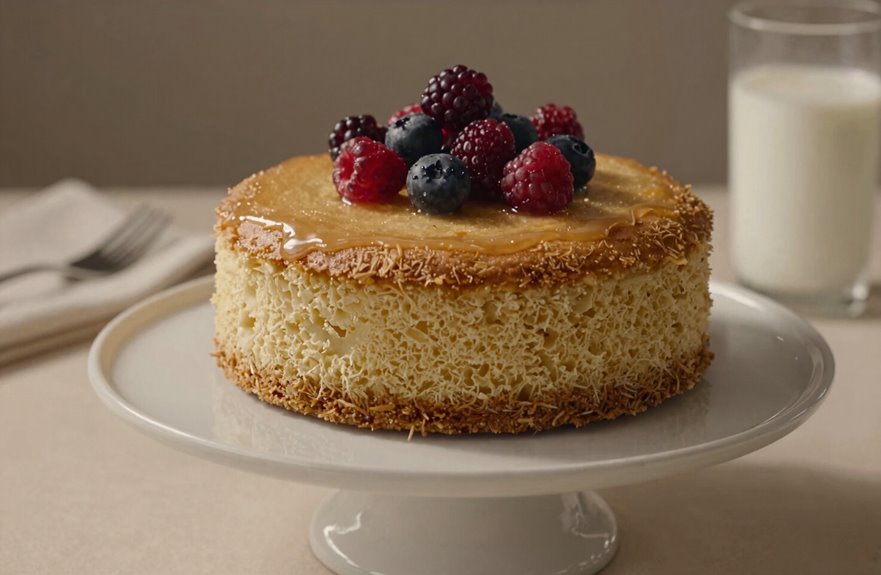
When I first tried a gluten-free cake years ago, I braced myself for disappointment; however, the slice in front of me tasted remarkably like any traditional chocolate cake I had enjoyed before.
I have since learned that gluten-free cakes can taste good when bakers use quality gluten-free ingredients and master their technique.
The secret lies in blending gluten-free flours like white rice flour with potato starch and tapioca starch, plus binders such as xanthan gum. These combinations mimic gluten’s structure and moisture.
I rest my batters and adjust liquids to avoid gummy textures. Modern gluten-free baking has evolved far beyond dry, crumbly results.
With Belgian dark chocolate and careful preparation, I create indulgent, moist cakes that welcome everyone to the table without compromise.
Where to Buy Gluten-Free Cakes Online
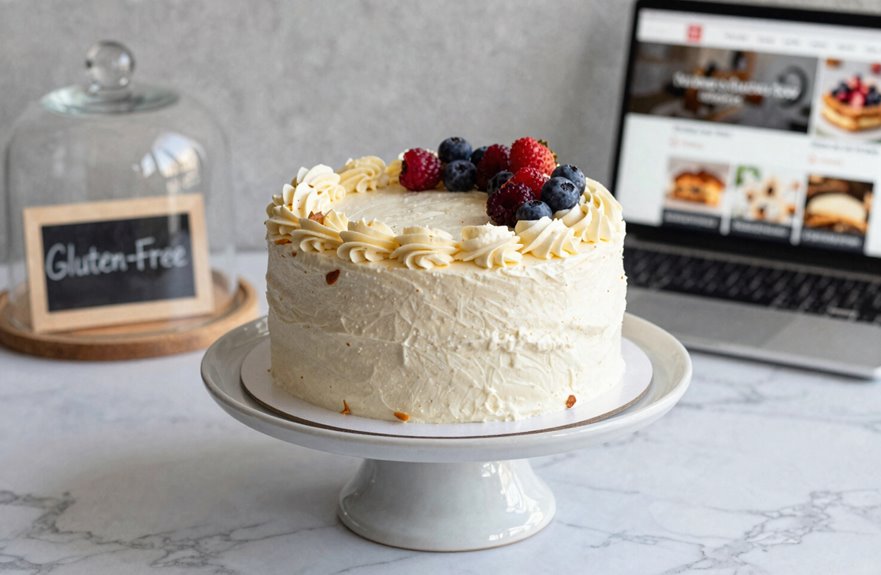
Where can you find gluten-free cakes that deliver on taste? There are several excellent options to consider.
- Nothing Bundt Cakes offers gluten-free selections like Chocolate Chip Cookie and Lemon Raspberry varieties; however, availability varies by location. Check their “Shop Our Gluten-Free Cakes” page for convenient occasion filters.
- Lazy Day operates as a 100% gluten-free bespoke online bakery where every cake and snack is completely safe, ensuring no cross-contamination concerns.
- Partner bakeries provide nationwide shipping for gluten-free cakes, with costs around $89.95. They also offer guidance on freezing and storage upon arrival.
Always scrutinize gluten labeling carefully. Products marked “may contain gluten” are not suitable for celiac disease or gluten intolerance, even when other items show 20 ppm compliance under UK standards.
What Does “Certified Gluten-Free” Really Mean?
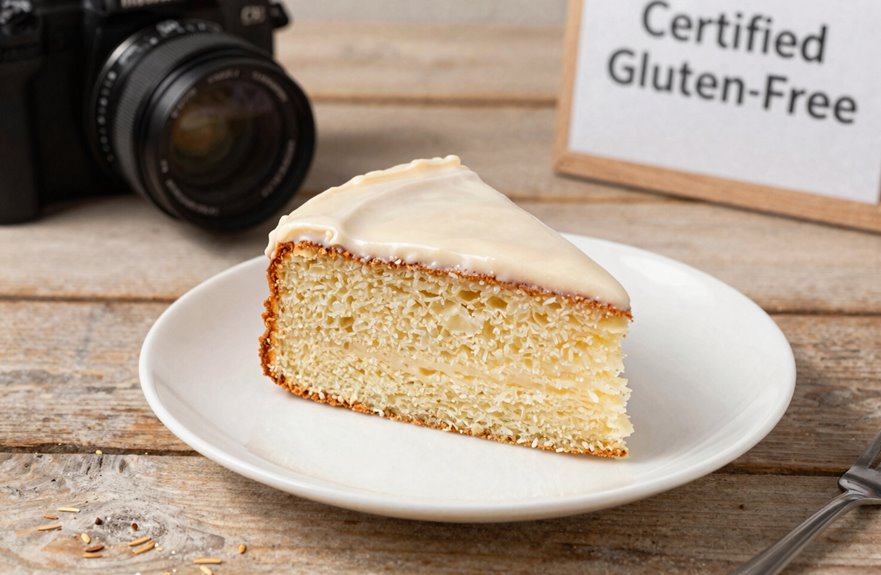
Why does “certified gluten-free” matter when I’m scanning bakery shelves? It indicates that I’ve found products tested to 20 ppm or less gluten under UK law, providing safety I can rely on with my gluten intolerance.
| What I’ll Check | Why It Protects Me | Red Flags I’ll Skip |
|---|---|---|
| Certified gluten-free seal | Verified testing, strict standards | “May contain gluten” warnings |
| Dedicated facilities | Prevents cross-contamination risks | Shared equipment without cleaning protocols |
| 100% gluten-free brands like Lazy Day | Guarantees across all products | Vague “gluten-free” claims without certification |
Reading labels connects me with a community that prioritizes gluten safety. Certification requires rigorous ingredient sourcing and production controls.
I will still look for cross-contact notes, as my health is a priority. True certified gluten-free status allows me to choose products without concern.
How to Spot a Well-Baked Gluten-Free Cake
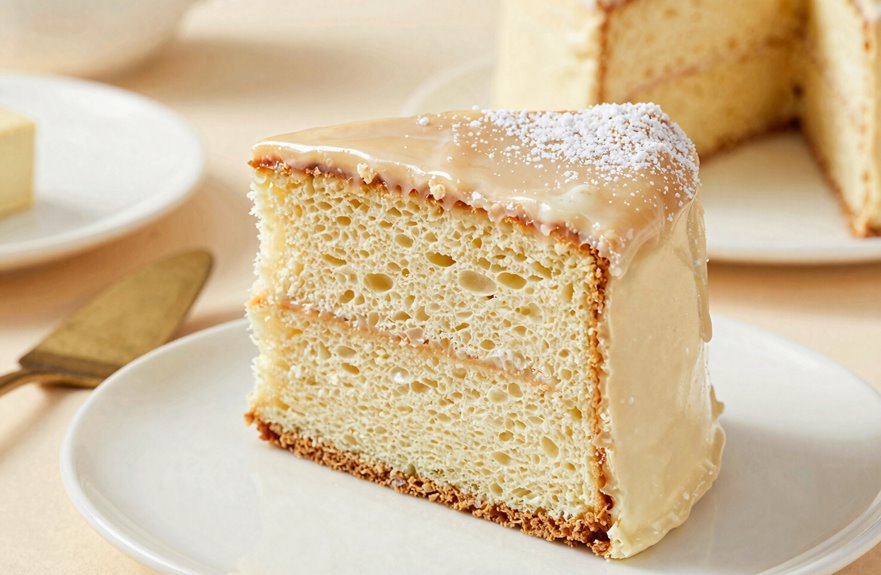
How do I know my gluten-free cake is actually done without guessing? I have learned to trust specific doneness cues rather than leaving it to chance.
- I set my timer for the early end of the recipe’s range; checking at 25 minutes for a 25–30 minute bake keeps me in control.
- I watch for edge pull; when the sides release from the pan, the structure is forming properly.
- I test center spring-back with a gentle finger press. If it bounces back, it’s ready; a dull impression means more time is needed.
I do not rely solely on the toothpick test. Wet batter simply indicates that I should extend baking and recheck.
Combining these three signals gives me confidence every time.
Common Gluten-Free Cake Baking Mistakes to Avoid
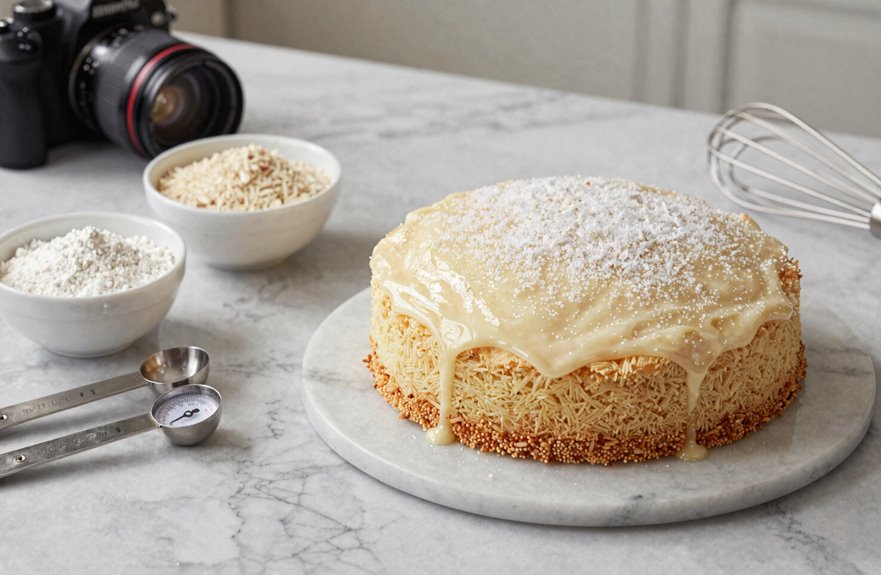
Although I’ve learned plenty of tricks for nailing doneness, I still slip up in other ways when baking gluten-free cakes. One significant mistake I make is relying solely on the toothpick test.
Gluten-free batters often stay gummy until cooled, so I now trust multiple doneness cues instead.
| My Mistake | What I Do Now |
|---|---|
| Trusting toothpicks alone | Use set-and-test timing from tested recipes |
| Checking at recipe’s end time | Check at the early end of the range |
| Ignoring edges | Watch for edges pulling away from the pan |
| Skipping the press test | Press the center—it should spring back |
| Rushing the decision | Recheck after a few more minutes if needed |
Combining edge checks, center spring-back, and timing helps me avoid over- or under-baking my gluten-free cake.