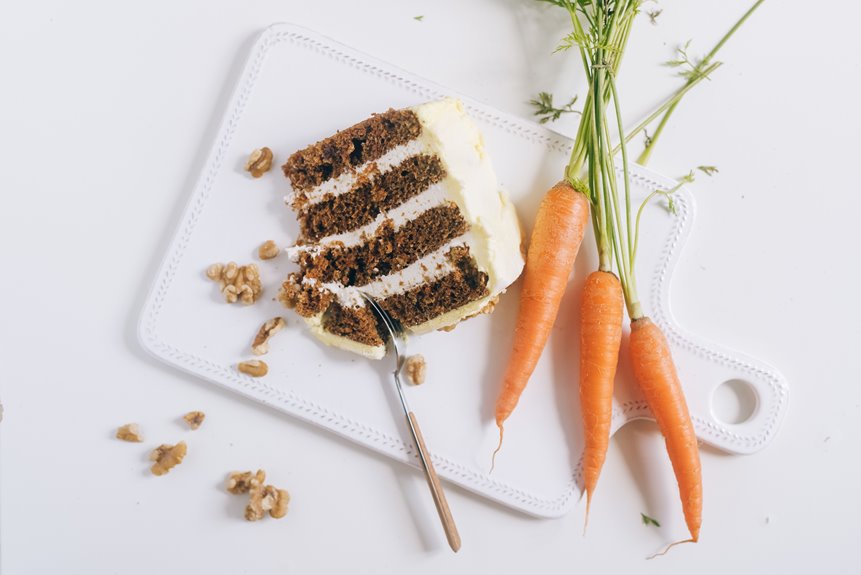
I wouldn’t call carrot cake healthy, but it’s not automatically a diet disaster either. A plain 70-gram slice runs about 144 calories with 3 grams of fiber from the carrots.
Adding cream cheese frosting nearly doubles everything—jumping to 242 calories and 25 grams of sugar.
The carrots do add vitamin A; however, they don’t cancel out the refined flour and sugar in the base.
The overall healthiness of your slice depends on its ingredients and portion size.
How Healthy Is Classic Carrot Cake?
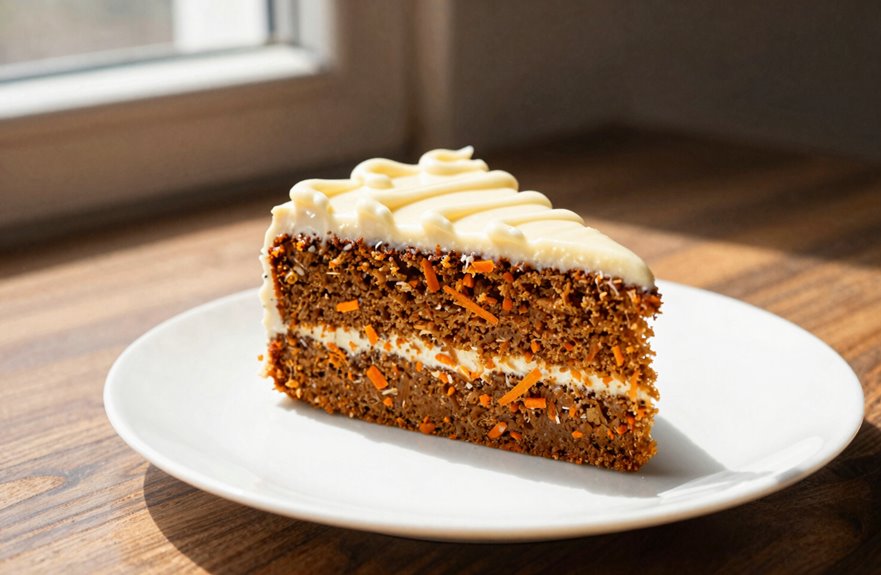
When I examine classic carrot cake, I consider more than just its vegetable content compared to the sugar and fat. I’m focused on what actually lands on your plate.
A plain slice runs about 144 calories with 11 grams of sugar. Add frosting, and you’re suddenly at 242 calories and 25 grams of sugar.
That creamy topping nearly doubles the sugar load.
The carrots do deliver—four times more vitamin A than fruit cake—but they do not negate the impact of the other ingredients.
If you’re tracking healthiness, frosting is the critical factor. Without it, you’ve got a modest treat.
With it, you’re moving toward dessert territory quickly.
Can we keep the experience without the added sugar? Gluten-free versions exist, but they do not automatically solve the sugar issue.
The fundamental concern remains.
Ingredient Swaps That Cut Sugar and Boost Nutrition
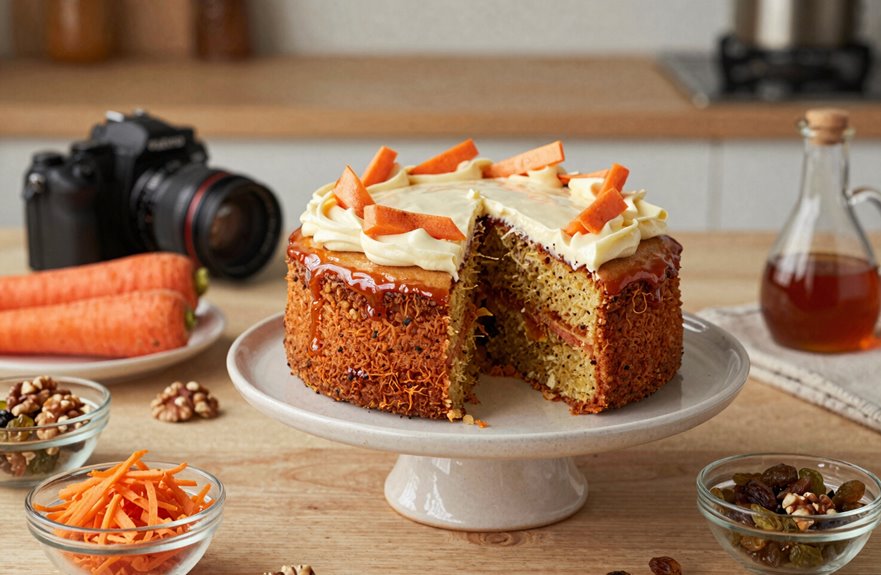
Why settle for a sugar-heavy slice when I can rebuild this cake from the ground up? I swap refined sugar for unsweetened applesauce, keeping every bite moist without the crash.
I trade wheat flour for almond flour, creating a gluten-free base that feels indulgent and accessible. I mix flax eggs, which are just ground flax and water left to thicken, providing binding power without using eggs.
I go dairy-free with non-dairy milk and vegan butter, showing that traditional ingredients aren’t necessary for deliciousness. I fold in shredded coconut and crushed pineapple for natural sweetness and fiber that satisfies.
Together, we’re creating a more nutritious cake that everyone can enjoy.
How Cream Cheese Frosting Affects Nutrition
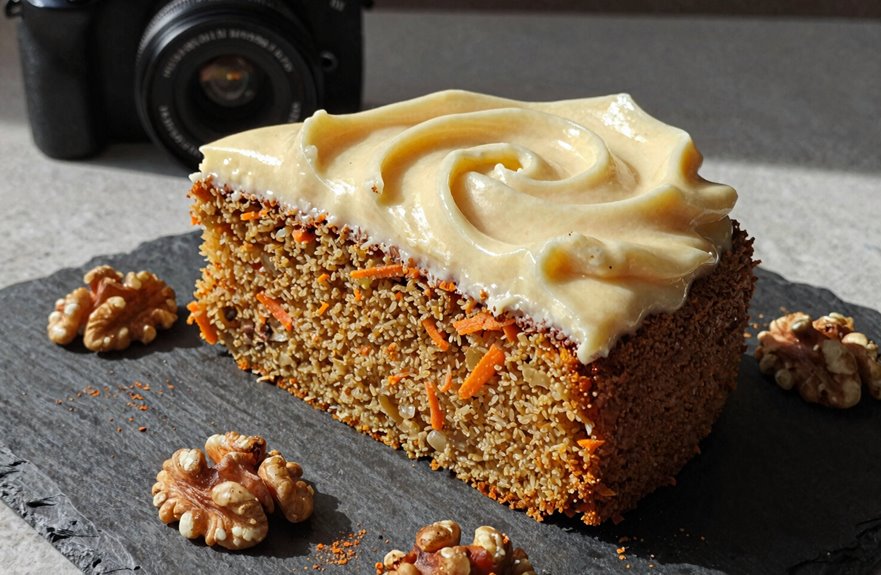
I want you to understand how dramatically that layer of cream cheese frosting changes what you’re actually eating.
Adding frosting nearly doubles the calorie count from 144 to 242 per slice and more than doubles the total fat from 3 grams to 7 grams, with saturated fat jumping from zero to 3 grams.
These numbers are significant if you’re monitoring your intake, so I’ll explain what this means for your choices.
Calorie Impact
How much does that tangy cream cheese frosting really change the nutritional picture? The numbers tell a clear story.
Unfrosted versus frosted makes a real difference in nutrition per slice.
That frosting adds roughly 80 calories to each piece, pushing the total to 242 calories. The sugar jumps to about 25 grams per slice, which is a significant portion of your daily limit.
The saturated fat also increases due to the cream cheese and butter combination.
When comparing frosting-on to frosting-off, I see nearly 100 extra calories along with higher fat and sugar content. If you’re monitoring your intake, that layer of sweetness turns a modest treat into something more indulgent.
The choice is yours, but now you have a clearer understanding of what you’re getting.
Fat Content
Where does most of the fat in frosted carrot cake come from? The frosting is the main contributor.
When comparing frosted to unfrosted versions, the numbers increase significantly. A typical frosted slice contains about 7 grams of fat, including 3 grams of saturated fat, while the unfrosted version has just 3 grams and no saturated fat.
The frosting also raises calories from 144 to 242 per serving. Cholesterol increases as well, from 22 mg in the unfrosted version to 33 mg in the frosted one.
As we make these choices, seeking balance is important. Healthier options like vanilla Greek yogurt or almond butter frostings can reduce fat and cholesterol while maintaining flavor.
Portion control is essential when enjoying that creamy topping.
The Healthiest Carrot Cake Recipe Formula
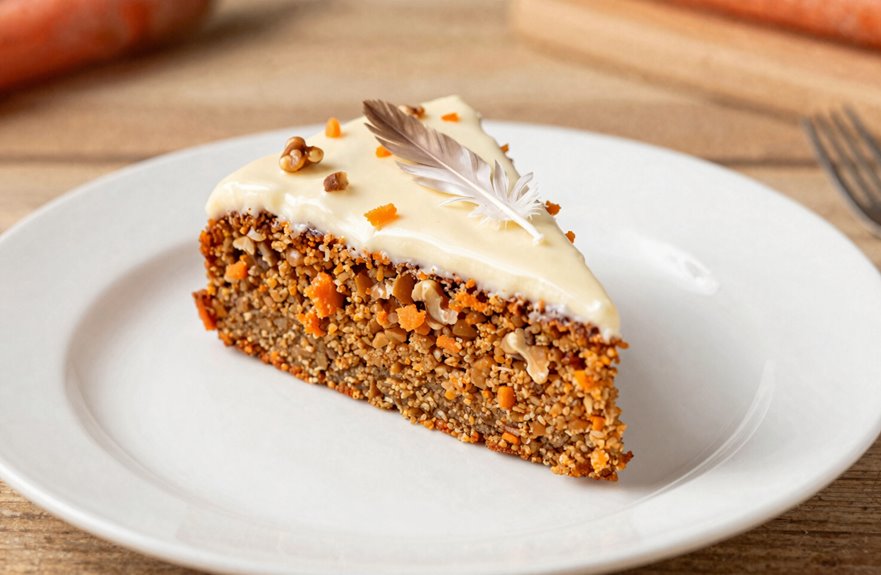
Why settle for a sugar-laden dessert when you can create something truly nourishing? I’ve crafted a formula that transforms carrot cake into a treat we can all feel good about sharing.
I start with almond flour as my gluten-free foundation, binding everything with eggs or flax eggs for vegan friends. That simple swap of two tablespoons ground flax plus four tablespoons water, thickened for three to five minutes, works beautifully.
I sweeten with maple syrup, add moisture from fresh carrots, and boost nutrition with walnuts and warm spices. For dairy-free adaptations, I use plant milk and vegan butter, finishing with dairy-free cream cheese frosting.
Unfrosted slices contain 144 calories and 3g of fiber. For storage, I keep unfrosted cake for three days at room temperature, and frosted for up to five days refrigerated.
Slices can be frozen for three months.
Portion Sizes That Keep Carrot Cake Guilt-Free
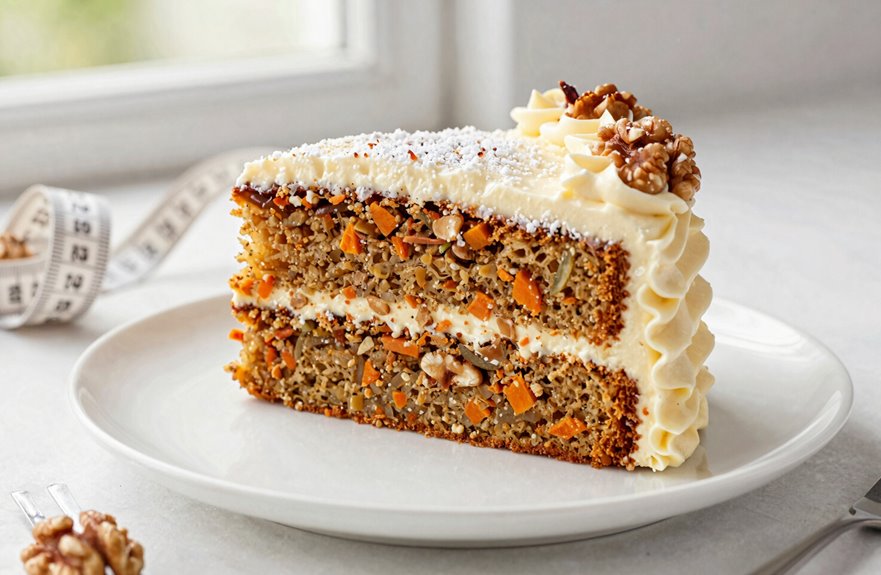
What keeps a slice of carrot cake from becoming a calorie bomb? It’s all about portion sizes and smart choices.
My serving size guidance centers on 70-gram slices—small enough to satisfy without overdoing calories per serving.
The impact of frosting changes everything:
| Portion Type | Calories | Best For |
|---|---|---|
| Unfrosted 70g slice | 144 | Daily treat, room temp 3 days |
| Frosted 70g slice | 242 | Special occasions, fridge 5 days |
| Two 6-inch rounds | 16 slices | Tighter portion control |
| 9×13 doubled batch | 24 slices | Sharing with friends |
| Light frosting swap | ~180 estimated | Balanced flavor, fewer calories |
I embrace the flexibility of unfrosted versus frosted options. Sometimes I skip frosting entirely, while other times I use Greek yogurt.
This approach to portion control allows us to enjoy carrot cake together without guilt.
Mistakes That Make Healthy Carrot Cake Unhealthy
I’ve noticed that even with the best intentions, common ingredient pitfalls can quickly turn a healthy carrot cake into something far less nutritious.
Substituting almond flour with regular flour or swapping maple syrup for high-sugar alternatives undermines the very benefits we aim for.
Additionally, portion control errors, such as cutting oversized slices, can negate the careful balance that makes this treat better for us.
Common Ingredient Pitfalls
How often do we swap ingredients thinking we’re upgrading nutrition, only to create new problems? I’ve fallen into this trap myself, and I bet you have too.
- Almond flour packs protein, but calories accumulate quickly per slice.
- Maple syrup replaces refined sugar, yet spikes overall sugar content.
- Raisins and pineapple add natural sweetness, which still raises glycemic load.
- Dairy-free substitutes maintain claims but often replace them with processed fats.
- Flax eggs shift protein balance and can leave cake gummy rather than satisfying.
We want to belong to the wellness community, so we embrace these swaps enthusiastically. However, “healthier” ingredients don’t automatically lead to healthier outcomes.
The math matters; every substitution carries trade-offs we cannot ignore when considering what lands on our plates.
Portion Control Errors
Why do we cut ourselves generous wedges and call it moderation? I’ve done it too; I trusted my eyes instead of a scale and then wondered why my healthy carrot cake sabotaged my goals.
Proper portion control means respecting the serving size. That modest 70-gram slice hits about 144 calories without frosting, but I have often grabbed portions nearly double that.
Suddenly, I’m consuming 242 calories before counting frosting calories that pile on 7 grams of fat and 25 grams of sugar per piece.
We belong to a culture of abundance, not accuracy. Mislabeling servings on shared dessert tables or doubling recipes without adjusting frosting proportions invites overeating.
Stacking two slices can lead to exceeding my daily sugar target before I even notice.
Precise dessert portioning—measuring rather than eyeing—keeps our carrot cake genuinely healthy.
Pineapple vs. Raisins: Best Mix-Ins for Nutrition
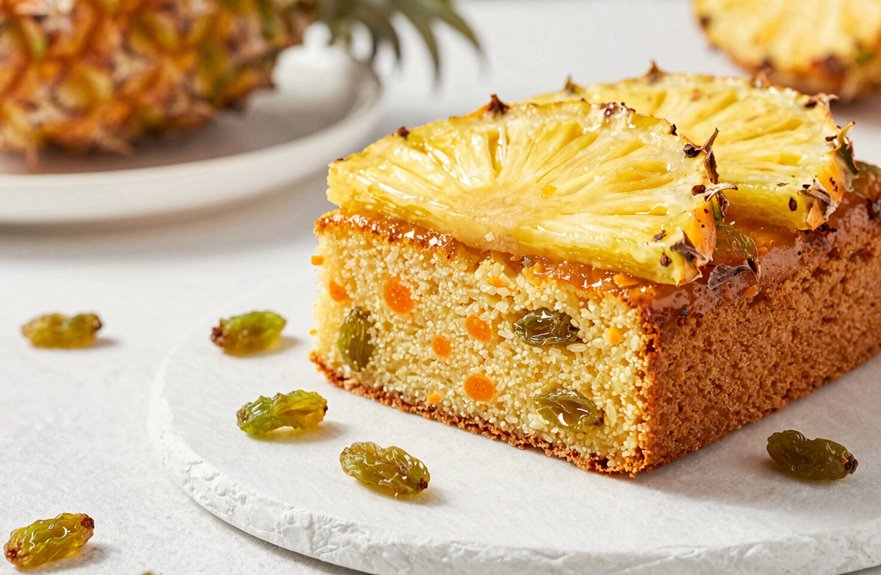
Although both pineapple and raisins enhance the nutrition profile of carrot cake, I assess their benefits based on specific goals. Pineapple adds moisture and natural sweetness, reducing the need for added sugar while providing vitamin C and manganese.
Raisins offer dietary fiber and iron, which can boost satiety and provide essential micronutrients.
Here are the differences I noted in selecting between them:
- Pineapple contains bromelain, which aids digestion after indulgence.
- Raisins add bulk and texture, allowing for potential fat reduction in recipes.
- Pineapple’s high moisture content requires adjustments to baking time to prevent sogginess.
- Raisins contribute potassium, but I remain aware of their concentrated sugar content.
- Combining both offers balanced nutrition without excessive sweetness.
Blending small amounts of raisins with pineapple creates an ideal moisture-sweetness ratio while maximizing micronutrient intake.
Storing and Freezing Healthy Carrot Cake
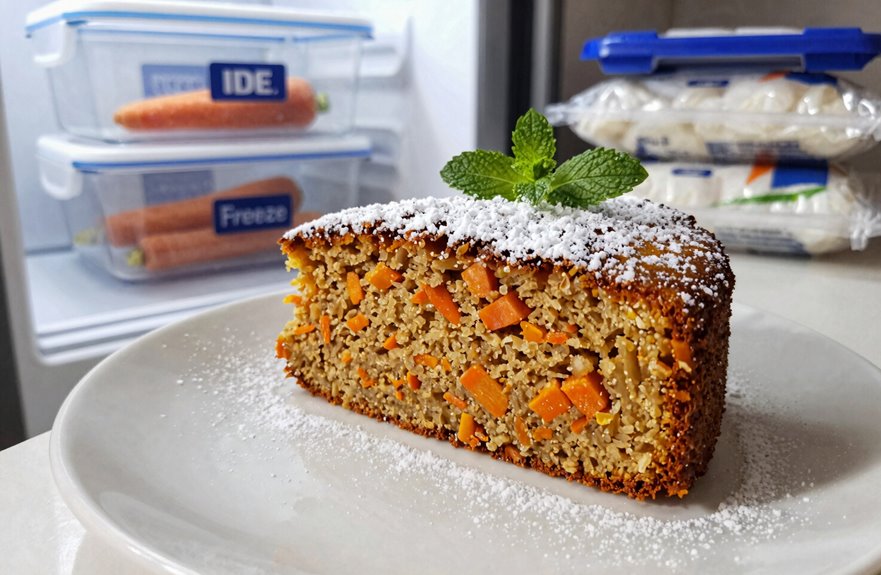
Once I settle on the perfect mix-ins for my carrot cake, I focus on keeping it fresh. I store unfrosted cake in an airtight container at room temperature for up to three days.
Once frosted, refrigeration extends storage duration to five days. I do not leave frosted leftovers out for more than two hours.
Freezing works well for unfrosted slices; I wrap them thoroughly and freeze them for up to three months. Thawing overnight in the fridge helps retain moisture.
I do not freeze frosted portions.
| Factor | Unfrosted | Frosted |
|---|---|---|
| Storage Location | Room temp | Refrigeration |
| Container | Airtight container | Airtight container |
| Storage Duration | 3 days | 5 days |
| Freezing | Recommended | Not recommended |
| Thawing | Fridge overnight | N/A |
Carrot Cake vs. Fruit Cake: Which Is Healthier?
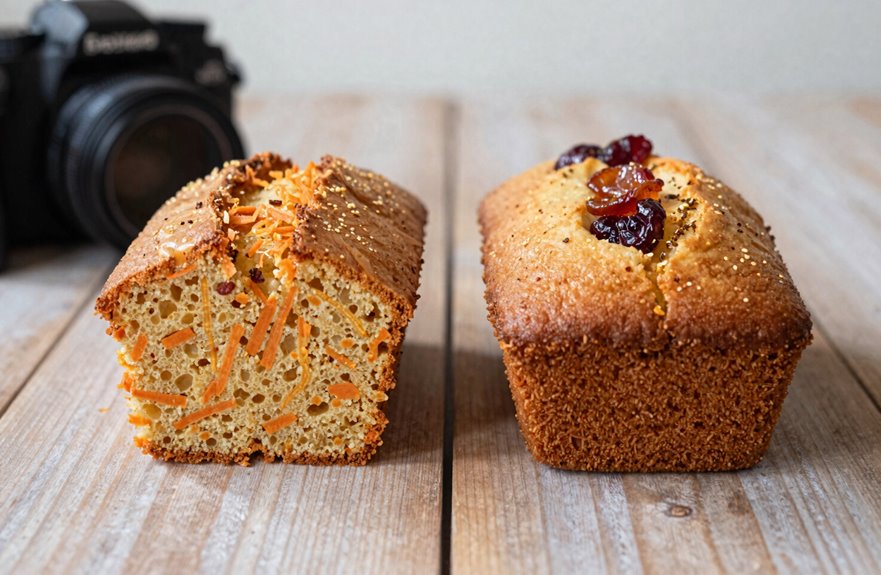
How do I choose between two classic desserts while watching what I eat? We all aim to make smarter choices, so let’s break down this health comparison.
Carrot cake packs more frosting fat and calories, with about 242 per frosted slice versus 144 unfrosted. Fruit cake offers more natural sugar along with fiber and micronutrients.
When I choose fruit cake, I’m trading vitamin A from beta-carotene for potassium and iron.
Frosted carrot cake hits 242 calories, but fruit cake trades cream cheese fat for natural sugars, fiber, and minerals.
Here’s what I’ve learned:
- Carrot cake’s cream cheese frosting increases saturated fat quickly.
- Fruit cake’s dried fruits provide natural sugars and fiber.
- The nutritional benefits depend on which vitamins I need most.
- Portion control at 70g keeps either treat reasonable.
- Moderation allows me to enjoy both without guilt.
Finding balance is key to making healthier dessert choices.