
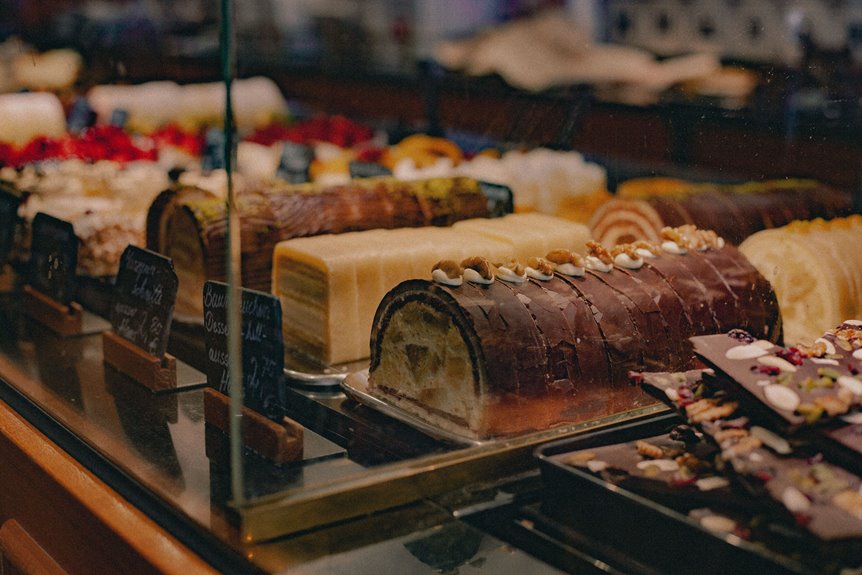
A sheet cake is a single-layer rectangle baked directly in its pan, then frosted and served without any stacking or fuss.
They are practical, eliminating the need for leveling rounds or concerns about wobbly towers. You simply bake it, spread frosting across that wide, flat surface, and cut clean squares that can feed a crowd.
They are a reliable choice for potlucks, birthdays, or any gathering where you need dessert without complications.
Stay tuned for tips on selecting the right size and achieving perfect frosting every time.
What’s the Difference Between Sheet Cakes and Layer Cakes?
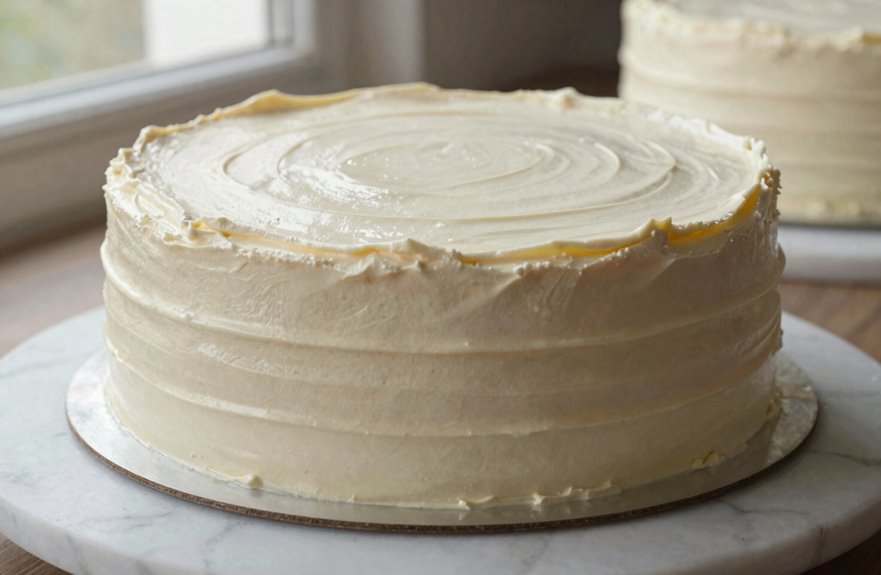
Why do sheet cakes and layer cakes feel like entirely different desserts when they’re built from the same basic ingredients? I often find myself pondering this when deciding what to bring to a gathering.
Sheet cakes bake in large, flat rectangular pans—full, half, or quarter sizes. I serve them directly from the pan.
There’s no stacking, no trimming, and no fuss. They consist of one even layer with uniform depth, providing a wide canvas for toppings and clean rectangular portions.
Layer cakes require more effort. I bake separate rounds, stack them with filling in between, and create height for visual appeal.
Each slice becomes a towering wedge.
I choose sheet cakes for their simplicity and ability to serve everyone gathered around the table.
The Three Standard Sheet Cake Sizes (And When to Use Each)
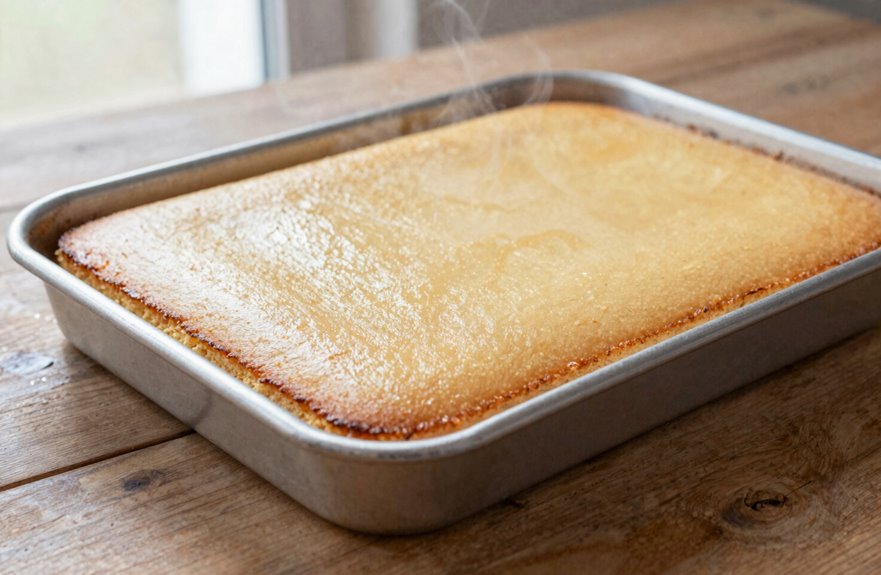
How do I decide which pan to pull from my cupboard? I look at my guest list and remember these three sheet pan sizes that every home baker needs in their arsenal.
- Quarter sheet (9″ × 13″): my go-to for intimate gatherings.
- Half sheet (18″ × 13″): the reliable workhorse for potlucks.
- Full sheet (26″ × 18″): the showstopper for crowds.
Each sheet pan size serves a specific purpose in baking. I grab my quarter sheet when I’m bringing dessert for my book club; it’s that familiar supermarket-sized comfort we all recognize.
My half sheet handles the office birthday party with ease. When I’m feeding the whole neighborhood block party, that full sheet becomes my trusted companion, delivering the most portions with a flat canvas for decorating.
How to Choose the Right Size for Your Guest Count
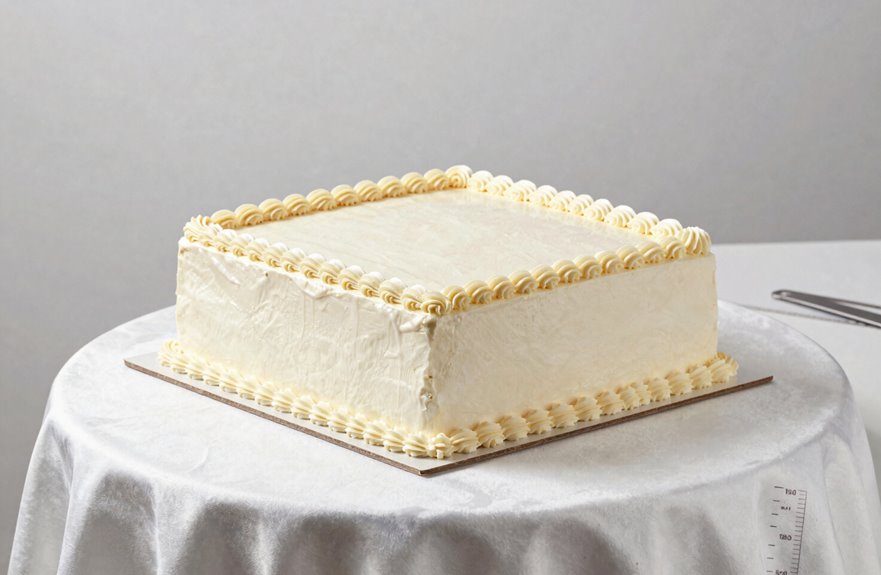
What size sheet cake do I actually need? It starts with counting my people and deciding how generous I want to be.
A quarter-sheet provides 16 to 24 servings, which is suitable for a cozy gathering where everyone feels included. When my guest list grows, I opt for the half-sheet.
For larger events, the full sheet is ideal.
I picture that flat, even surface making clean cuts so no one waits awkwardly for their slice. Portion size is also important; I choose dainty squares for a light reception and hearty pieces when cake is the main attraction.
Matching sheet cake size to my crowd ensures everyone leaves satisfied and minimizes leftovers. It reflects my consideration for my guests.
How Deep Your Sheet Cake Should Be (And Why It Matters)
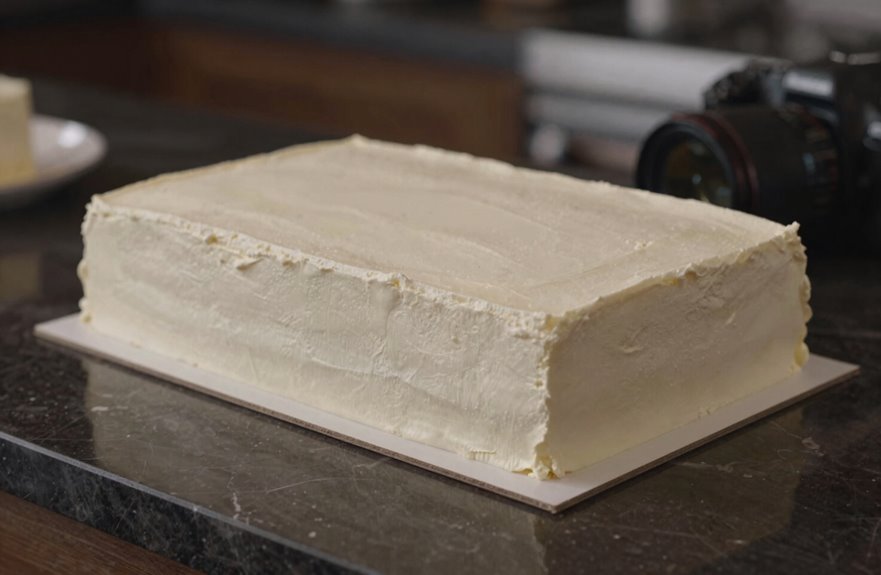
I’ve learned that the ideal depth for a sheet cake, usually two to three inches, directly affects its stability when stacking or frosting.
I consider this carefully because taller cakes provide heartier servings, while thinner ones risk drying out or collapsing under decorations. When planning portions and selecting my pan, I balance these structural needs against the number of guests I’m feeding.
Ideal Depth Standards
Why does depth matter for a simple sheet cake? It shapes everything from texture to how we share slices.
Most sheet cakes achieve the ideal depth at 2 to 3 inches, though some recipes may be thinner at 1 inch. Your pan size—full, half, or quarter—determines this depth and how evenly your batter bakes.
Here’s what I’ve discovered about getting depth right:
- Match depth to pan size for even heat distribution.
- Allow extra baking time for thicker layers.
- Maintain consistent depth across the entire surface.
- Adjust fat and egg content for deeper cakes.
When we achieve the right depth, we create a perfect crumb and frosting balance. This makes cutting clean portions for gatherings effortless and inviting.
Structural Stability Factors
How do we keep a sheet cake from buckling under its own weight? Depth is crucial.
I stick to 2–3 inches for a sturdy structure that supports heavy frostings without collapsing. Shallower cakes risk sagging, and going too tall can lead to domed centers from uneven baking.
Here’s what I have found works:
| Depth | Structure Benefit | Common Pitfall |
|---|---|---|
| 1 inch | Quick baking, light texture | Can’t support heavy toppings |
| 2 inches | Balanced crumb, versatile | Requires precise leavening |
| 2.5 inches | Excellent for layered fillings | Longer bake time needed |
| 3 inches | Maximum frosting stability | Risk of sunken center if underbaked |
| 3+ inches | Dramatic presentation | Doming without proper leveling |
I balance moisture, fat, and emulsification to prevent gummy textures. The goal is to create a cake that holds together effectively.
Serving Size Considerations
Where does depth meet practicality? It lies in your serving sizes.
I bake sheet cakes between 2 and 3 inches deep; this range provides sturdy slices that hold frosting beautifully without collapsing at your cousin’s graduation party.
Here’s how depth influences what you’re serving:
- Two-inch cakes slice cleaner for casual gatherings.
- Three-inch layers support heavy buttercream and fondant.
- Deeper pans require longer bake times to avoid gooey centers.
- Shallower cakes portion faster when feeding a crowd.
Your pan size directly controls the math; my quarter-sheet yields 16–24 servings depending on how generous I’m cutting. I match depth to occasion—deeper for celebration cakes, shallower for potlucks where everyone is grabbing seconds together.
Chocolate vs. Vanilla: Which Flavor Works Best for Your Event?
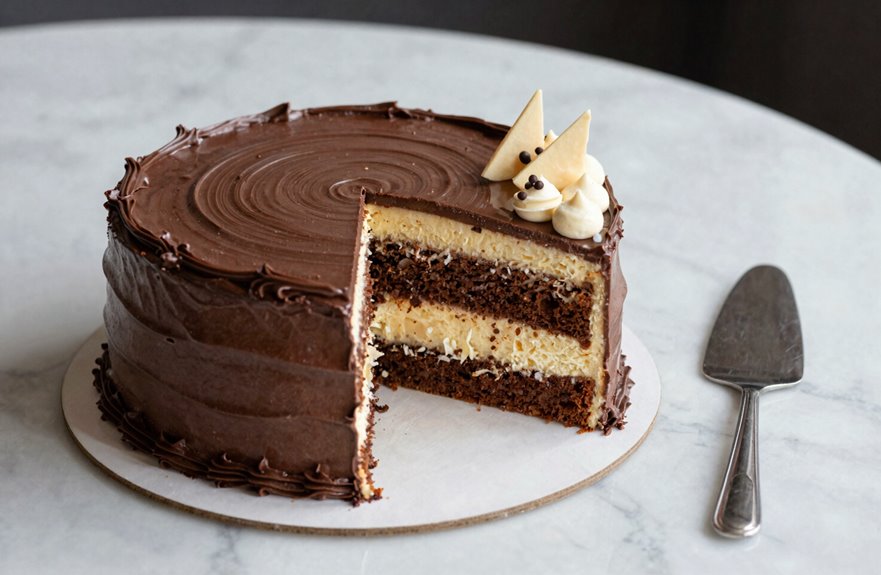
When deciding between chocolate and vanilla for a sheet cake, I consider who will be eating it and the nature of the celebration.
Chocolate offers a rich, crowd-pleasing flavor that appeals to a wide age range, making it suitable for instant gratification. Vanilla provides versatility; its sturdy, moist crumb can support heavy decorations and showcase fillings.
I also think about my guests’ preferences. Will children opt for something familiar?
Do adults lean toward sophisticated flavors? I check for dairy or nut allergies before finalizing frosting styles.
American buttercream works well with either flavor, but ganache pairs best with chocolate, while whipped toppings enhance vanilla’s neutral profile.
Ultimately, I aim to match the flavor to the occasion. The goal is to choose the option that fosters connection among everyone present.
How Many Servings Each Sheet Cake Size Actually Yields
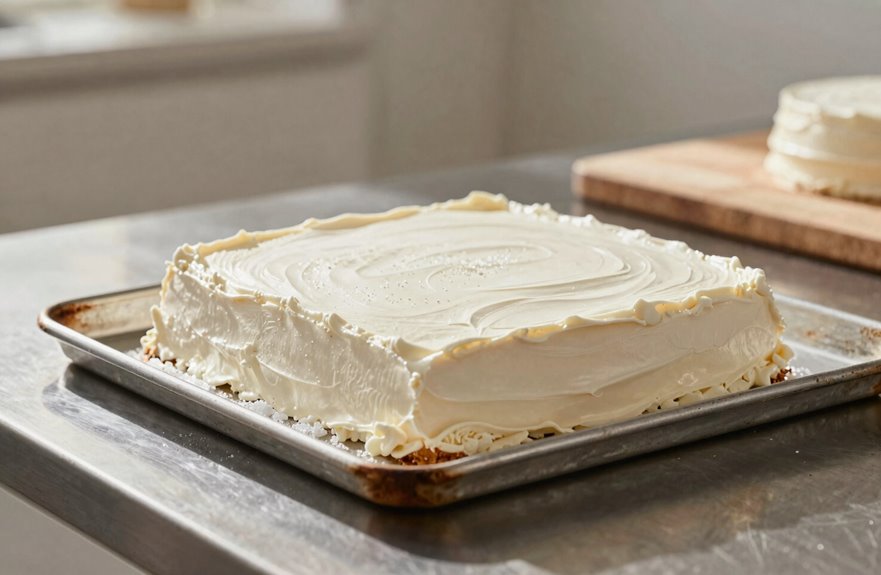
Why does serving size trip up so many hosts? I’ve been there, staring at a half-sheet cake, wondering if it’ll stretch for my crowd.
Here’s what I’ve learned about sheet cake servings.
A quarter-sheet (9×13 inches) feeds 16–24 people. A half-sheet doubles that space, offering 24–60 servings.
The full-sheet serves 60–100+ slices.
Depth matters too. Here’s how I break it down:
- 2-inch layers give generous portions.
- 3-inch cakes feel more indulgent.
- Thinner cuts stretch your count.
- Party slices differ from wedding slices.
I always cut slightly smaller than I think, as guests rarely finish large pieces. It’s better to have extra than to leave someone hungry.
Consider the pan size, and read the room.
Should You Bake Your Own Sheet Cake or Buy One?
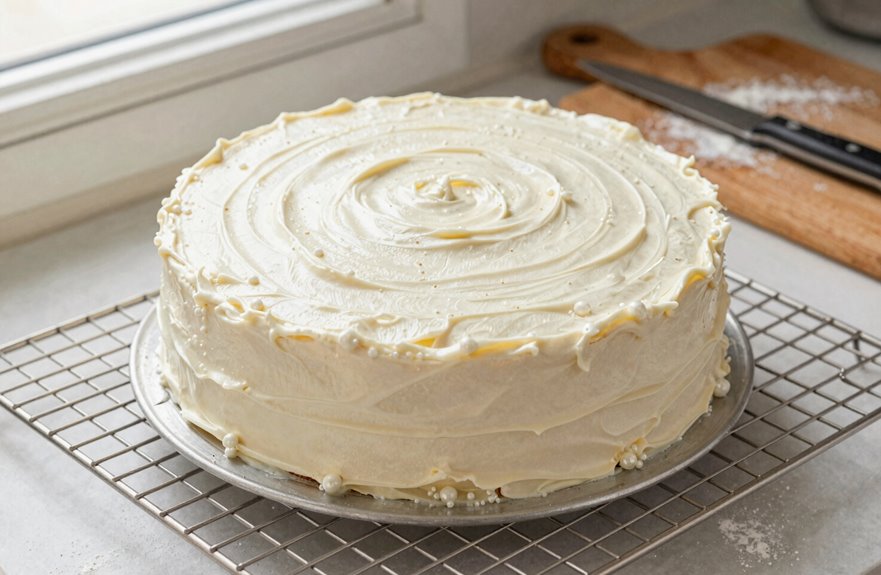
How do you decide between baking your own sheet cake or grabbing one from the bakery? This choice often arises before summer gatherings and hinges on what you value most.
When I bake my own sheet cake, I have full control over the flavor, frosting, decorations, and pan size. I usually opt for an 18×13 half sheet for larger crowds or a 9×13 quarter sheet when serving 16–24 people.
Boxed mixes simplify the process even when I’m pressed for time, and there’s a sense of accomplishment in creating something for the group.
On the other hand, buying a cake offers convenience. I avoid prep and cleanup while still having options in half, full, or 9×13 sizes.
For casual celebrations where connection is more important than the baking process, a store-bought sheet cake helps everyone enjoy a sweet moment together without added stress. In either case, we are sharing something delightful.
The Easiest Ways to Frost a Sheet Cake
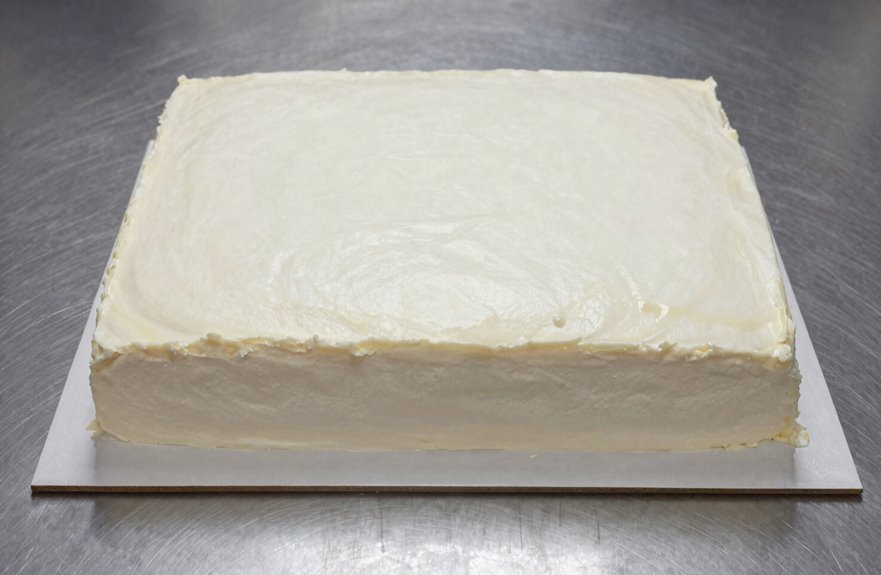
A completely cooled sheet cake is essential when it’s time to frost; no melting or sliding occurs, creating a smooth canvas. I choose American buttercream as my base because it spreads effortlessly across those wide, flat surfaces.
Here’s how I achieve a great finish each time:
- Apply a thin crumb coat first.
- Chill briefly to set the buttercream.
- Add a thicker final coat for a clean, bakery-worthy finish.
- Decorate with sprinkles, nuts, or edible decals that suit the crowd.
Sheet cake frostings extend beyond buttercream. I also make lighter versions or fold in peanut butter or tahini for a unique twist.
This approach ensures perfectly frosted sheet cakes every time.
Why Your Texture Turned Gummy (And How to Fix It)
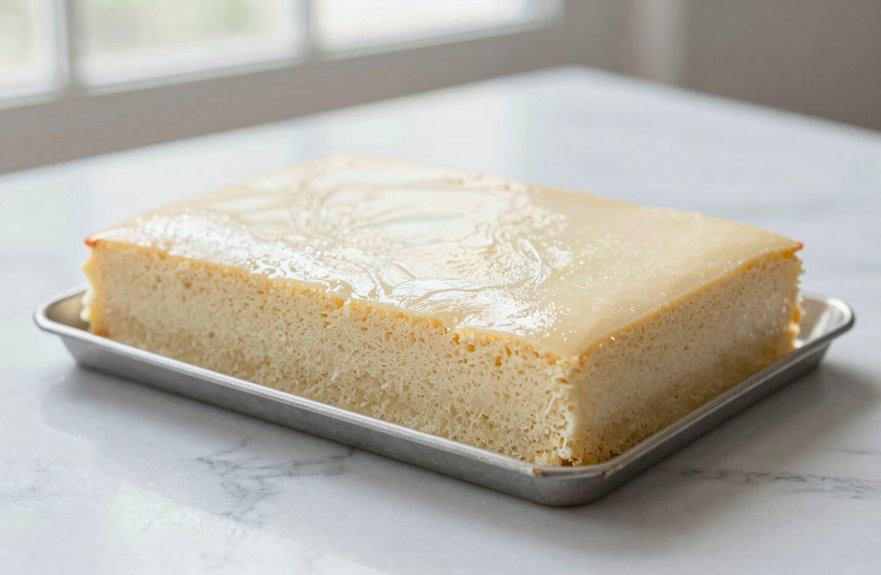
Where did your sheet cake go wrong? I’ve experienced that gummy texture when I expected a light, fluffy result.
High moisture levels often sabotage structure, leading to a dense, gummy texture instead of the tender crumb we all desire. Overmixing the batter develops excessive gluten, resulting in a chewiness that is unappealing.
Too little fat can create uneven structure, including gummy edges. Additionally, check your oven; insufficient baking time or low temperature can leave wet pockets inside.
I have pulled cakes out early and regretted it.
To avoid these issues, measure liquids precisely, mix until just combined, and verify doneness with a tester. After switching to Dutch-processed cocoa and employing proper techniques, my sheet cakes consistently became a hit at gatherings.
How to Move and Cut Sheet Cakes Without Breaking Them
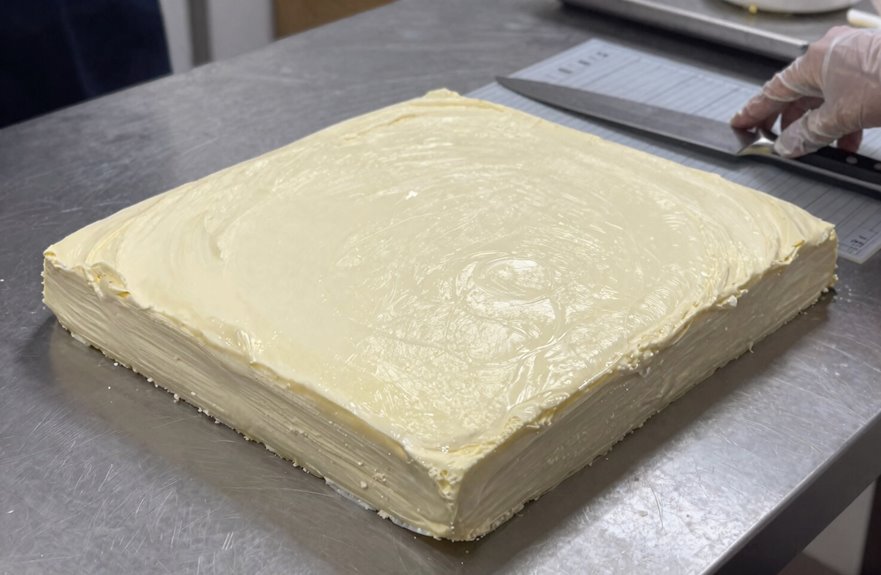
Once I’ve nailed the texture, the next challenge is getting that perfect slice onto a plate without disaster. Moving and cutting sheet cakes requires patience and the right technique to keep every piece intact.
Here are my tips for serving:
- Chill the sheet cake briefly before slicing to lock in structure and prevent crumbs from crumbling.
- Use a serrated knife with gentle sawing motions, wiping the blade between cuts for clean edges.
- Cut from edge to edge in straight, even strokes to maintain uniform portions without breaking.
- Run the knife under warm water for frosting-heavy sheets, then dry it to glide through thick layers.
When serving from the pan, I place it flat, cut directly inside, and lift with a long spatula. This method ensures perfect pieces every time.