
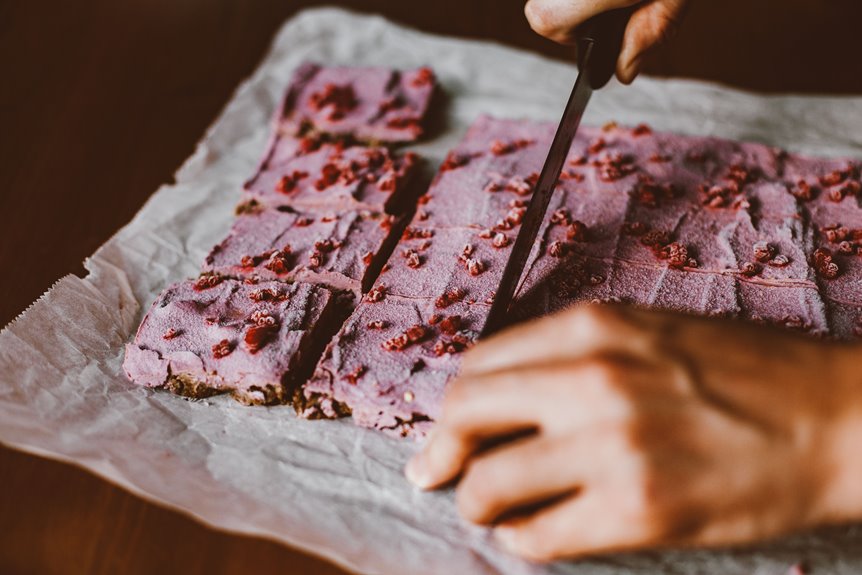
I can get about 58 pieces from a single-layer half sheet cake when I cut standard 2-by-2-inch slices. If I’m feeding a hungrier crowd with 2-by-3-inch portions, that drops to roughly 39 servings.
Going double-layer doesn’t change the surface area; it does double my yield to around 116 smaller pieces if I slice accordingly.
The exact count depends on how generous I want each portion to be, and additional factors should be considered when planning for an event.
How Many Pieces Are in a Half Sheet Cake?
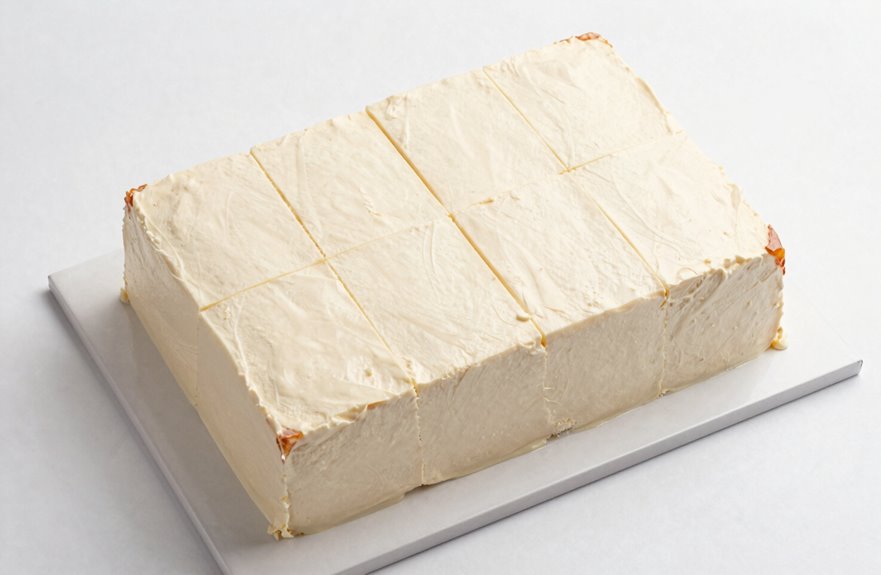
How do you determine the number of pieces from a half sheet cake? It really depends on the size of the slices.
When I cut my half sheet into 2×2 inch squares, I get about 58 servings, which works well for large gatherings where people are mingling and grazing.
If I opt for 2×3 inch portions, that number drops to approximately 38 servings, providing a more satisfying experience for guests. Larger 3×3 inch cuts result in even fewer servings.
It’s also important to consider that edge pieces can add to the final count. Whether you’re catering to a large crowd or a smaller group, you have various options to suit your needs.
What Counts as a Half Sheet Cake Pan?
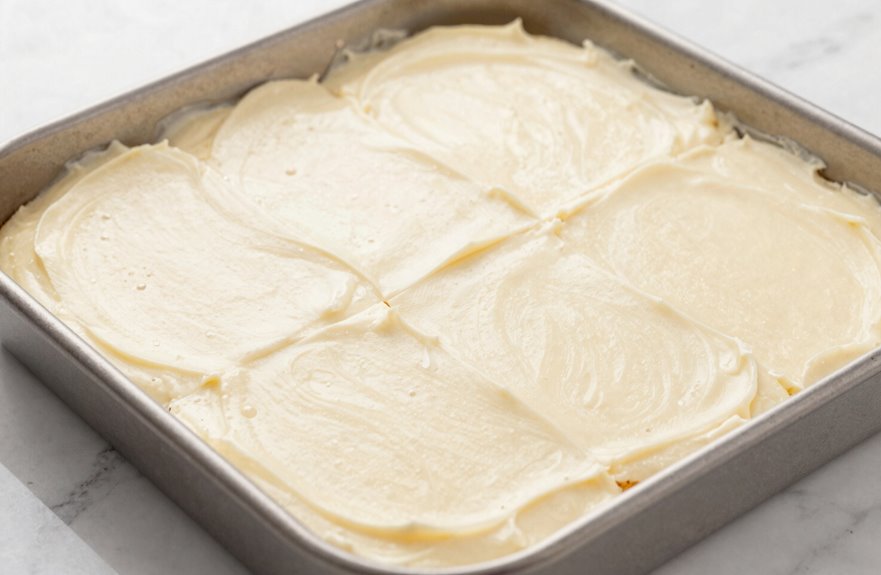
Understanding how many pieces you’ll get starts with knowing what you’re actually baking in. I’m referring to a half sheet pan that measures roughly 18 by 13 inches and stands about an inch tall, though brands may vary slightly.
When I plan serving sizes, I cut 2-by-2-inch pieces, which yields approximately 58 servings from a standard half sheet pan. This size is ideal for feeding crowds at weddings or large gatherings, as it handles volume efficiently.
Commercial kitchens often favor these pans, while home bakers may opt for quarter sheets to fit smaller ovens. Don’t let labeling confuse you; whether it’s marked 13-by-18 or 18-by-13, the usable area remains the same for portioning.
Single or Double Layer: How Structure Changes Your Count
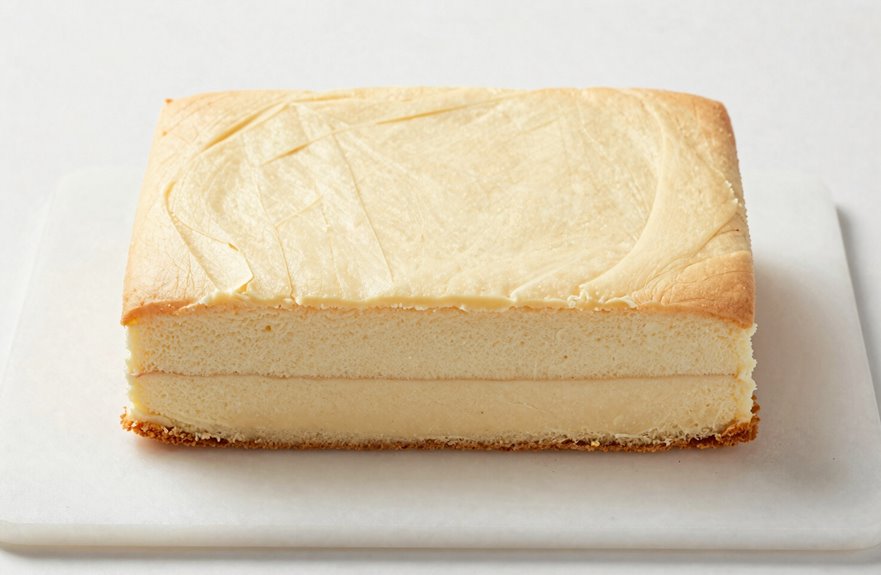
When planning a half sheet cake, I consider whether to stack one layer or two, as this choice affects the height of each slice and the number of portions I can serve.
A double-layer structure doubles my yield compared to a single layer, but I must account for how the extra height alters the perceived serving size and whether guests prefer smaller or larger cuts.
I also think carefully about batter distribution to ensure I have enough volume to fill both pans evenly without compromising the cake’s rise or texture.
Layer Height Matters
Why does layer height significantly impact your final piece count? Layer height directly affects how many servings you’ll actually bring to the table.
A single-layer half sheet provides about 58 pieces of 2×2 inch slices, which is sufficient for a modest gathering. When I stack two layers, I’m effectively doubling my total servings by slicing through both layers.
That same footprint now accommodates nearly twice as many guests. The structure plays a crucial role.
I’ve seen hosts panic about portions, only to realize their double-layer creation stretches further than expected. Understanding this allows me to plan confidently, ensuring everyone leaves satisfied and no one feels excluded from the celebration.
Serving Size Variance
How does a single layer compare to a double when planning portions? A single-layer half sheet cake provides about 58 pieces at 2×2 inches, but guests often grab two since they’re thin.
This results in fewer actual servings. A double-layer half sheet cake addresses this issue; each slice feels complete, so the serving size remains accurate, ensuring everyone gets enough.
Here’s the breakdown:
| Factor | Single Layer | Double Layer |
|---|---|---|
| 2×2 slices per layer | ~58 | ~58 |
| Typical guest behavior | Guests take 2 slices | 1 slice satisfies |
| Effective servings | ~29 | ~58 |
| 3×3 slice yield | ~38 | ~20–25 |
| Best for | Light gatherings | Celebrations |
Selecting the right half sheet cake structure ensures fair sharing. Guests leave satisfied, and there’s no concern about running short.
Batter Distribution Planning
Where should you put your batter—across one layer or two? I’ve considered this when planning sheet cake servings for a crowd.
My batter distribution plan makes a significant difference. One single layer in my 18×13 half sheet gives me roughly 58 generous 2×2 inch pieces.
This is ideal for casual gatherings.
For larger celebrations, I double up. Two layers nearly double my yield to around 116 slices with that same cut.
We achieve a satisfying height, ensuring everyone gets enough.
Sometimes I switch to 2×3 inch cuts instead, yielding 39 servings per layer and 78 when stacked. It depends on my batter and the pan’s capacity.
I match my batter distribution to my guest list for optimal planning.
How Slice Size Changes Half Sheet Cake Servings
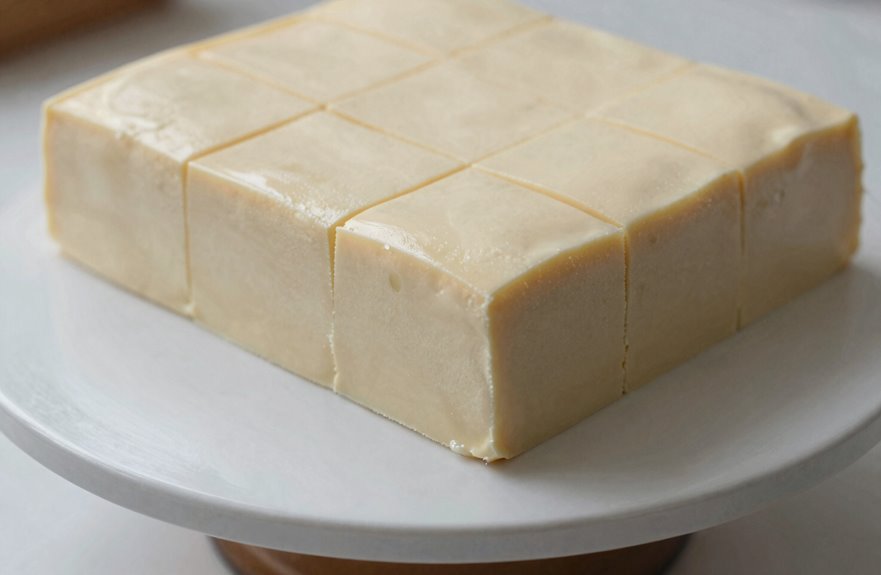
I want to show you how slice dimensions affect your half sheet cake yield. A standard 2×2 inch cut yields roughly 58 pieces, while shifting to a 2×3 inch portion reduces that count to about 39 servings.
Smaller 1×2 inch mini-slices or larger 3×3 inch pieces can adjust your total anywhere from 26 to 90 servings.
Standard Slice Dimensions
Just how dramatically does slice size affect your serving count? When I plan a half sheet cake, I’m working with an 18-by-13-inch canvas, and every inch I allocate for each guest changes everything.
Here are the standard dimensions I’ve learned about:
- 2×2 inch slices — the party classic — deliver about 58 servings, perfect for feeding a crowd and ensuring everyone feels included.
- 2×3 inch slices — my go-to for hungrier gatherings — yield roughly 39 servings, providing more per plate.
- 3×3 inch slices — the dessert lover’s dream — offer about 26 servings for indulging my closest friends.
Cake height and frosting between layers can adjust these numbers slightly. Mastering standard slice size ensures I’m never caught short or wasteful, and my guests leave feeling satisfied.
Alternative Slice Sizes
Moving beyond the standard options, you’ll find many situations where the typical 2×2 inch party slice doesn’t fit the bill. When planning gatherings with heartier appetites, I adjust my slice sizes accordingly.
If I cut generous 2×3 inch portions, I’m looking at roughly 39 servings instead of 58. For truly indulgent moments, 3×3 inch slices deliver about 26 servings, which ensures everyone feels satisfied.
Even 2×4 inch slices yield around 37 servings, making them ideal for brunches or light lunches where cake serves as the main sweet treat.
I always rely on the surface-area formula: divide the cake’s total area (234 square inches) by your chosen slice dimensions. This keeps my calculations precise, ensuring everyone leaves the celebration with enough to enjoy.
Calculate Half Sheet Cake Servings Using Surface Area
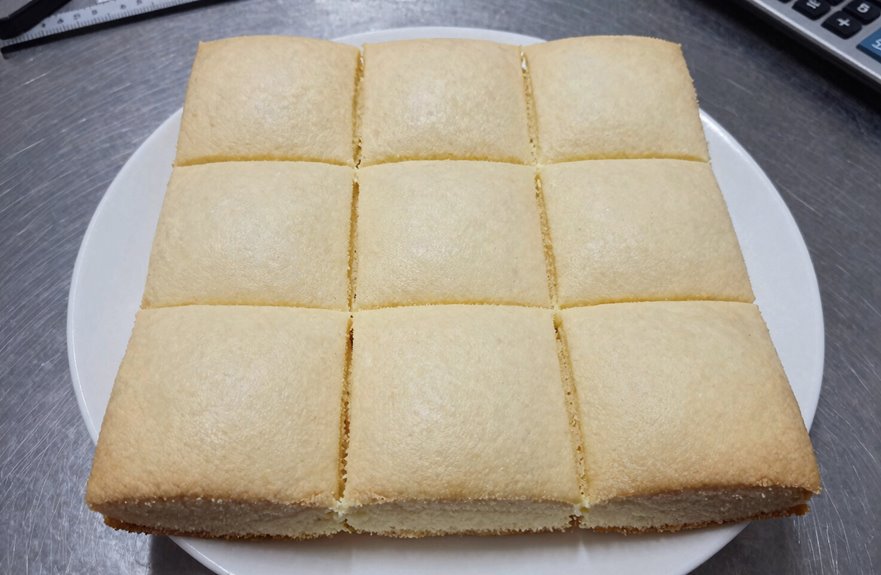
How do you figure out how many guests your half sheet cake will feed? I use the surface area method to get precise numbers.
Here’s the breakdown:
- Calculate total surface area: 18 × 13 inches gives 234 square inches.
- Divide by your slice size: for 2×2 inch pieces, that’s 234 ÷ 4 = 58 servings.
- Adjust for bigger appetites: 2×3 inch slices yield 39 servings instead.
This approach allows me to tailor servings to my crowd. Planning a light dessert table?
I’ll stick with 58 smaller portions. Hosting hungry relatives?
I’ll recalculate using larger slice dimensions. The 234 square inches remains constant; the decision is simply about how to share it.
Whether you’re feeding colleagues or family, this method ensures everyone receives their fair share of the celebration.
How Much Batter You Need for a Half Sheet Cake
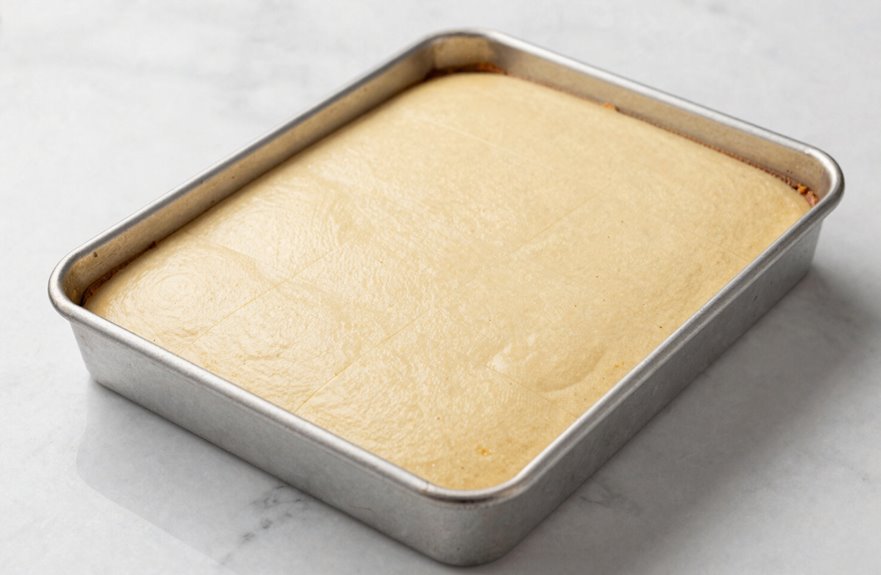
Most half sheet cakes need roughly 16 cups of batter total, which means about 8 cups per layer when building a two-layer cake in a standard 18×13 inch pan. Nailing the batter quantity is crucial because it directly impacts the number of servings.
If there’s too little batter, the layers may end up thin and insufficient for the crowd.
When determining how many people I’m serving, I connect my batter quantity to my slice size. For 2×2 inch pieces, I can expect around 58 servings.
If I cut 2×3 inch slices, that number drops to roughly 39 servings. If I need more, I simply bake another half sheet.
This approach has consistently worked well for feeding large groups.
How to Bake Half Sheet Cakes Evenly
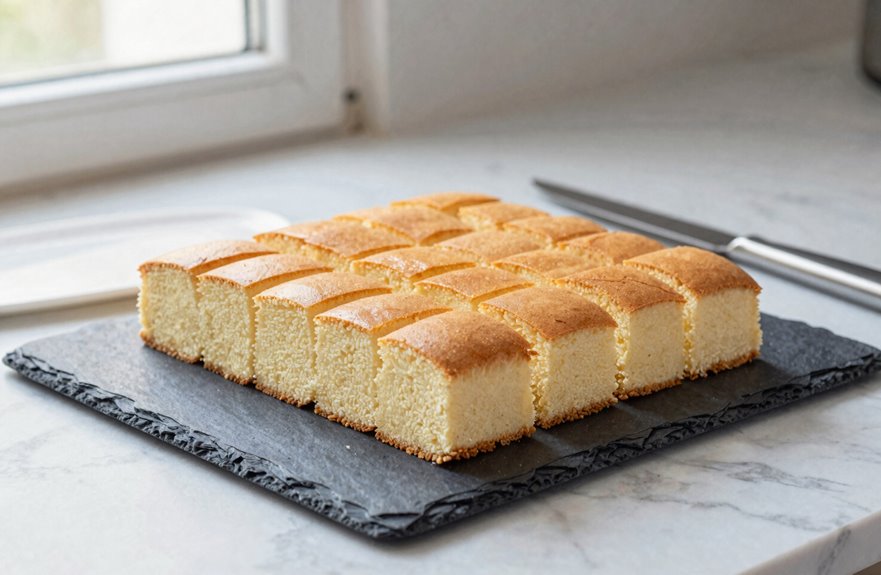
I start every half sheet cake with proper pan preparation. I grease the sides, line the bottom with parchment, and fill the batter about two-thirds full so it rises without spilling over.
I also rotate the pan exactly halfway through baking; this step addresses the hot spots that can leave one side taller than the other.
These habits result in a cake that is level, evenly colored, and ready to be cut into clean, consistent pieces.
Pan Preparation Essentials
An 18-by-13-inch half sheet cake pan requires a few smart tricks to ensure your cake bakes flat and evenly from edge to center. Preparing your sheet pan properly can make a significant difference in achieving a professional-looking cake.
Here’s what I do:
- Grease thoroughly and line with parchment, leaving overhang for easy removal from this large pan.
- Insert flower nails upside-down in the batter center to conduct heat and prevent doming.
- Measure batter carefully for 1.5-inch layers, adjusting bake time to 25-30 minutes at 350°F.
I chill my layers before stacking to keep everything stable during assembly. These steps are essential for creating cakes that are ready to impress.
Even Heat Distribution
Why does the center of a half sheet cake often bake slower than the edges? It’s all about heat distribution.
That vast 18-by-13-inch surface means the middle stays cooler while the edges catch the oven’s warmth first. I’ve learned this through experience, and I want to help you avoid my mistakes.
To ensure even baking for your sheet cake, place it on a stable rack with proper airflow. Adding flower nails to the center can help; they conduct heat effectively in large pans.
Avoid opening the oven door repeatedly, as that temperature drop can affect your results.
Always test multiple zones with a toothpick—center and edges—before determining if it’s done. When baking multiple sheet cakes, rotate pans between racks and stagger times to maintain a consistent oven temperature.
This approach will yield perfectly even results.
How to Cut Half Sheet Cake Slices Cleanly
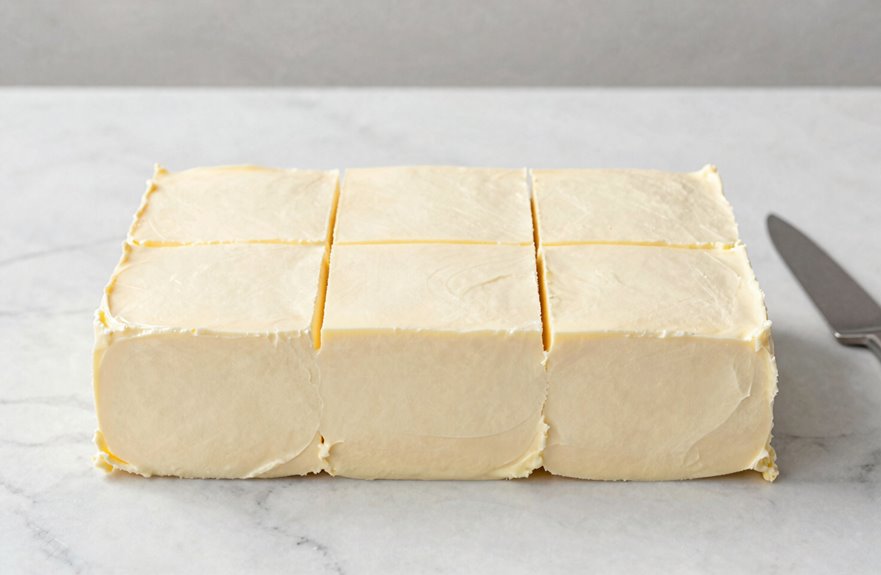
What’s the secret to getting perfectly even slices without tearing the frosting? It starts with understanding your pan dimensions.
Since a half sheet measures 18 by 13 inches, I always map out my cake slices before cutting.
Here’s my method:
- Score the surface first. I lightly mark where each slice will go using a ruler, ensuring my 2×2 or 3×3 inch portions stay consistent.
- Use a hot, clean knife. I dip my blade in warm water and wipe it dry between cuts; this glides through frosting without dragging.
- Cut with confidence. I press firmly and pull straight out, never sawing, which keeps layers intact and presentation flawless.
This approach ensures you serve beautiful, professional-looking pieces every time.
How to Transport a Half Sheet Cake
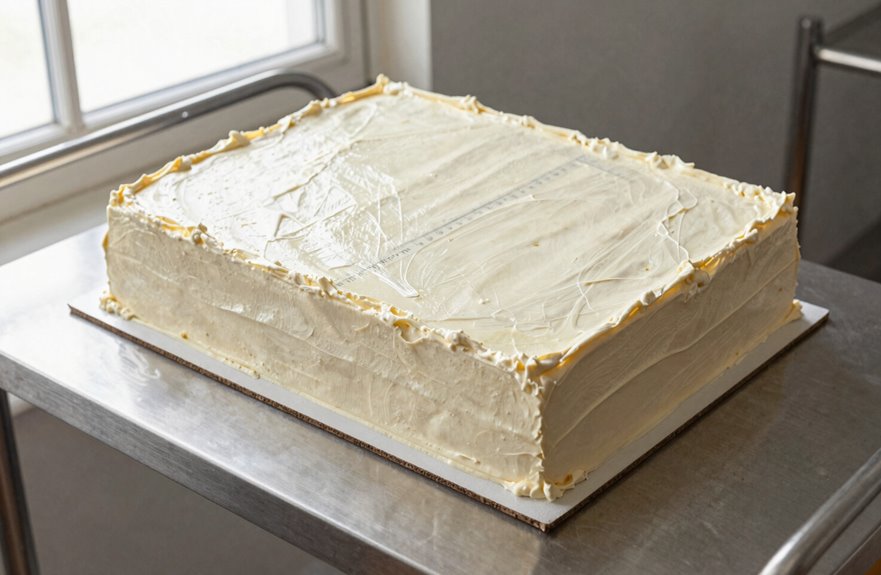
How do I transport an 18-by-13-inch half sheet cake from my kitchen to the party without causing a frosting disaster? I start by chilling the frosted cake for at least 30 minutes; firm buttercream holds its shape during transport.
I slide the half sheet onto a sturdy cardboard base that extends past the pan edges, providing secure grip points. A non-slip drawer liner beneath the board prevents sliding in my car.
I clear my vehicle’s flattest surface—usually the trunk or back seat floor—and maintain a steady speed around turns. Hot weather can affect transport, so I turn on the AC and avoid direct sunlight on the cake box.
For extra security, I slide dowels through the board into a foam base. Arriving 15 minutes early allows me to touch up any smudges before guests arrive, ensuring I deliver a well-presented cake.
How to Store Half Sheet Cake: Short and Long Term
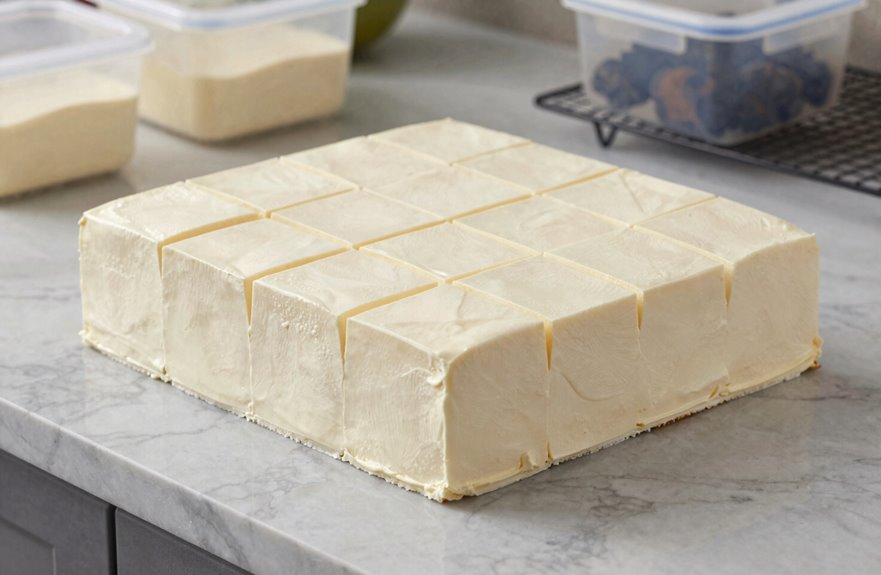
Once I’ve got that half sheet cake safely to the party, the next challenge is keeping it fresh if I’m not serving it right away.
Storage duration depends heavily on whether I’ve already made my serving cuts or I’m keeping it whole.
Here’s how I keep my cake tasting fresh:
- Wrap uncut cake tightly in plastic wrap, then foil; this locks in moisture for 2–3 days at room temperature.
- Refrigerate cut portions in airtight containers for up to 5 days, as the serving cuts expose the sponge to air.
- Freeze individual slices wrapped in plastic and foil for up to 3 months; this is ideal when I have leftover pieces from my 58 serving cuts.
Planning my storage duration around when I’ll finish those pieces ensures every bite remains delicious.
Half Sheet vs. Quarter or Full: Which Size to Choose?
Three sizes dominate the sheet cake conversation, and choosing the right one can save both money and leftovers. The half sheet pan size, measuring 18 by 13 inches, is ideal for most gatherings.
It provides approximately 58 servings with standard 2×2 inch cuts, or about 39 servings with generous 2×3 inch slices. Quarter sheets often leave guests wanting more at larger events, while full sheets can take up too much kitchen space and strain the budget.
When hosting, I calculate servings based on the pan’s surface area and match it to my guest count. The half sheet size effectively accommodates everyone without resulting in excessive leftovers.
Select this pan size to ensure that guests are satisfied without having to deal with days of leftover cake.