
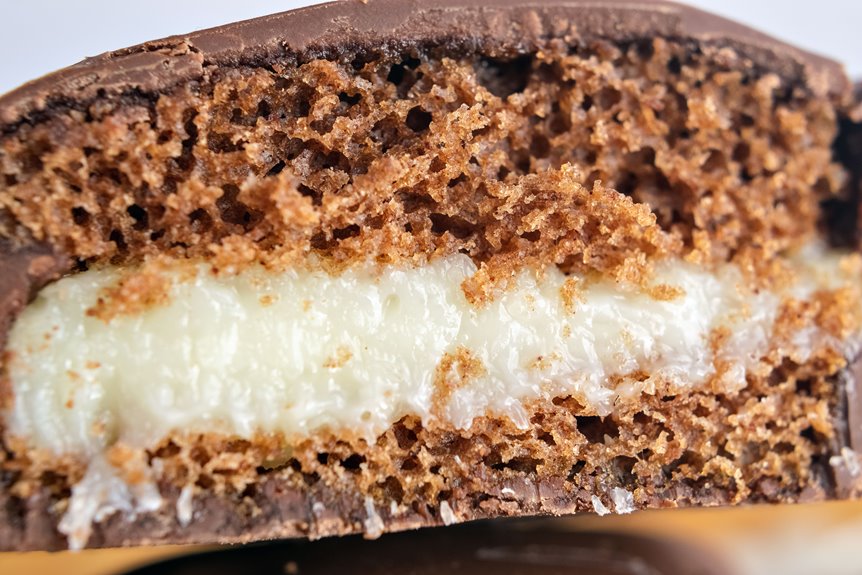
I’ve worked with everything from silky buttercream dams that hold back jammy fruit layers to stabilized whipped creams that survive summer heat.
My go-tos include rich ganaches, tangy cream cheese centers, airy mousses, and sturdy pastry creams, each matched to cake type and occasion.
The secret lies not just in flavor pairing; it’s also about knowing when to use a buttercream barrier to prevent soggy layers or gelatin to keep cream from weeping.
Stick around as I show you how to build cakes that maintain their structure from the first slice to the last.
How to Match Fillings to Cake Flavors and Events
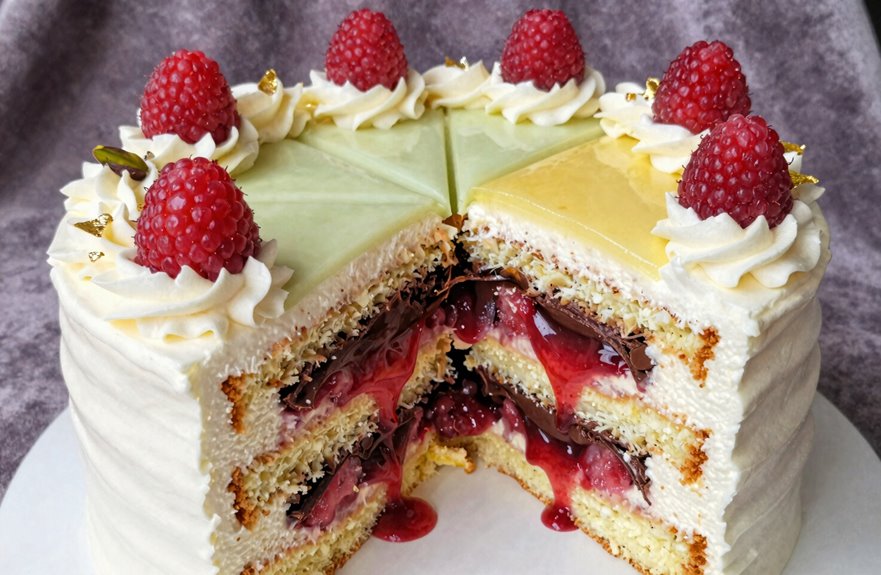
How do you decide which filling belongs inside your cake? I balance acidity and intensity to create harmony that welcomes everyone at the table.
I pair lemon curd filling with mild vanilla layers; that bright acidity cuts through sweetness without overwhelming. For rich chocolate cakes, I reach for bold mocha or caramel; they match intensity with intensity so no flavor gets left behind.
I lean on whipped cream filling for lighter sponges, keeping things airy and inclusive. Fruit fillings demand respect; I build an icing dam to prevent bleeding and time assembly carefully when humidity threatens cohesion.
Stability for events is crucial. I choose buttercream for weddings and celebrations that stretch across hours; it holds at room temperature while pastry creams wilt.
My guests deserve a cake that looks beautiful from the first slice to the last.
Buttercream Fillings: The Versatile Foundation for Any Cake
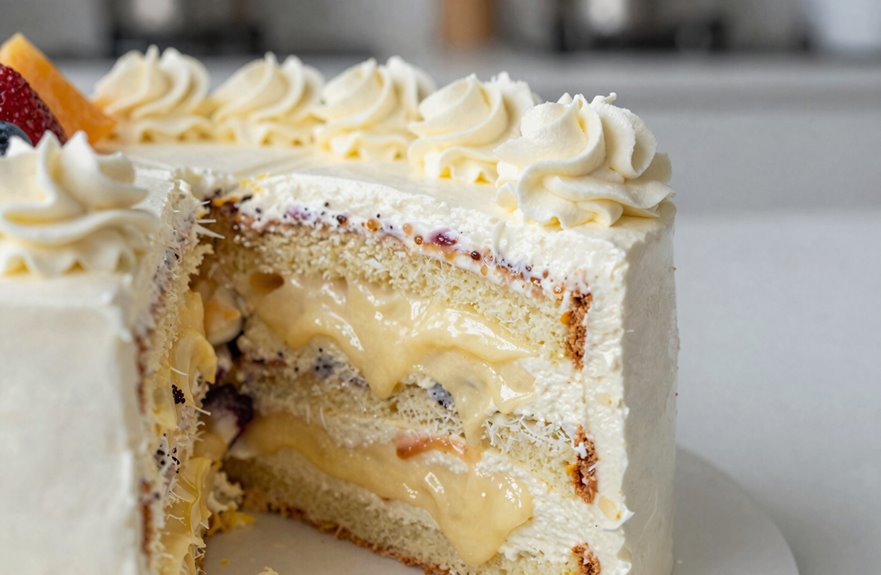
Why do I reach for buttercream first when I’m building a cake? Buttercream fillings offer unmatched versatility that welcomes everyone into the baking community, whether you’re crafting your first layer cake or your fiftieth.
I cream butter and powdered sugar together, often adding vanilla for that classic flavor. Vanilla buttercream pairs beautifully with chocolate, red velvet, or yellow cake layers.
I can tint it any color or enrich it with cream for a silkier texture. For a lighter option, whipped buttercream provides an airy quality without sacrificing stability.
Buttercream serves as both filling and frosting, creating smooth, spreadable finishes that hold cake layers together. I dam my edges with it when adding jams or curds to prevent leaks.
Refrigeration firms buttercream, so I let it sit out for 15–20 minutes before serving to achieve the ideal softness.
Whipped Cream Fillings: Light Options for Warm-Weather Baking
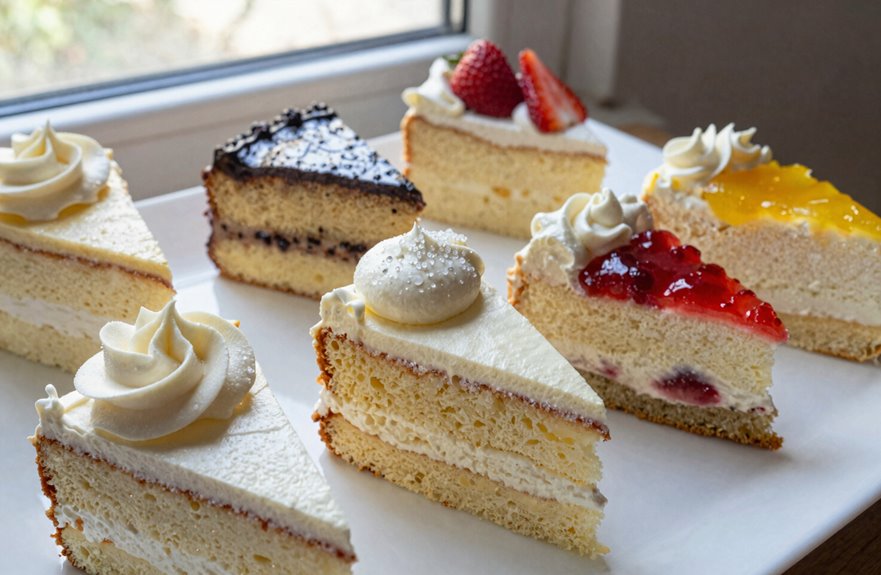
Whipped cream fillings address summer stability challenges while offering remarkable flexibility. Stabilizers keep these airy layers intact in heat, and they pair well with espresso, chocolate, or fruit to create complex flavor profiles.
Their texture range—from billowy clouds to mousse-like density—allows for adaptation to any cake architecture.
Summer Stability Solutions
What makes whipped cream such a tempting choice for summer cakes is that cloud-like lightness we crave when temperatures rise. Texture stability doesn’t happen by accident.
Stabilized whipped cream changed everything for me. It holds its shape through summer assembly without turning grainy or weeping.
When working with fruit fillings, moisture management is essential. I pat those berries bone-dry and work fast.
Here’s my battle-tested approach:
| Challenge | My Solution |
|---|---|
| Heat collapse | Stabilizer + cold bowl |
| Soggy layers | Dry fruit thoroughly |
| Weeping cream | Same-day assembly |
| Weak structure | Chill between layers |
| Flavor dilution | Concentrated extracts |
We belong to a community that prioritizes elegance alongside practicality. Master these techniques, and your summer cakes will remain stunning from kitchen to table.
Flavor Pairing Options
How do we transform something as simple as whipped cream into a memorable filling? I start with the basics: sugar, a splash of vanilla, and then I push further.
Vanilla paste adds those gorgeous seed flecks that enhance the cake’s appearance, elevating it to a professional level.
I enjoy experimenting with flavor pairings that surprise people. Vanilla combines with espresso for subtle depth, or I brighten things with fresh fruit notes that cut through richness.
These combinations allow us to build cakes that feel personal, reflecting our shared traditions.
Stability is important. I whip to soft peaks and sometimes add stabilizers to ensure our work holds up.
These airy filling textures maintain a lightness even in warm weather, demonstrating that whipped cream is an essential element in every baker’s repertoire.
Texture Versatility Benefits
Whipped cream fillings add a delightful lightness to warm-weather desserts, creating layers that practically melt on the tongue. This filling versatility allows me to pair that airy texture with chocolate, vanilla, or fruit cakes without overwhelming them.
When baking for summer gatherings, I always choose stabilized whipped cream; it maintains its structure through long afternoons thanks to gelatin or other stabilizers, ensuring my cakes remain intact before serving.
Whipped cream is essential for your warm-weather toolkit for several reasons:
- Flavor infusion transforms basic whipped cream into vanilla, berry, or espresso variations.
- Proper chilling keeps the filling cool and soft even on hot days.
- Whipping to soft peaks preserves that signature delicate texture we all enjoy.
Many bakers have embraced this approach for effortless summer elegance.
How to Stabilize Whipped Cream for Cake Fillings?
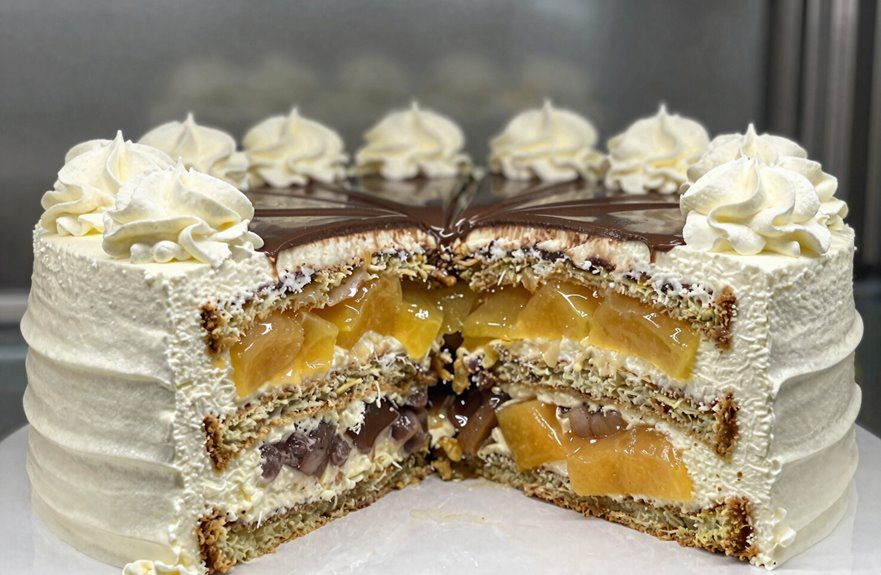
Why settle for whipped cream that wilts before your cake reaches the table? I achieve stabilization that keeps whipped cream proud and pipeable.
I rely on gelatin as my secret weapon. I dissolve it, cool it slightly, and fold it into softly whipped cream for lasting piping stability.
Chilling my bowl and beaters beforehand helps too, and I sometimes incorporate light emulsifiers to prevent deflation.
Whipped cream-based fillings aren’t suitable for long room-temperature displays. For those events, I prefer ganache buttercream or Italian meringue buttercream.
When I need that airy elegance, I prepare my stabilized whipped cream close to assembly day.
I always build a buttercream dam around my layers. This contains my filling and stops seepage from ruining the cake.
Pudding and Pastry Cream: Stable Fillings for Any Cake
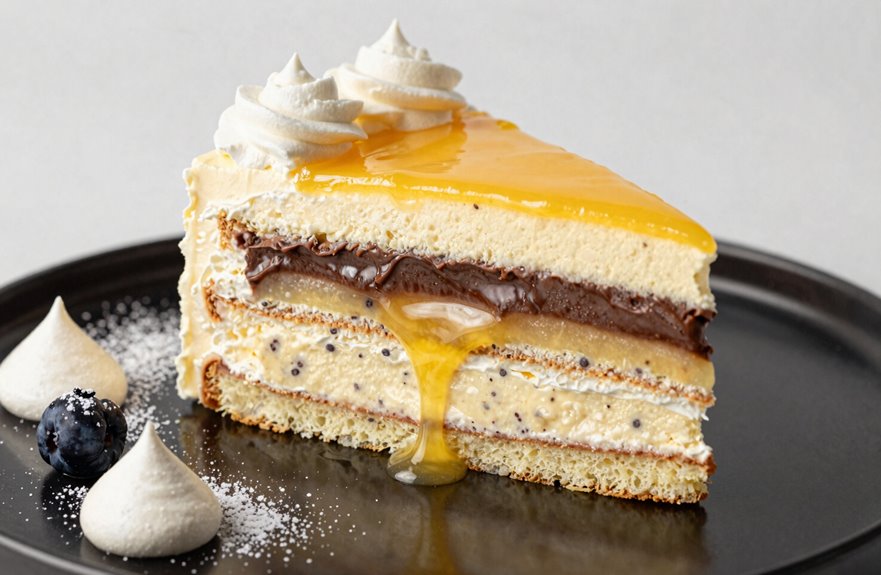
Stabilized whipped cream has its place, but I prefer pudding and pastry cream for a lighter filling that doesn’t rely on aerated dairy.
These options provide creamy comfort without the risk of deflation and are versatile across various cake flavors.
Here’s why they are effective in our baking community:
- Vanilla pudding pairs beautifully with chocolate cake for classic appeal.
- Bavarian cream combines custard, gelatin, and whipped cream for a smooth texture.
- An icing dam prevents squishing between layers.
I always build an icing dam and add a thin layer of buttercream before spreading my filling. For stability, some recipes may require thickening agents or gelatins.
Proper refrigeration keeps your pastry cream filling in optimal condition during display. These options are suitable for everyone, from beginners to experienced bakers.
Chocolate Ganache Fillings: From Drizzle to Dense Layers
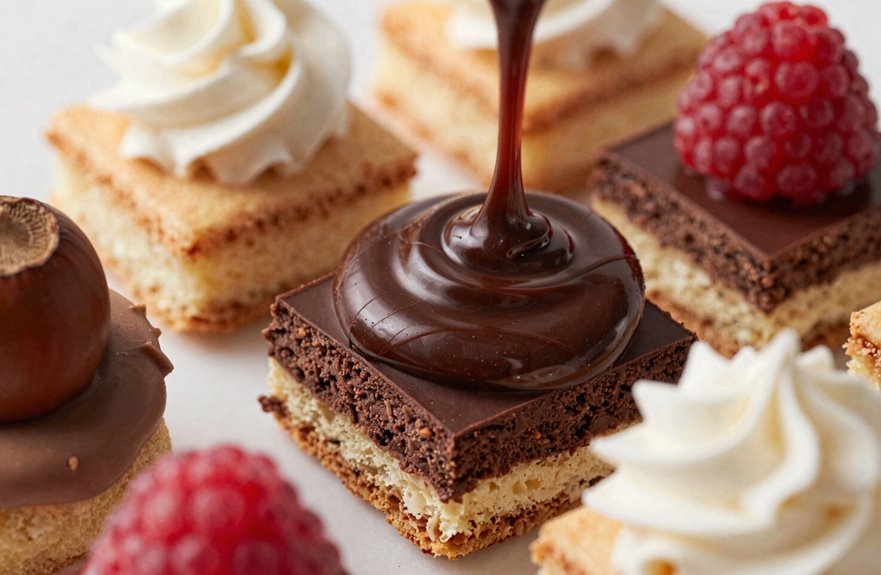
How do you transform two simple ingredients into something that anchors a cake with serious presence? You make chocolate ganache.
I pour hot cream over chopped chocolate, stir until glossy, and watch the magic happen.
Here’s how I match texture to purpose:
| Texture | Method | Best For |
|---|---|---|
| Firm | Chill, minimal cream | Fondant-covered cakes |
| Whipped | Whip cooled ganache | Layer cakes, lighter fillings |
| Pourable | Warm, extra cream | Drizzles, glazes |
It takes under ten minutes of hands-on time. Then come the flavorings—liqueurs, fruit purées, even hazelnut or espresso.
White chocolate ganache can also be included. These fillings complement vanilla, red velvet, coffee, and more.
You are not just baking; you are creating something to share. Welcome to the club.
Fruit Fillings: Fresh, Cooked, and Compote Variations
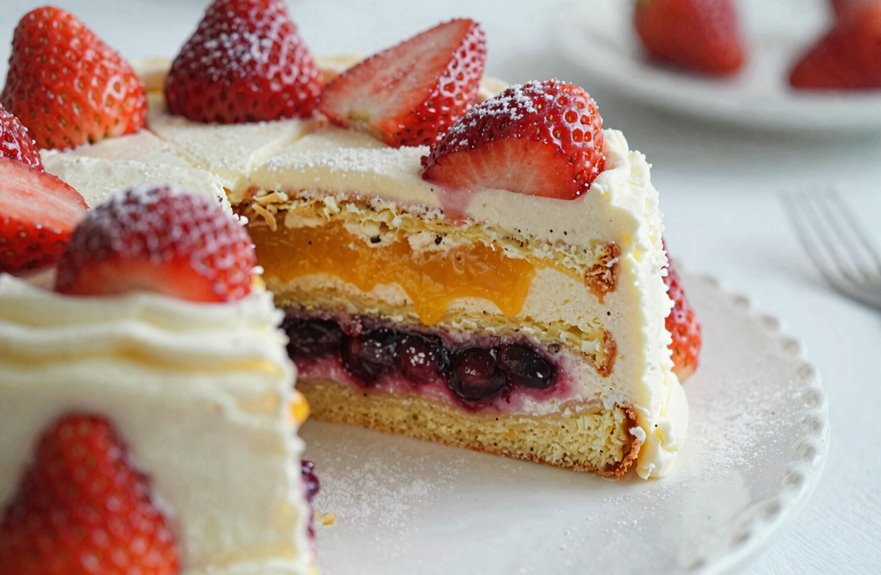
I will guide you through three methods of preparing fruit fillings. First, we’ll discuss fresh options that require careful moisture control.
Next, we’ll look at cooked preparations that provide stability for display cakes. Finally, we’ll explore compote variations that balance texture and concentrated flavor.
Each method involves different techniques and serves distinct purposes in cake construction. I will explain the specific challenges and advantages of fresh fruit, cooked fillings, and compotes so you can select the best approach for your project.
Fresh Fruit Options
What better way to capture summer’s essence than layering ripe berries or juicy stone fruits between tender cake tiers? Fruit fillings bring vibrant, seasonal energy to every slice.
Fresh berries shine when paired with citrus curd or folded into whipped cream for that cloud-like texture we all crave.
Moisture control is essential. I’ve learned these essentials:
- Pat sliced peaches dry with paper towels to stop sogginess.
- Add berries just before serving to preserve their snap.
- Create barriers with buttercream to seal in juices.
These fresh choices offer lighter textures and that immediate, just-picked taste. Skip frozen fruit here, as it is better suited for other uses.
Together, we will master the art of letting peak-season fruit speak for itself.
Cooked Fruit Fillings
Why settle for fleeting freshness when cooked fruit fillings deliver concentrated, jammy intensity that holds up under buttercream? I rely on these for reliable, bold flavor that won’t weep into my layers.
I build them from fresh or frozen fruit—pineapple, raspberry, strawberry, blueberry—cooking each down until it reaches a sturdy fruit jam consistency. For a firmer set, I add gelifying agents like pectin and let everything cool completely before spreading.
Moisture control is essential here. I always pipe an icing dam around my layer edges to block leaks, and I sometimes freeze filled layers briefly before crumb coating.
I assemble closer to serving when possible. These fillings pair beautifully with chocolate, lemon, or vanilla almond cakes, and they allow for personal customization.
Compote Variations
Moving from cooked fruit fillings, compotes offer a lighter, more textured alternative that brings serious flavor to your layers. Compote fillings come together in about ten minutes, providing a homemade touch without the fuss.
A berry compote, whether mixed berries, strawberries, or raspberries, creates the perfect fruit filling that complements chocolate, lemon, or vanilla almond cakes.
Compotes have several advantages for our baking community:
- Quick preparation with frozen or fresh fruit means you always have options.
- Natural buttercream compatibility allows for layered flavors that do not overwhelm the cake.
- Versatile textures, from chunky to smooth, cater to every preference.
Lemon curd also deserves attention; it thickens beautifully with instant clearjel and pairs well with vanilla and almond bases. Remember that compotes need proper barriers to prevent soggy layers, so it is essential to use a buttercream dam.
Curd Fillings: Bright, Tart Flavors for Balanced Cakes
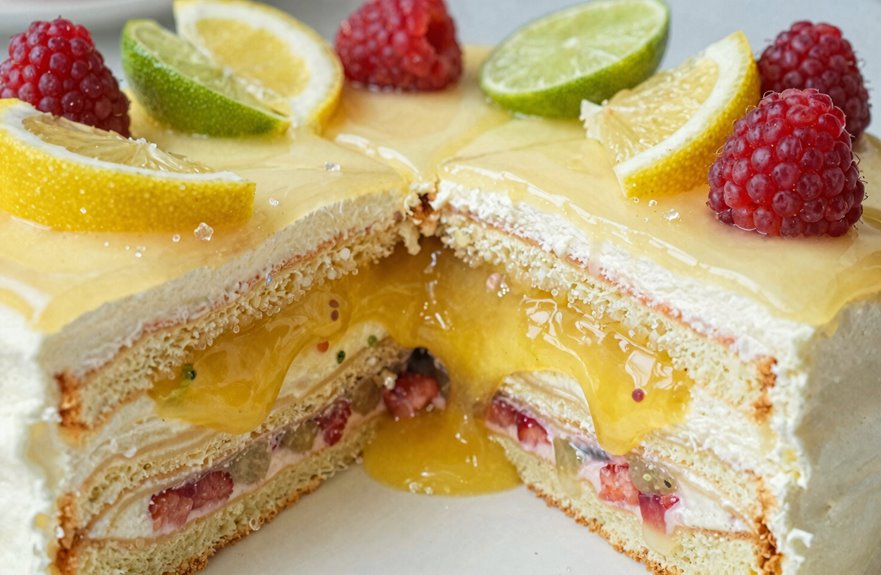
How do we cut through the richness of buttercream and ganache without losing elegance? I turn to tart fillings, specifically fruit curd, with lemon curd at the top of my list.
I make mine using lemon juice, sugar, butter, and egg yolks; sometimes I add instant clearjel for that silky, stable texture we all crave. It brightens vanilla, almond, or coconut sponge cakes beautifully.
When feeling adventurous, I enjoy folding in lavender or fresh berries. To balance flavors, I whip some curd into whipped cream frosting for a lighter touch.
A useful technique is to pipe a thin buttercream dam around each layer to prevent the curd from seeping and staining. Store leftover curd pressed with cling film for your next bake.
Mousse Fillings: Light Texture That Won’t Weigh Down Cake
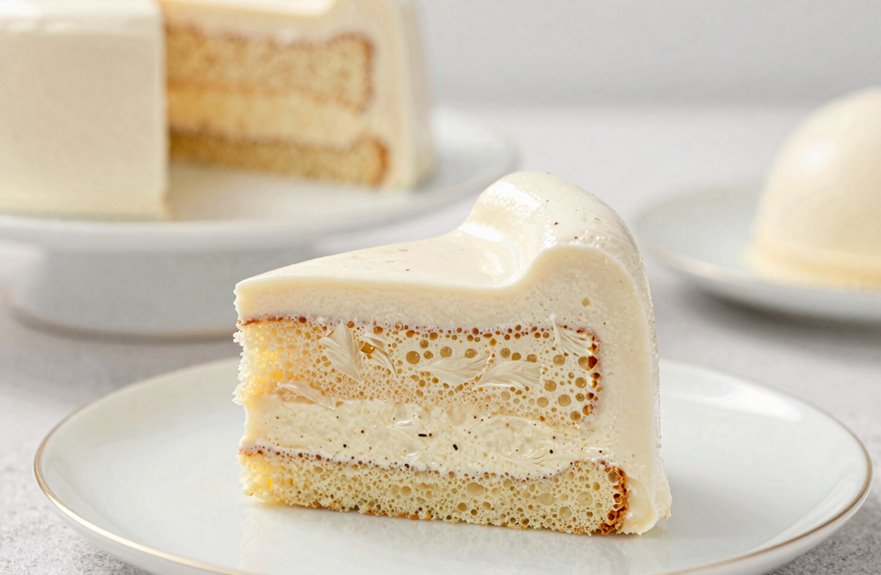
Mousse fillings provide an airy, luxurious texture without making the cake feel heavy or overly rich. Pair them with lighter cakes like simple chocolate, vanilla, or mocha layers to maintain balance.
Whether using dark chocolate, strawberry, or a stabilized version, these mousses deliver deep flavor while ensuring every bite remains wonderfully light.
Light Texture Benefits
Why settle for a dense, heavy cake when you can achieve something far more elegant? Mousse filling offers that coveted light texture.
By using whipped cream and careful gelation, you can trap air and transform simple ingredients into clouds of flavor.
What makes this filling essential for your baking repertoire:
- Chocolate, vanilla, or mocha bases remain feather-light through proper technique.
- Stabilizers like gelatin or whipped cream maintain structure without adding density.
- The airy contrast elevates every bite without overwhelming the palate.
Mousse provides a pronounced yet gentle mouthfeel, lighter than heavy custards. Whether you opt for easy mousse filling or dark chocolate mousse, you’re crafting elegance that enhances your creation.
This is a core aspect of our shared baking journey.
Best Cake Pairings
Where should you turn when your cake needs a filling that complements without overwhelming? I reach for mousse fillings every time.
Their airy structure balances richer elements without collapse.
Pairing flavors becomes intuitive once you understand the relationship between textures. Mousse fillings create harmony alongside chocolate ganache drips or thin buttercream coats.
When I’m building something indulgent, I layer strawberry mousse between vanilla tiers or slip dark chocolate mousse beside fruit fillings for contrast.
Here’s how I match mousse to cake:
| Mousse Type | Cake Base | Emotional Payoff |
|---|---|---|
| Dark Chocolate | Chocolate sponge | Deep comfort, like coming home |
| Strawberry | Vanilla chiffon | Bright joy, shared celebrations |
| Easy Mousse | Mocha layers | Quiet confidence, trusted tradition |
| Stabilized whipped | Angel food | Lightness that feels like relief |
| Gelatin-set | Layered torte | Pride in every clean slice |
I always refrigerate before serving; patience rewards us with perfect cuts.
Popular Mousse Varieties
Those pairings work because the mousse itself carries the weight of the flavor without adding density. Mousse fillings allow us to create cakes that feel indulgent without sitting heavy in your stomach.
You’ll typically find me reaching for three reliable varieties when I’m building something special:
- Easy Mousse Filling keeps things simple with whipped cream and gentle flavoring.
- Dark Chocolate Mousse delivers richness through real chocolate folded into light whipped cream.
- Strawberry Mousse brings bright fruit filling notes that scream celebration.
I always stabilize my mousse with gelatin or extra whipped cream so it holds between layers. Once you’ve experienced that airy texture alongside your favorite sponge, you’ll prefer it to any dense alternative.
It offers pure, cloud-like bliss.
Nut Fillings: Pecan, Walnut, and Macadamia Creams
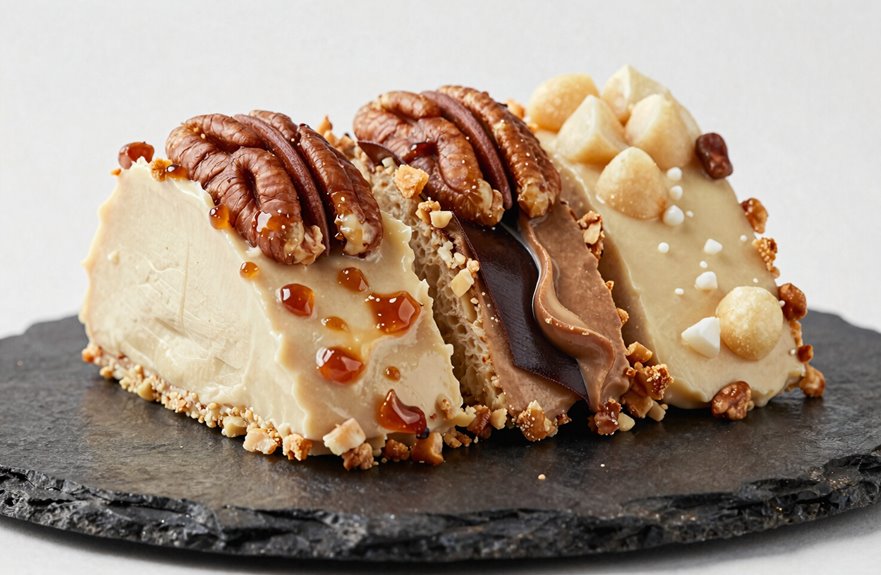
How do you transform a simple cake into something memorable? I turn to nut fillings.
They are my secret weapon for creating connections through flavor.
I spread pecan cream filling between tender cake layers, and suddenly everyone gathers around to share stories. Walnut filling adds that earthy depth I crave in autumn bakes, while macadamia cream provides pure luxury with its silky, rich texture.
These nut fillings are not just ingredients; they invite a sense of belonging.
I incorporate them into frostings or let them stand alone between cake layers. Each option contributes distinctive crunch and warmth that mass-produced desserts cannot replicate.
When I choose pecan, walnut, or macadamia, I’m crafting something personal. You’re not just eating cake; you’re joining my table, my tradition, my kitchen.
Cream Cheese Fillings: Tangy Centers for Spice and Red Velvet Layers
Why do I keep reaching for cream cheese when I want a filling that satisfies? That tangy bite cuts through sweetness, creating something we all crave in our favorite cakes.
That tangy bite cuts through sweetness, creating something we all crave in our favorite cakes.
I blend cream cheese with powdered sugar and vanilla for a creamy, dense base that holds up beautifully in layered creations. This filling belongs in your kitchen for several reasons:
- It pairs flawlessly with red velvet and spice cakes, balancing their warmth with cool tanginess.
- You can customize it with lemon zest, juice, or cocoa for endless variations.
- Its frosting-filling compatibility means you’re working with one versatile mixture.
I particularly love how this cream cheese filling stays soft yet substantial, never collapsing under pressure. Whether you’re building a showstopper or a simple layer cake, this tangy center provides creamy comfort that enhances any dessert.
Caramel and Marshmallow Fillings: Rich Specialty Options
What if you’re craving something richer than standard frostings? Caramel and marshmallow fillings are specialty options that elevate ordinary layers into something truly satisfying.
I make caramel filling by simmering sugar, butter, and heavy cream until golden, sometimes adding sea salt or bourbon for depth. It clings beautifully to chocolate, apple, or vanilla cakes.
For even more intensity, I spread dulce de leche. This thick, deeply golden filling can have espresso or salt variations that enhance each bite.
For contrast, I whip up marshmallow filling by melting marshmallows with butter until gooey, then folding in vanilla or cocoa. It’s lighter than buttercream, yet still indulgent.
These fillings create exciting textures between layers, combining sticky with fluffy and rich with tender, resulting in cakes that are truly enjoyable to share.
Layering Multiple Fillings Without Soggy Cake
Combining caramel, marshmallow, or jam fillings in one cake requires careful technique to maintain distinct layers and an intact crumb.
Building a buttercream dam around each layer’s edge creates a barrier that prevents jam fillings from bleeding into frosting or neighboring tiers. This simple wall keeps everything in place.
For multi-fill success, I always:
- Freeze layers for 10 minutes after filling to set everything before applying the crumb coat.
- Choose room-temperature fillings that won’t weep or separate during display.
- Assemble within 3 hours of serving to minimize moisture migration.
Stabilizing fillings with proper temperature control transforms ambitious layer cakes from risky experiments into impressive desserts suitable for sharing. You can master this technique and create cakes that delight everyone at the table.